
How will 15 presses change RRD's capacity strategy?
I see the significance of this investment in the extra digital printing capacity and scheduling flexibility 15 presses can bring to RRD. The machines are expected to be installed at selected operating sites over the next two years. Print21 reported on October 23, 2026, that RR Donnelley (known as RRD, a major global printing company) had ordered 15 new HP digital presses. They will go to selected sites among its 175 print centers in 30 countries. The report did not say how many machines each site would receive or how the models would be split. Original Print21 report
The number of machines is only a starting point. When evaluating a purchase, MINDS (mid-to-high-end, fully customized commercial printing) would ask which jobs will move to the new presses and how the added equipment will fit into existing schedules. The source gives no print speeds, shift patterns, or replacement details, so the 15 presses alone do not tell us how much output will increase

How will sheet-fed and web-fed presses divide the work?
I would start with the model mix, then ask how brand orders will be routed. The equipment includes models such as the HP Indigo 120K and 12000HD, as well as the HP PageWide Advantage 2200. MINDS points out that the report does not say how many of each model were ordered or which products each one will handle
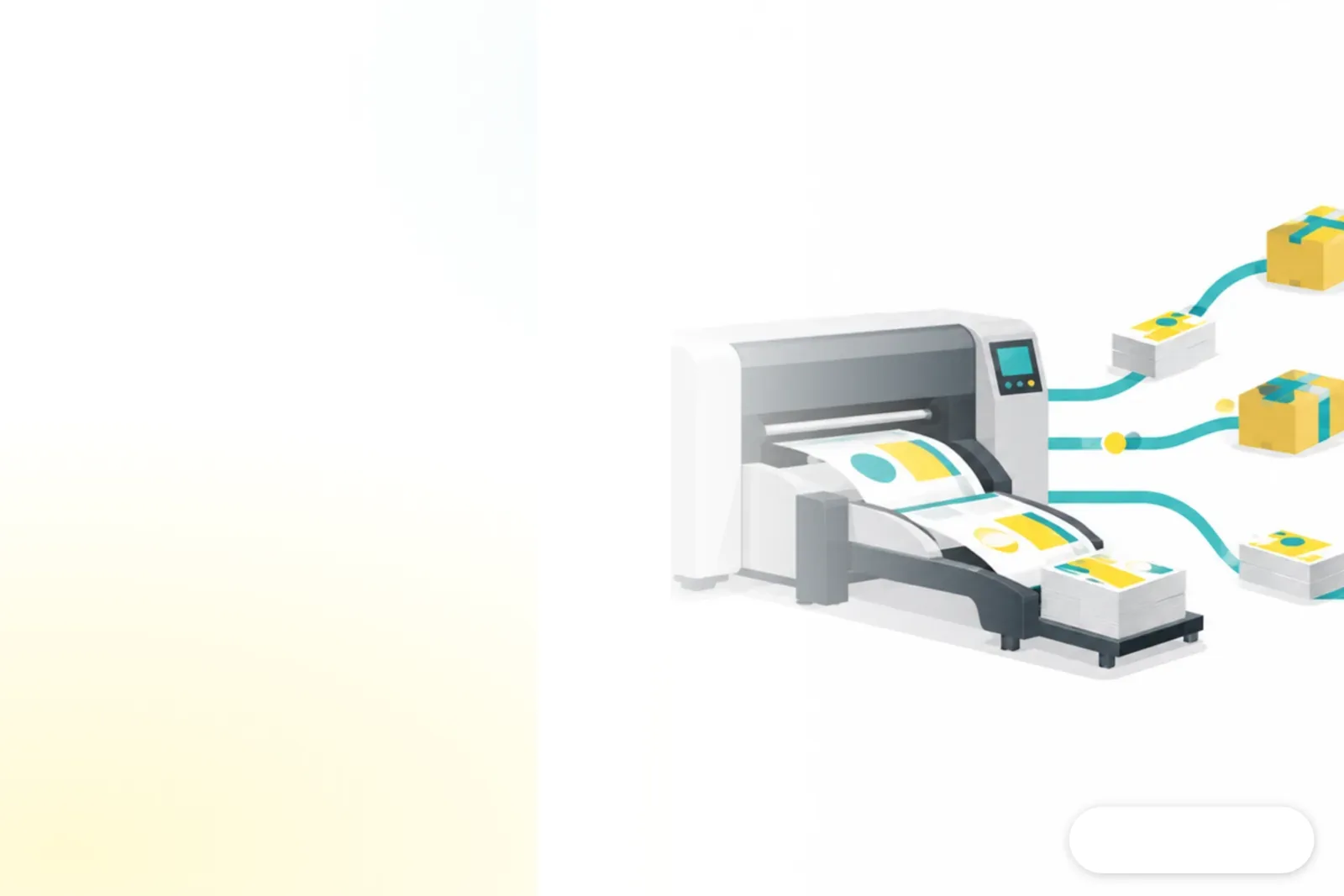
HP Indigo is HP's sheet-fed digital printing line. It feeds sheets one at a time and creates images digitally, making it a good fit for jobs that need version changes. HP PageWide is HP's high-speed web-fed inkjet line, which feeds and prints on a continuous roll. Print21 says the new equipment will support commercial printing, direct mail, packaging, labels, and billing, while meeting customer expectations for personalization, fast delivery, and consistency at scale. Brands can ask suppliers how they will route their own multi-version jobs and how color and lead times will be checked across print runs
Why connect the equipment to a Smart manufacturing framework?
MINDS sees the Smart manufacturing framework as a way to connect new equipment investments with standardized data, scheduling, and capacity management across plants. That lets teams coordinate work beyond a single site. Smart (Systematic Manufacturing, Automation & Robotic Transformation) is RRD's manufacturing framework. It uses standardized data to coordinate equipment, schedules, and capacity across sites
RRD says it is using artificial intelligence (AI) for predictive maintenance, dynamic scheduling, and network-wide capacity balancing, with the aim of reducing the impact of supply chain disruptions. Dynamic scheduling adjusts job order based on orders and equipment status, so each plant's workload and lead times can be factored into the plan. AI predictive maintenance uses equipment status data to estimate when maintenance will be needed. The source gives no figures for downtime or cost changes. MINDS recommends that brands separately confirm which backup plant will handle delays and how they will be notified
How can brands tell whether the added capacity is worthwhile?
Brands should use their own orders to check a supplier's scheduling, lead time, and quality commitments. MINDS' "Three Checks Before Print" can be used right in the quote process. RRD operations executive Craig Roberton said customers want more personalization and faster responses for bills, direct mail, and packaging, while keeping large-scale production reliable and consistent
・① MINDS' Three Checks Before Print, confirm requirements: Pick out products with frequent version changes, personalization needs, or tight deadlines, then confirm how the supplier will handle them
・② MINDS' Three Checks Before Print, check the schedule: Ask how rush orders affect existing lead times and who tracks versions when production spans multiple sites
・③ MINDS' Three Checks Before Print, confirm quality: Agree in advance on how proofs, color, and consistency between print runs will be checked
What can small and midsize Taiwanese printers learn from RRD?
Small and midsize printers in Taiwan and their brand customers can start by organizing their orders and how the work is routed, then assess equipment investments. RRD will deploy 15 new presses over two years at selected sites among its 175 print centers in 30 countries. That is a very different purchasing situation from a single plant. MINDS recommends that smaller printers first review their recurring jobs, multi-version jobs, and rush jobs, find bottlenecks in job changeovers, waiting for files, or outsourcing handoffs, then ask an equipment vendor to run representative jobs
Start with the orders. If a brand is adding new products or revising supplier specifications, the advisory team at Mai Strategy Knowledge Academy can help turn lead-time, quality acceptance, and backup requirements into purchasing questions, so suppliers respond with more than an equipment catalog
Key takeaways
・RRD ordered 15 HP digital presses, with deployment at selected operating sites over two years
・Indigo and PageWide models will work side by side, adding flexibility for routing different print jobs
・MINDS points out that machine count alone cannot be used to calculate an increase in print volume
・Brands should use their recurring jobs, multi-version jobs, and rush orders to check lead times, quality, and backup plans
Further thoughts
On the manufacturing side, start by organizing equipment status and order fields so data from different plants can be read together. On the design side, spell out versions, personalization fields, and sign-off responsibilities. Scheduling SaaS (Software as a Service, software accessed by subscription over the internet) and AI predictive maintenance both need reliable data before they can support the scheduling and capacity balancing RRD describes. MINDS recommends that brands next ask an existing supplier to walk through the scheduling, proofing, and exception reporting process for one recurring job and one multi-version job
Further reading
FAQ
- Which models are included in RR Donnelley's order for 15 HP presses?
- The order includes sheet-fed digital presses such as the HP Indigo 120K and 12000HD, as well as high-speed web-fed inkjet presses such as the HP PageWide Advantage 2200. The report does not give the number of each model
- How much will the 15 new HP presses increase production?
- Print21 does not provide the model mix, print speeds, or shift patterns. MINDS recommends against converting the number of presses directly into an estimate of increased print volume
- Why is RRD connecting the presses to its Smart manufacturing framework?
- RRD says the Smart framework combines standardized data, AI predictive maintenance, dynamic scheduling, and network-wide capacity balancing to coordinate manufacturing and reduce the impact of supply chain disruptions
- How can Taiwanese brands assess a printing supplier's added capacity?
- MINDS recommends using recurring jobs, multi-version jobs, and rush orders to ask about work routing, lead times, quality checks, and backup plans, then running a representative order through the process
Related articles
The Print × AI weekly
The print and AI know-how designers, brands and enterprises can use before they commit — one email, every week
MINDS Free Tools
Spine width and imposition calculators — skip the manual math, free in your browser.
MINDS Group
Need actual printing or gifting services?
From premium printing to online ordering and festive gifts — the MINDS Group sister brands take it from here.