
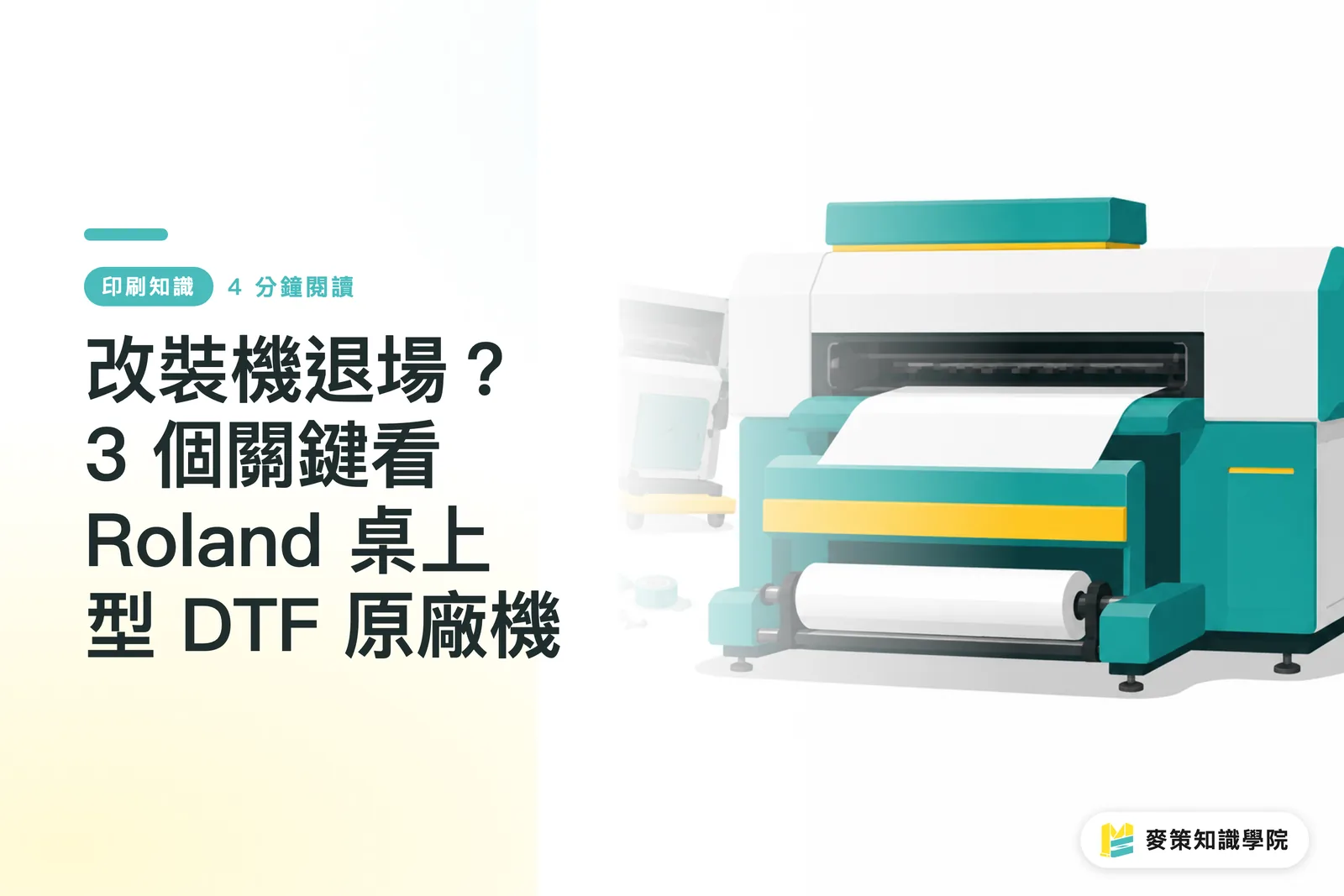
Why Are Major Brands Moving into Desktop DTF?
The answer is simple: the pain points are impossible to ignore. Visiting apparel and merchandise print shops across central and southern Taiwan over the past few years, you would almost always spot a converted DTF printer tucked into a corner. There is no denying that skipping plate-making and screen washing brought the barrier to entry to an all-time low. Still, converted machines come with a familiar curse: print quality comes down to luck, support happens in LINE groups, and clogged nozzles or settled white ink shut things down every few days. More often than not, the profits barely cover the wasted materials from reprints
Roland DG's launch of the compact VersaStudio BY2-20 desktop DTF printer this June, following similar moves by Epson, sends a clear signal. When tier-one equipment makers pour resources into small-footprint machines built for micro-production spaces, custom printing has moved past the early price war into an era of dependable output. Factory-built machines sell yield rates, along with the peace of mind that owners will not have to wake up in the middle of the night to unclog printheads
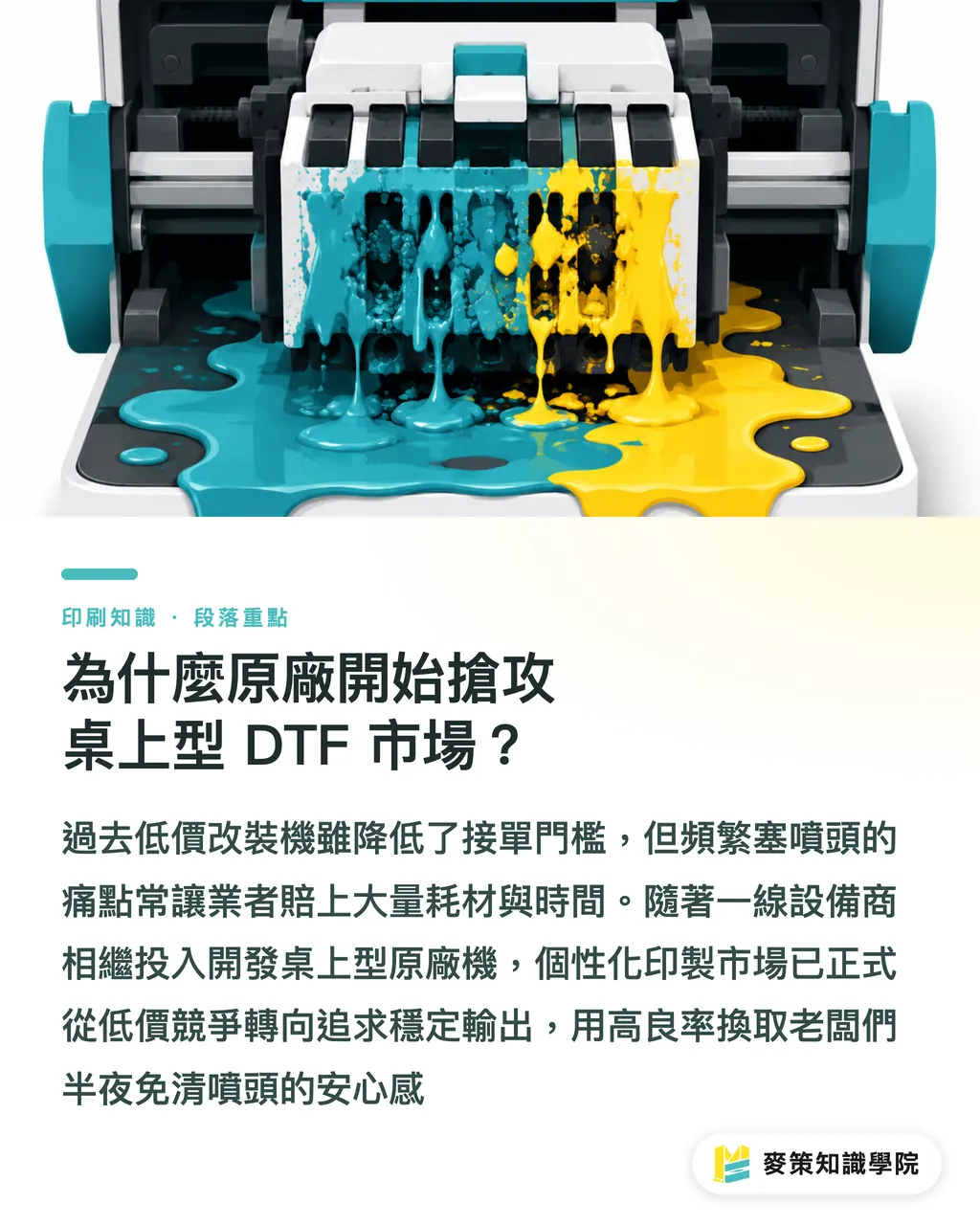
What Production Headaches Does the VersaStudio BY2-20 Solve?
On an actual production floor, white ink is easily the biggest headache in DTF. Roland gave the BY2-20 several targeted hardware designs aimed right at the pressure points of smaller shops:
・White ink stability: Large-capacity white ink cartridges, optimized fluid paths, and internal temperature control drastically cut down on nozzle dropouts and wasted prints caused by ink settling
・Integrated hardware and software: Instead of cobbling together third-party RIP tools like most converted setups, Roland bundles VersaWorks 7 for print management, Connect Designer for artwork, and Roland DG Connect for real-time monitoring
・Built-in contour cutting: Beyond printing DTF film, the machine includes integrated cutting to handle heat transfer vinyl directly. This opens the door to metallic, glitter, and holographic finishes, giving creative brands an immediate edge
・Eco certifications: Its S-PG2 inks and S-Powder hot-melt powder carry OEKO-TEX® Eco Passport certification, which serves as a mandatory ticket for landing European and US orders or producing infant apparel
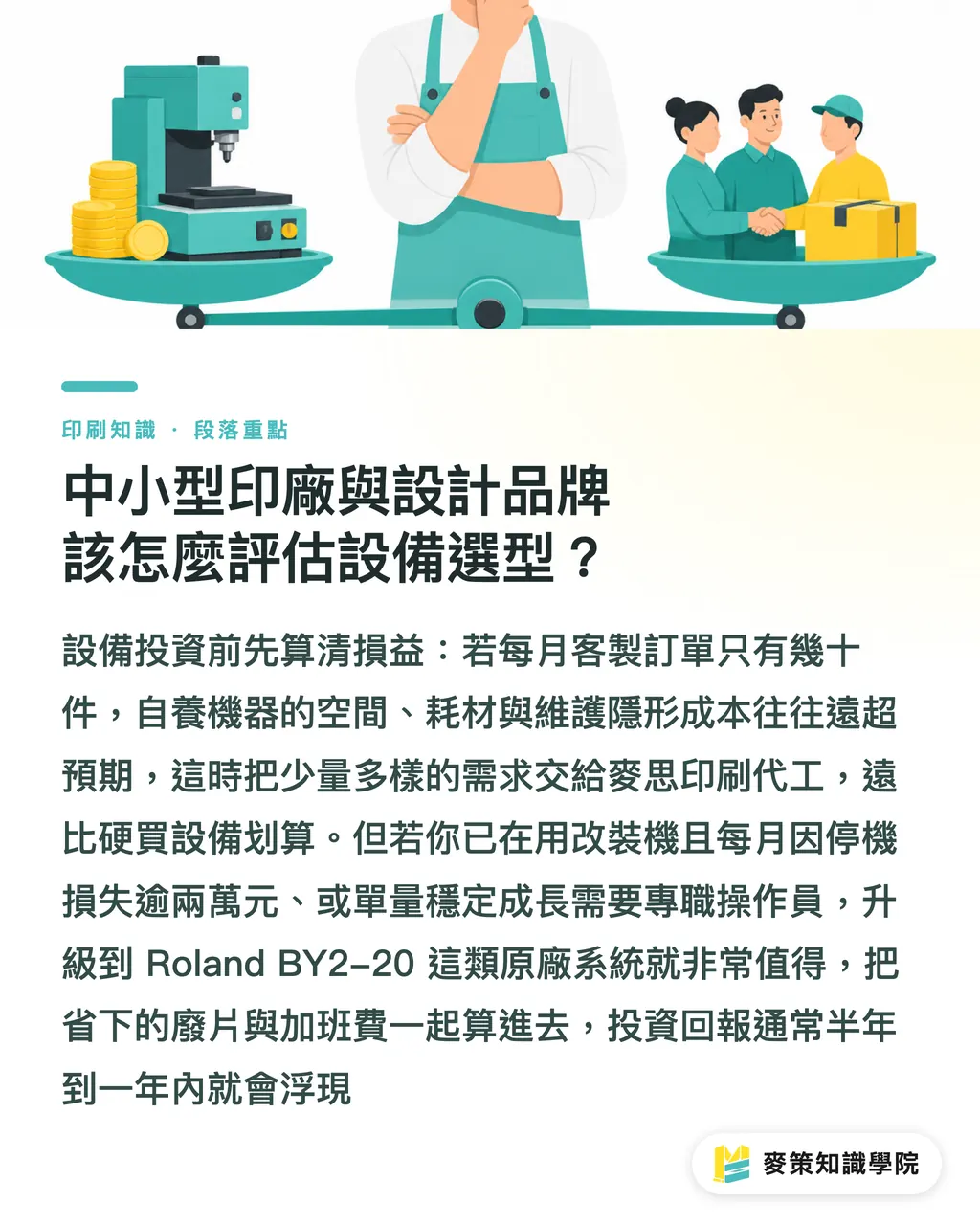
How Should Small Print Shops and Design Brands Evaluate Equipment Options?
Do not rush to swipe your card just because major brands are releasing smaller machines. Equipment investments always come down to the break-even point. If your custom orders run only a few dozen pieces a month, or if you are an independent designer focused on illustration, the hidden costs of running your own machine (floor space, climate control, ink expiration risks) run far higher than expected. Instead of forcing an equipment purchase, hand off high-mix, low-volume transfer jobs to MINDS for mid-to-high-end custom production with standardized workflows, or test the market by placing short-run orders through MINDS online
If you already run a converted setup and lose over NT$20,000 every month to unexpected downtime, or your order volume has grown enough to justify a dedicated operator, stepping up to a factory system like the Roland BY2-20 makes complete sense. When calculating equipment costs, factor in the money saved on ruined film and reduced overtime. Returns on factory hardware usually become obvious within six months to a year
Key Takeaways
・The arrival of factory-built desktop DTF printers signals a market shift from price cuts to yield rates
・The BY2-20 tackles the fatal flaw of white ink settling through internal temperature control and high-capacity cartridges
・Built-in contour cutting lets a single machine handle both DTF transfers and specialty heat transfer vinyl
・Equipment choices should be weighed against order volume and scrap waste, rather than buying just for the sake of buying
Further Considerations
For smaller print shops and brand creators, lower technical barriers mean competition is returning to design strength and customer experience. Once everyone can afford desktop DTF gear capable of decent quality, the winners will be those who pair eco-certified films with great fabrics, clever packaging, and automated ordering systems. That is how shops will protect their margins in the next wave of custom printing
Further Reading
FAQ
- What is DTF printing?
- DTF (Direct-to-Film) prints graphics onto a specialized film, coats them with hot-melt powder, and transfers them to fabric using heat and pressure. Because it eliminates plate-making, handles unlimited colors, and works across nearly any fabric, it is ideal for high-mix, short-run customization
- How does the Roland BY2-20 differ from converted DTF printers?
- The biggest difference comes down to system reliability and after-sales support. A factory-built machine features a dedicated white ink circulation and temperature control system, integrated layout and monitoring software, and OEKO-TEX certification, sharply reducing scrap caused by ink dropouts
- Is this machine a good fit for an independent illustrator?
- Not in the beginning. The hardware requires steady print volume to keep the printheads clear. Start by outsourcing your artwork to professional print houses. Once order volumes stabilize and you have dedicated fulfillment space, you can look into bringing in desktop equipment like this
Related articles
The Print × AI weekly
The print and AI know-how designers, brands and enterprises can use before they commit — one email, every week
MINDS Free Tools
AI background removal, a LINE sticker maker, spine & imposition calculators — all free, right in your browser, no upload.
MINDS Group
Need actual printing or gifting services?
From premium printing to online ordering and festive gifts — the MINDS Group sister brands take it from here.