
Introduction
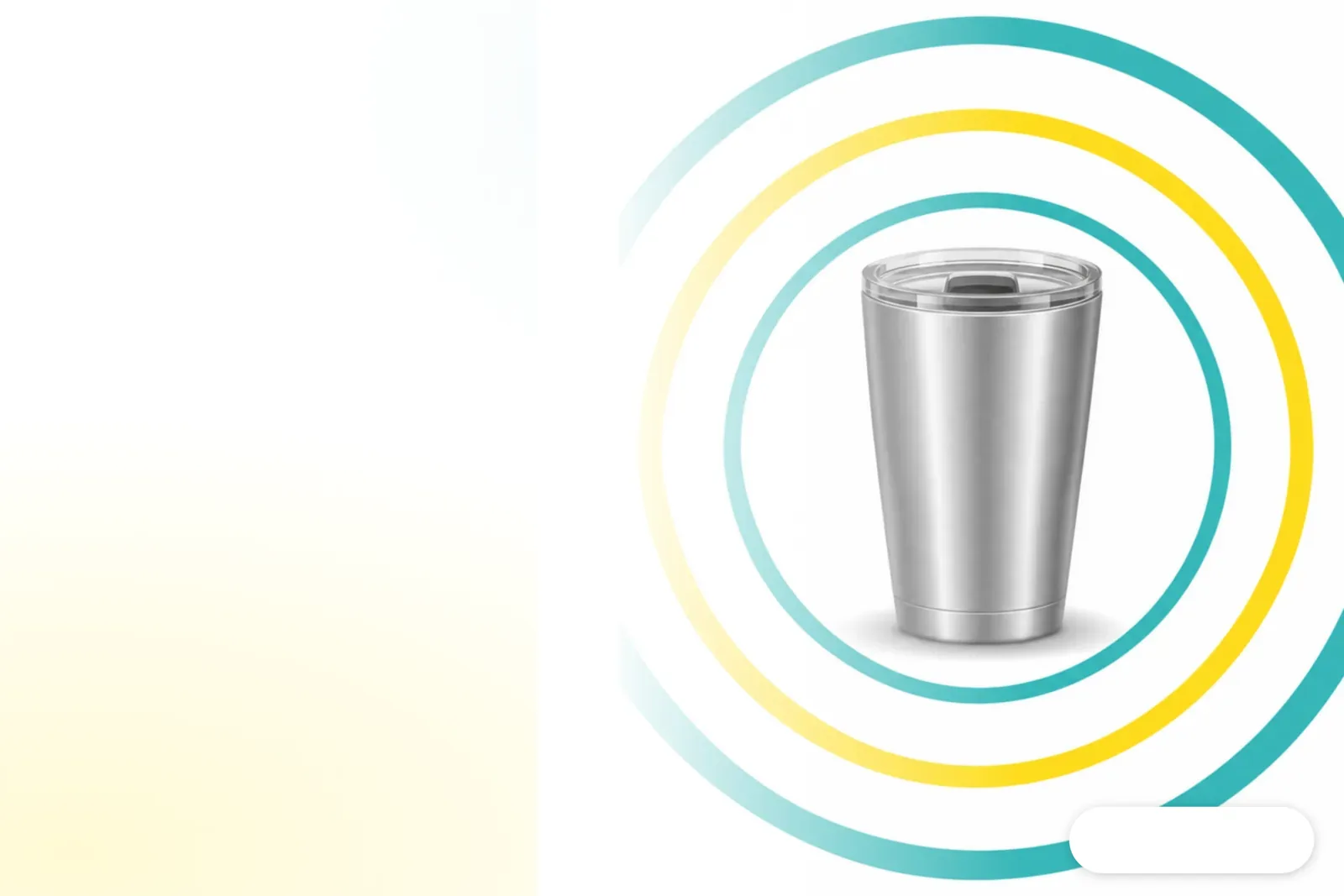
Direct-to-object printing is moving brand imagery from labels, sleeves, and transfer films back onto the objects themselves. This shift affects printing processes, packaging design, and the way brands plan their touchpoints. It is therefore a question of industry structure as well as equipment selection
Academic reviews of industrial inkjet printing treat direct-to-shape as a distinct topic. They cover concepts for printing on curved surfaces [3], processes and handling systems for partial or full object coverage [2], motion control for robotic 2½D printing [4], and circular economy assessments of object printing [5]. This literature shows that object printing has a substantial research base in the technical community
Existing research, however, tends to focus on the engineering question of how to place ink droplets accurately on curved surfaces. Far less often does it use real operating cases to show which orders become viable when an equipment parameter changes, and which constraints remain. Firsthand experience from small customization businesses is especially scarce, even though it is exactly the kind of evidence Taiwan's printing and gift industries, dominated by small and midsize businesses, need most
This article asks: What determines the customization boundaries of direct-to-object printing, and how does changing an equipment parameter, such as throw distance, shift those boundaries? Its contributions are as follows:
・It proposes a Three-Layer Boundary Framework for Direct-to-Object Printing, breaking customization feasibility into geometric, economic, and material and quality boundaries for use in future case comparisons. See "Terms and Research Approach."
・It uses the Ink2Heart case to examine the real effect and trade-offs of a 15 mm High Throw distance on the geometric boundary. See "Analysis 1."
・It unpacks the shift from "100 different designs as 100 jobs" to "100 different designs as one digital order," distinguishing image variation from object variation as two sources of cost. See "Analysis 2."
・It identifies gaps in the evidence on material and quality boundaries, then turns those findings into practical process recommendations for Taiwan's small and midsize printers, designers, and brands. See "Analysis 3" and "Implications for Taiwan's Design and Printing Industry."
Terms and Research Approach
This section defines the terms used throughout the article, then explains the analytical framework and the scope of the data
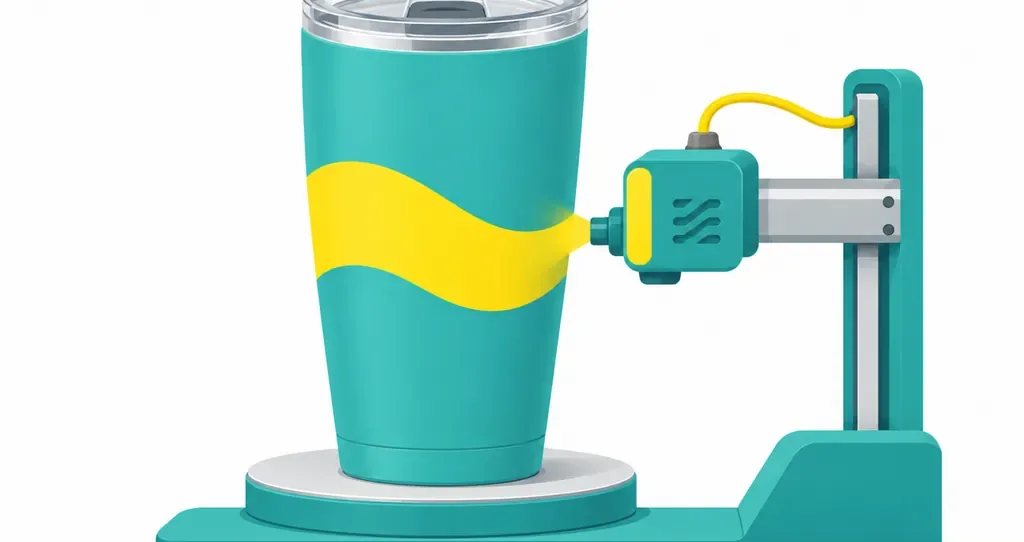
・Direct-to-object printing (DTO): A printing method that deposits ink directly onto the surface of a finished object without labels, transfers, or films. This is the umbrella term used in this article
・Direct-to-shape printing (DTS): The term used in industrial inkjet literature for printing on three-dimensional or curved objects [2][3]. This article uses it when referring to that literature. Its scope substantially overlaps with DTO
・Throw distance: The distance between the nozzle plate of the printhead and the surface being printed
・Variable data printing (VDP): A digital printing method in which the text and images on each finished item can vary within the same production run
The analytical framework is the Three-Layer Boundary Framework for Direct-to-Object Printing proposed in this article:
・Geometric boundary: Whether an object's curvature, contours, and height differences fall within the range where the equipment can maintain image quality
・Economic boundary: Whether, for a given run size and degree of variation, the setup, fixture, and administration costs allocated to each item are acceptable to the market
・Material and quality boundary: Whether ink adhesion and durability on the substrate, as well as the finished product's performance in use, meet expectations
The research combines interpretation of a single case with a synthesis of the literature. The case data come from a user feedback report published by PrintIndustry.news on October 29, 2026 [1]. The literature review draws only on verified research into industrial inkjet printing and packaging [2], [7]
Literature Review and Current Landscape
Existing discussions fall into four groups: curved-surface imaging, motion and handling systems, sustainability assessment, and perceived value among customers
Curved-surface imaging and process control. Thorp and Geddes outline inkjet strategies for printing on curved surfaces. The core challenge is that the distance from nozzle to surface is no longer constant across a curve [3]. Buck expands the problem to partial and full object coverage, pointing out that challenges arise across the printing process, handling system, and workflow [2]. Research into inkjet as a precision deposition technology also extends to functional materials. For example, antisolvent inkjet printing has been used to grow and pattern single-crystal perovskites directly [6], showing that controlling the relationship between nozzle and substrate is a shared challenge across applications. This research provides a technical basis for understanding geometric boundaries, but generally does not connect them to operational feasibility at specific run sizes. The case in this article adds that layer
Motion systems and robotics. Vogel and Tipura discuss using robots to move the printhead or object for 2½D direct-to-shape printing [4]. The idea is to have the printhead follow the curved surface, using freedom of movement to achieve high-quality printing at close range. This research contrasts with the case in this article. The High Throw approach extends the throw distance to reduce the need for motion tracking. These are complementary strategies for managing geometric boundaries, rather than competing ones
Sustainability and the circular economy. Has proposes applying circular economy criteria to printing systems, including paper, labels, and direct-to-object printing [5]. This means the environmental impact of DTO cannot be judged only by whether it eliminates labels. Ink, energy use, and the route an object takes through recycling also matter. This body of research offers an assessment framework, but lacks real-world data from small customization businesses. This article extends the discussion to material and quality boundaries
Perceived value among customers. A study published in Acta Graphica uses the Kano model to analyze consumer satisfaction with packaging materials [7], showing that packaging attributes can fall into different categories, such as basic requirements and attractive qualities. This research is a reminder that technical feasibility does not mean consumers care about it. This article draws on that idea to distinguish the different roles of personalization and durability in drinkware
Taken together, the literature is relatively well developed on the technical side, but two questions remain open:
・First, case evidence is lacking on the causal link between changes in equipment parameters and changes in order structure
・Second, how economic and material boundaries interact in small-batch personalization has not yet been systematically described. These are the gaps this article addresses

Analysis 1: The Geometric Boundary and How Throw Distance Changes What Can Be Printed
The main effect of High Throw technology is to expand the geometric boundary, allowing objects with pronounced height differences to be printed without frequent repositioning
According to the report, Inkcups unveiled High Throw technology at Fespa 2025. It can project ink droplets across a distance of up to 15 mm, far beyond the few millimeters common in conventional UV printing [1]. The significance is that, as long as the height variation across the object's surface in the print area stays within roughly 15 mm, the printhead can remain at a safe distance, reducing the risk of a head strike and the need for repositioning
The report says the design lets the printhead stay far enough from the substrate to decorate objects with raised areas, recesses, or curved surfaces without constant repositioning [1]. This article interprets the approach as allowing more distance tolerance instead of precisely tracking the surface. It complements the robotic approach [4] rather than replacing it
A longer throw distance comes with trade-offs. As a general principle of inkjet printing, the longer droplets travel, the more flight-speed differences and airflow disturbances can magnify errors in where they land. This can put pressure on image sharpness and color uniformity on curved surfaces [3]. The report provides no measurements of resolution or droplet placement accuracy, so performance at a 15 mm throw distance can currently be described only as "professional quality" in the user's own assessment. It has not been independently verified [1]
Another example in the case is Ink2Heart's past work printing on a power drill [1]. A drill is an industrial object with an irregular shape and varying surface curvature. This example shows that the geometric boundary has extended beyond drinkware. A single example, however, says nothing about yield. This article treats it as proof of feasibility, not proof of stable mass production
Analysis 2: The Economic Boundary, from 100 Jobs to One Order
DTO's economic advantage for small-batch customization comes from bringing the marginal cost of image variation close to zero. It does not make every kind of variation cheaper
Founder Richard Müller says the setup time, fixtures, and other production steps involved in traditional printing make very small runs economically difficult [1]. The main reason is that fixed costs cannot be spread across enough items
The key figure in the report is that a customer can order 100 water bottles, each printed with a different name. For the business, this is not 100 complicated, independent jobs. It is one digital order containing 100 personalized products [1]. The business can quote, schedule, and inspect all 100 items as one run, so adding different names does not cause administration costs to rise in proportion to the number of items
Buck identifies workflow as one of the three main challenges in direct-to-shape printing [2]. This case provides a practical example. In this article's analysis, whether VDP works in practice depends on how well the data file, such as a name list, connects automatically to the print file. If every name still needs to be laid out by hand, the labor at the front end will eat up the benefit of treating the job as one order
This article further distinguishes between two kinds of variation:
・Image variation: The same type of object with different text or imagery, such as printing a different name on each of 100 identical water bottles. A digital workflow can absorb this variation
・Object variation: Different objects with different shapes, sizes, or materials combined in one order. Each change of object typically requires adjustments to the fixtures, positioning, and parameters
The report notes that Ink2Heart handles a wide range of products and that its ability to print on multiple materials was one factor in its equipment selection [1]. This shows the business faces both kinds of variation. In this article's analysis, the economic boundary ultimately depends on how well the business manages object variation, not image variation. The key to pricing is the setup time required each time the object changes
Analysis 3: The Material and Quality Boundary, Lessons from Stainless Steel Insulated Drinkware
The material and quality boundary is the least well-supported layer of the three-part framework, and it is also where DTO for drinkware most needs better evidence
The report says stainless steel water bottles, bottle bodies, and insulated cups make up most of Ink2Heart's business [1]. Insulated containers tend to have relatively regular shapes, a price point that can support a personalization premium, and are common as corporate and organizational gifts. That makes them a good entry category for the DTO small-batch model
Drinkware, however, is used frequently and goes through hand friction, washing, and temperature changes. The report provides no data on UV ink adhesion to stainless steel, wash resistance, or abrasion resistance [1]. In this article's analysis, without that data, "professional quality" mainly describes the visual quality when the item leaves the factory, not its durability after a period of use
Customer research offers a way to understand this gap. The Kano model divides attributes into categories such as basic requirements and attractive qualities [7]. In this article's analysis, a personalized drinkware item's custom name may be an attractive quality, while the print not peeling off may be a basic requirement. The first can motivate a purchase. If the second fails, it leads directly to dissatisfaction. One cannot make up for the other
The sustainability question also calls for care. Has's framework includes direct-to-object printing in circular economy assessments [5]. DTO eliminates labels and sleeves, which may reduce material use. But the effect of ink applied directly to a metal surface on recycling and reuse still needs to be assessed case by case. This article does not assume DTO is automatically the more environmentally friendly option
Implications for Taiwan's Design and Printing Industry
Taiwanese businesses can first build their ability to manage object variation and verify durability, then assess which equipment is worth adopting
Small and midsize printers should first review their existing customer base for orders driven by image variation, such as corporate gifts, event souvenirs, and alumni nameplates. These orders can capture the benefits of VDP most directly. Before adopting the technology, they should build a sample library of objects. For each common item, record fixture specifications, positioning methods, and print parameters so the setup time for each change can be measured and included in quotes. A suggested pricing structure has two parts: an object setup fee and a per-item printing fee. This reflects the two sources of variation costs discussed in Analysis 2. For durability, printers should establish in-house standards with their own tests, such as cross-cut adhesion, repeated wiping, and actual washing, instead of relying only on the item's appearance when it leaves the factory
Designers are working with a canvas that is more constrained than a flat layout. Curves, recesses, and height differences affect how an image actually appears on an object. A design brief should include the object's dimensions, printable area, and acceptable range of distortion. For VDP projects, set the character limit, typeface, and name-list field format during the design stage, so long names do not overflow the layout after the list is imported. Proof against the actual object. A flat proof cannot predict how the design will look on a curved surface
Brands need to reconsider which brand touchpoints are suited to direct printing on objects. Limited editions, collaborations, and member-exclusive products are good candidates for small-batch DTO market tests that reduce inventory risk. Procurement specifications should include durability requirements and acceptance criteria, with clear requests for suppliers to provide adhesion and wash-resistance test results. If a brand makes sustainability claims, it should ask suppliers to explain the ink type and the object's recycling route instead of relying on "label-free" as the sole basis for promotion
Conclusion and Limitations
The answer to the research question is that the customization boundaries of direct-to-object printing are jointly determined by geometry, economics, materials, and quality. High Throw's 15 mm throw distance mainly shifts the geometric boundary. The Ink2Heart case shows that a digital workflow can bring 100 different designs together as a single order, loosening the economic boundary for orders driven by image variation [1]. The setup costs of object variation and durability in drinkware use remain boundaries that the available evidence has not adequately addressed
The limitations of this article are as follows:
・Scope of the data: The case evidence comes from a single user feedback report in an industry publication [1]. It includes no quantitative measures of production capacity, yield, unit cost, or image accuracy, and offers no comparisons with other users or competing equipment
・Time covered by the data: Ink2Heart opened in 2026, and the report reflects early user experience [1]. It cannot show the equipment's long-term reliability or how well the finished products hold up after months of use
・Limits on generalization: The case comes from the German market and concerns stainless steel insulated drinkware. Its order structure and customers' willingness to pay may not apply to Taiwan's gift market or to other substrates such as plastic, glass, or ceramic
Future research can move forward in three specific directions:
・Select 3 to 5 small and midsize businesses in Taiwan that have adopted DTO. Record the setup time and first-item yield when changing designs on the same object to quantify the cost of object variation
・Compare image accuracy at different throw distances on the same stainless steel insulated cup, then run adhesion and wash-resistance tests to examine High Throw's quality trade-offs
・Use a Kano model questionnaire [7] to survey personalized drinkware customers and verify how they categorize personalization and durability
Key Takeaways
・The customization feasibility of direct-to-object printing can be divided into geometric, economic, and material and quality boundaries. If any one of them fails, the order cannot be delivered reliably
・The Inkcups X5-T High Throw extends the throw distance from the few millimeters typical of UV printing to as far as 15 mm. This mainly expands the range of object geometries that can be printed, but independent data on image accuracy trade-offs are still lacking
・A digital workflow turns "100 different names" into "one order." It reduces the cost of image variation, while fixture changes and parameter setup when switching objects remain key pricing factors
・Durability is the biggest evidence gap for DTO on drinkware. Personalization can motivate a purchase, but a print that does not peel off is a basic requirement
・For small and midsize printers in Taiwan, adoption should focus on an object sample library, two-part pricing, and in-house durability tests, not equipment specifications alone
Further Thoughts
Direct-to-object printing is shifting the competitive focus for printers from "How good is the print?" to "How quickly can we change over, and how reliably can we deliver a durable finished product?" Print manufacturers need to standardize how they record fixtures, positioning, and parameters so the cost of object variation can be measured and quoted. Designers need to bring printable areas on curved surfaces and VDP field rules into the design brief earlier. Practical entry points for AI include predicting image distortion from an object's 3D dimensions and generating corrected artwork, checking whether names overflow the layout, and using image recognition for first-item and batch inspection. At the SaaS level, the most valuable tool would connect e-commerce or corporate name lists directly to print files and scheduling, with an object sample library and changeover time data built in. Open questions remain: public measurements of quality trade-offs at longer throw distances are lacking, the industry has yet to agree on durability standards for drinkware, and DTO's actual effect on recycling still needs to be assessed for each material
References
[2] Buck B. (2022). Inkjet‐Based Direct‐to‐Shape Printing with Partial or Full Coverage of the Object, Technical Challenges and Solutions for Printing Process, Handling Systems, and Workflow. Inkjet Printing in Industry. DOI: 10.1002/9783527828074.ch56
[3] Thorp D., Geddes N. (2017). Concepts for "Direct‐to‐Shape" Inkjet Printing onto Curved Surfaces. Handbook of Industrial Inkjet Printing. DOI: 10.1002/9783527687169.ch46
[4] Vogel D., Tipura D. (2022). Robotics for Inkjet‐Based 2 ½ D Printing; Direct‐to‐Shape. Inkjet Printing in Industry. DOI: 10.1002/9783527828074.ch58
[5] Has M. (2022). Sustainability and Eco‐footprint, Concepts for the Application of Circular Economy Criteria for Printing Systems and Their Use when Printing on Paper, Labels, and Direct‐to‐Object. Inkjet Printing in Industry. DOI: 10.1002/9783527828074.ch73
[6] Direct Growth and Patterning of Single-Crystal Perovskites via Antisolvent Inkjet Printing. DOI: 10.1021/acsaelm.2c01112.s001
[7] Acta Graphica/Hrčak: Kano Model Paper on Consumer Satisfaction with Packaging Materials. Acta Graphica/Hrčak
[8] German Bundestag Lobby Register: Official bvdm Lobby Register Entry. German Bundestag Lobby Register
FAQ
- What is direct-to-object printing (DTO)?
- Direct-to-object printing deposits ink directly onto the surface of a finished object without labels, transfer films, or stickers. Common applications include stainless steel insulated tumblers, water bottles, and tool housings, along with other three-dimensional or curved objects
- What does the 15 mm throw distance of the Inkcups X5-T High Throw mean in practice?
- Conventional UV printing usually has a throw distance of a few millimeters. High Throw technology can project droplets up to 15 mm, allowing the printhead to stay at a safer distance from the object. This makes it possible to print on objects with raised areas, recesses, or curved surfaces without frequent repositioning, though the effect of the longer throw distance on image accuracy still needs to be verified through testing
- Why is direct-to-object printing suited to small-batch personalized orders?
- With traditional printing, setup time and fixture costs are hard to spread across very small runs. Digital DTO can process 100 products, each printed with a different name, as a single order. This advantage mainly applies to image variations on the same type of object. Combining different objects in one order still adds fixture and parameter setup costs
- What risks come with using UV direct-to-object printing for personalized drinkware?
- The main risk is durability. Drinkware is subject to hand friction, washing, and temperature changes, all of which can affect ink adhesion. Public case reports mostly describe quality when products leave the factory. When purchasing, brands should ask suppliers for adhesion and wash-resistance test results
- What should small and midsize printers in Taiwan do first when adopting direct-to-object printing?
- Start by reviewing orders driven by image variation, such as corporate gifts and event souvenirs, and build a sample library of fixtures and parameters for common objects. Quotes can be split into an object setup fee and a per-item printing fee. At the same time, establish durability standards through in-house testing
Related articles



The Print × AI weekly
The print and AI know-how designers, brands and enterprises can use before they commit — one email, every week
MINDS Free Tools
AI background removal, a LINE sticker maker, spine & imposition calculators — all free, right in your browser, no upload.
MINDS Group
Need actual printing or gifting services?
From premium printing to online ordering and festive gifts — the MINDS Group sister brands take it from here.