

When is digital printing cheaper than offset?
Here is the direct answer: when your print run is under 500 copies and you do not need an extremely precise dedicated-plate spot color, digital printing is absolutely the better deal
To understand why, we first need to separate how the two methods work
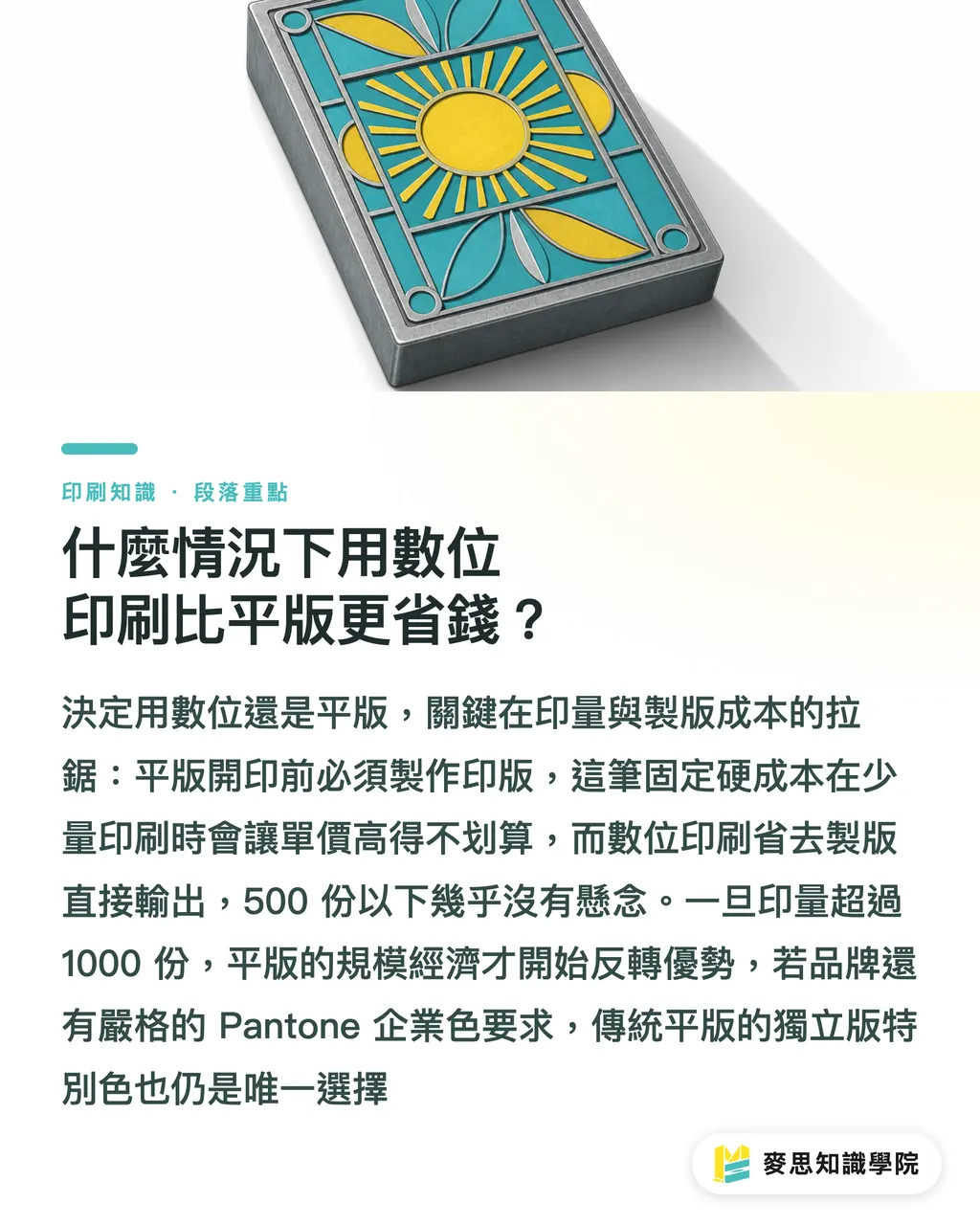
Offset printing works a bit like stamping. Before the press can run, printing plates have to be made, usually CMYK plates. That "plate setup fee" is a fixed hard cost
If you only print 100 copies, those 100 copies have to absorb several thousand dollars in plate-making costs. Of course the unit price becomes frighteningly high
Digital printing is more like a large high-end laser or inkjet printer. The file goes straight to the machine and prints, with no plate-making step at all
When sending a job to print, you can use this rough rule of thumb to decide quickly:
・Print run under 500 copies: choose digital printing straight away to save plate setup fees and machine calibration time
・Print run over 1000 copies: offset printing's economies of scale begin to kick in, and the cost per sheet drops sharply
・Extremely strict color requirements: if the brand has strict Pantone corporate color rules, traditional offset printing with a dedicated plate is still the first choice
Is digital printing only for business cards or small rush jobs?
People used to think digital printing was only good for booklets or business cards, but the market has already flipped over the past few years
From what I have observed in the 2026 Asian market, especially in manufacturing hubs like Vietnam, the packaging industry is adopting digital printing at a fast pace
The biggest force behind this is not smaller print volume. It is the stronger demand from brands for customization and segmented marketing
Digital printing has one killer application that offset printing cannot replace: variable data printing, or VDP
Imagine you need to print 1000 packaging boxes, but every box needs a unique prize-draw QR Code, or the name of a different VIP customer
With offset printing, you would need 1000 different plates. The cost goes straight through the roof
For digital printing, once the database is connected properly, every sheet coming off the press can look different. That makes it a very practical weapon in modern offline marketing campaigns
AI has sped up design workflows. How should print production respond?
Recently, I have worked with quite a few teams using AI-assisted design, and I noticed a very real situation on the ground
In the early design stage, AI acts like a tireless creative assistant. Designers can quickly produce a large batch of concepts, shrinking what used to be a one-week design approval cycle down to one or two days
Then the problem appears: once front-end design gets faster, clients naturally expect physical printed pieces to arrive faster too
This is where digital printing's speed advantage shows up
Offset printing has to go through a series of steps such as film output, plate exposure, press setup, and color adjustment. It usually takes 3 to 5 working days
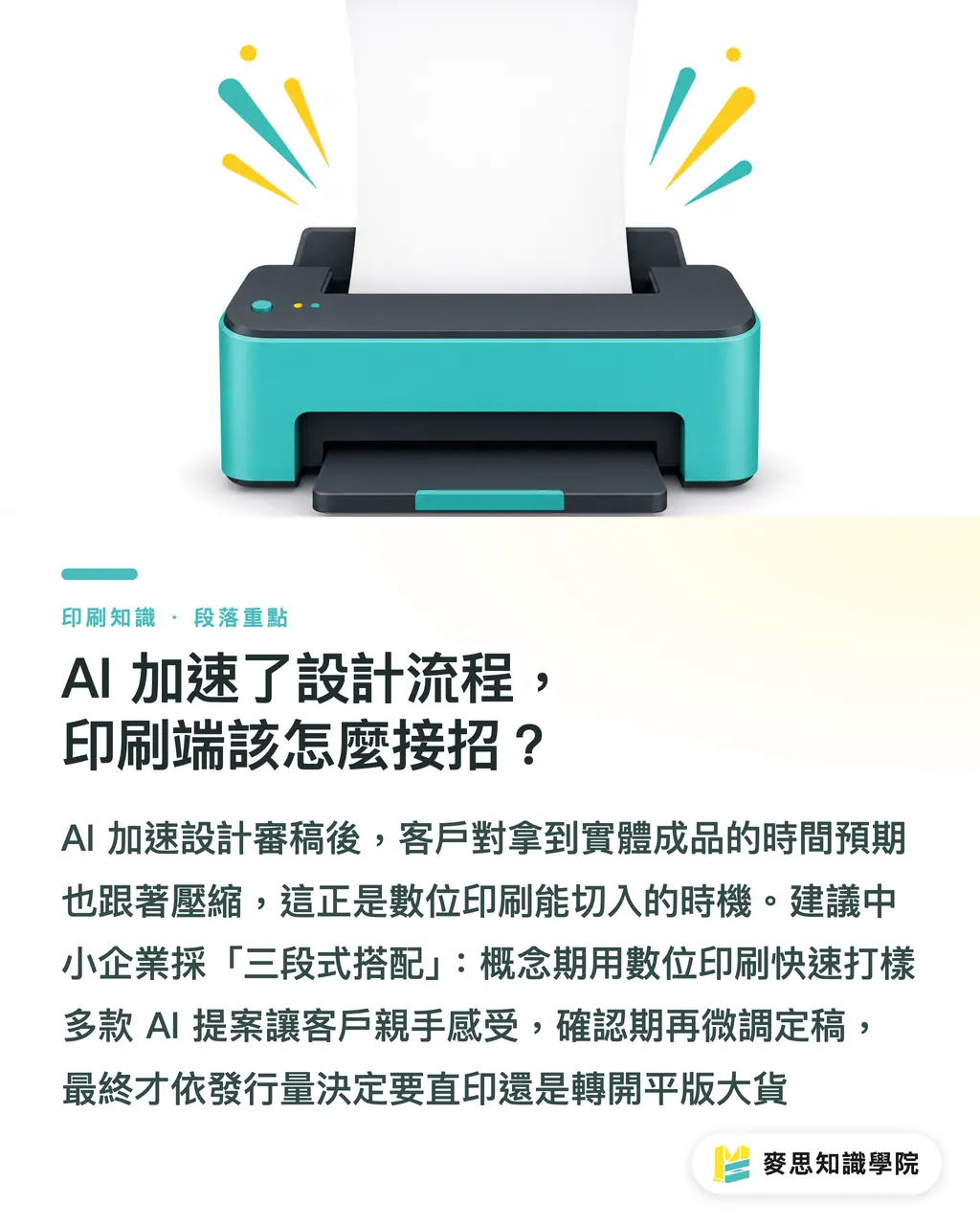
Digital printing can go straight to print once the file is confirmed. With the right print partner, it can even be printed today and delivered tomorrow
For small and midsize businesses, we suggest this workflow at the early project stage:
・Concept proofing stage: use digital printing to produce small batches of several AI-generated concepts, so clients can actually feel the paper texture and finishing effects
・Decision confirmation stage: make final color and layout adjustments based on the physical proofs
・Final production stage: decide whether to stay with digital direct printing or switch to offset mass production based on the final confirmed run size
Key Takeaways
A print run of 500 copies is the dividing line. Below that number, prioritize digital printing to avoid high plate setup fees
Offset printing earns its advantage through economies of scale. Digital printing buys you speed and the flexibility to customize
If each product needs a different serial number or exclusive barcode, digital printing with variable data handling is the only real solution
Further Thoughts
When buying print, do not look only at the unit quote. Time cost and inventory pressure must be counted too
For MINDS customers and designers, the smartest way to lower business risk is to use digital printing for small, varied market tests, confirm sales performance, and then scale up with offset printing
FAQ
- Why can digital printing sometimes cost more than offset when printing 1000 sheets?
- Because offset printing's plate setup fee is spread across 1000 sheets, while digital printing has a fixed unit price. The more you print, the less digital can show a cost advantage
- Are digital printing colors inaccurate?
- Modern high-end digital presses already have a wide color gamut, sometimes even beyond traditional CMYK. But if a company has strict Pantone corporate color rules, mixing dedicated colors in offset printing is still the most stable approach
- Which option should I choose for a rush print job?
- Definitely digital printing. It skips plate-making and ink-drying time, and in the fastest cases it can even be delivered the same day
Related articles





The Print × AI weekly
The print and AI know-how designers, brands and enterprises can use before they commit — one email, every week
MINDS Free Tools
Spine width and imposition calculators — skip the manual math, free in your browser.
MINDS Group
Need actual printing or gifting services?
From premium printing to online ordering and festive gifts — the MINDS Group sister brands take it from here.