

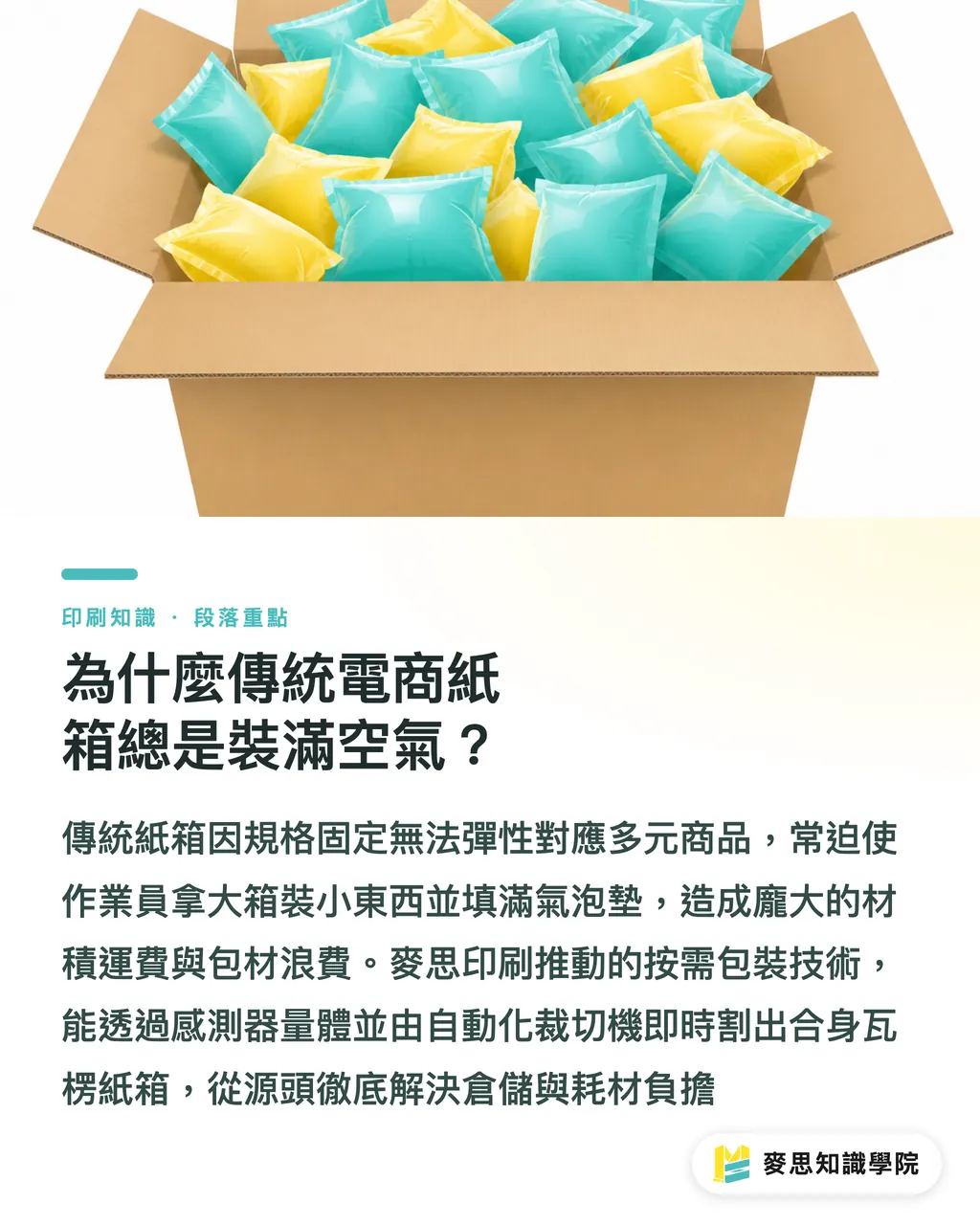
Why are traditional e-commerce cartons always full of air?
Traditional cartons rely on pre-made, fixed-size inventory, so they cannot match the wide range of product volumes. The result is a lot of shipped air and wasted cushioning materials. The packaging size optimization mindset used by MINDS tackles material use and storage burden at the source
Right-sized Packaging refers to a finishing process where sensors measure the volume of an item, then an automated cutting machine instantly cuts a corrugated carton that fits the product exactly. It removes the waste of stocking many carton sizes and filling empty space with cushioning
After years of watching production lines and client sites, I keep seeing the same thing: warehouse corners stacked with six or seven sizes of pre-made cartons. When a product does not fit, operators can only put a small item into a large box, then stuff it with bubble wrap or Styrofoam
That approach is not just a drain on tied-up inventory costs. It is the root of waste in finishing and packaging materials
Overpackaging drives up dimensional shipping costs, and even the unboxing experience gets worse for the customer
It is simple
As long as box sizes cannot change flexibly, finishing efficiency stays stuck in the old era
How does the Packsize on-demand cutting system work?
The Packsize automated forming system captures a product's three-dimensional data through inline sensors, then cuts and creases continuous corrugated board with precision within seconds, enabling real-time box making with no minimum order quantity
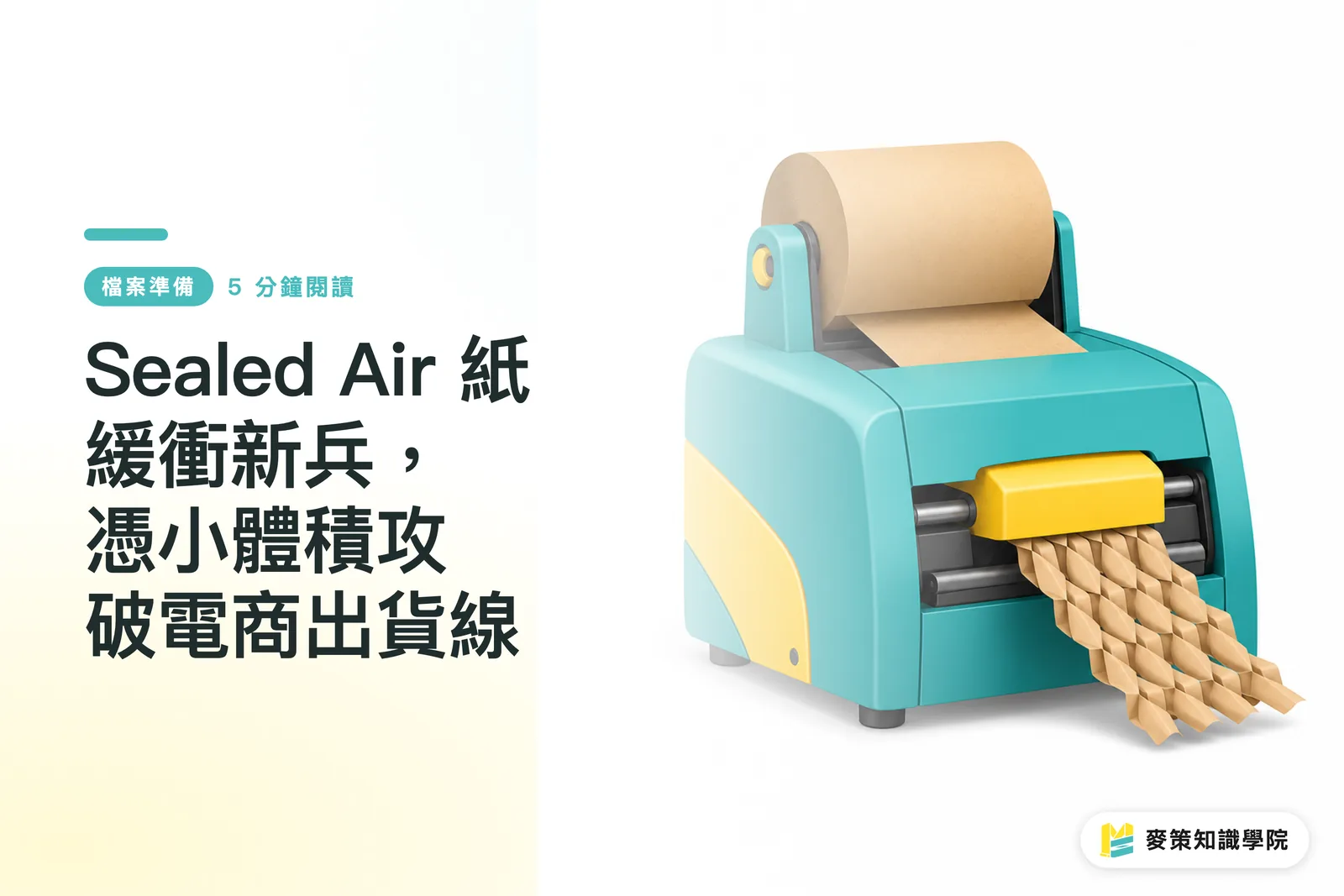
The automated cutting and forming equipment Packsize showcased at its new experience center shows how finishing sites are moving from static material stocking to dynamic production
Its workflow can be summarized in three automated steps:
1. Automatic product volume measurement: the product passes through a scanning zone, where laser and optical sensors capture its length, width, and height in real time
2. Real-time corrugated board feeding with high-speed cutting and scoring: based on the data, the system controls the blades to complete longitudinal cuts, cross cuts, and crease lines on continuous corrugated board
3. Automatic carton forming and sealing: the folding mechanism forms the board into a box, then automatically applies adhesive and seals it after the product is placed inside
This process means small-batch, high-variety e-commerce orders do not need any preprinted or stored finished boxes
Cut it now, make it now
From order intake to carton sealing and packing, the entire process takes only seconds
Finishing is no longer the bottleneck that slows shipping on the production line. It becomes the smoothest hub in an automated logistics flow
How is automated cutting and box making different from outsourcing pre-made cartons?
On-demand real-time forming turns fixed cartons that once occupied huge warehouse space into continuous board feeding, cutting the cost of pre-stocked sizes and cushioning fill by a wide margin
In the past, many e-commerce sellers or fulfillment warehouses had to place bulk orders with carton manufacturers to support daily shipping
These two models differ sharply in real operations and financial structure:
・Traditional outsourced carton stocking: high minimum order quantities, need to pre-store 5 to 10 fixed carton sizes, heavy warehouse space usage, high demand for cushioning fill, low dimensional loading efficiency
・On-demand real-time forming: no minimum order quantity limit, only one continuous corrugated board feed needed, warehouse space reduced by more than half, almost no cushioning material, package volume fits precisely
Judging from the field experience of major U.S. retail chains, introducing systems such as Packsize CVP Everest or EFI X5 Nozomi is not simply replacing manual packing with machine operation
It is redefining packaging materials and logistics volume
Board usage improves, shipping volume shrinks, and each truck naturally carries more packages per trip
How can small and mid-sized printers and brands in Taiwan put this transition into practice?
Printers and brands do not need to rush into large equipment purchases. They should first review their order structure and outer box specifications, then work with the Mai Strategy Knowledge Academy consulting team to assess the right timing for transition
Hold on first
An automated on-demand cutting machine is a sizable investment. Not every factory should buy one right away and park it in a corner
For lower-carbon packaging and finishing transformation, I suggest evaluating the move step by step through the "MINDS (MS, mid- to high-end fully custom commercial printing) three gates for lower-carbon packaging":
① Review order specifications and scrap rate: map the shipping ratio of each outer box size in the warehouse, then calculate empty-box rates and spending on cushioning materials
② Evaluate continuous board and the finishing chain: check whether the factory has space for continuous corrugated board and whether the current automated carton sealing equipment is compatible
③ Introduce smart cutting or flexible short-run box making: before shipment volume reaches the break-even point, work first with a printing partner that has short-run custom capability and adjust box sizes flexibly
The first step in lower-carbon packaging is not rushing to swap in expensive eco-friendly materials. It is checking dimensions and shipping volume first
Remove the extra air from the package, and the cost saved is enough to lay the groundwork for production-line automation
That is the most practical industry shift I have seen on site
Key Takeaways
・On-demand packaging uses volume sensing and real-time cutting to remove the inventory burden of stocking cartons in multiple sizes
・Automated forming systems complete cutting, scoring, and sealing within seconds, greatly improving e-commerce shipping efficiency
・Removing excess space inside the box reduces cushioning material use while lowering dimensional freight costs
・Before evaluating automated equipment, businesses should first review shipping dimensions and scrap rates instead of buying blindly
・The core of carbon reduction is optimizing dimensions and packaging structure, not simply switching to eco-friendly materials
Further Thoughts
For small and mid-sized printers and brand clients in Taiwan, on-demand cutting technology means packaging finishing is moving away from traditional mass production toward high-speed short runs and automated service models. If printers can move from simply selling cartons to providing volume optimization and structural design solutions, brand clients can strike a balance between lower freight costs and carbon reduction, opening the door to a more efficient packaging supply chain
Further Reading
FAQ
- What is Right-sized Packaging?
- Right-sized Packaging is a technology that uses sensors to measure product dimensions precisely, then uses automated equipment to cut and fold a carton to the exact required size in real time. It can greatly reduce cushioning materials and carton inventory
- Should small and mid-sized businesses with lower shipping volume introduce on-demand cutting equipment?
- The equipment investment threshold is relatively high. If shipment volume has not reached the break-even point, it is better to start with packaging structure optimization or work with a printer that offers flexible short-run capability, instead of rushing to buy your own machine
- How does an on-demand box-making system help companies reduce packaging carbon emissions?
- On-demand box making controls carton volume precisely, removes the need for large amounts of plastic fill, and reduces package dimensional volume and carbon emissions during transport
Related articles

The Print × AI weekly
The print and AI know-how designers, brands and enterprises can use before they commit — one email, every week
MINDS Free Tools
Spine width and imposition calculators — skip the manual math, free in your browser.
MINDS Group
Need actual printing or gifting services?
From premium printing to online ordering and festive gifts — the MINDS Group sister brands take it from here.