
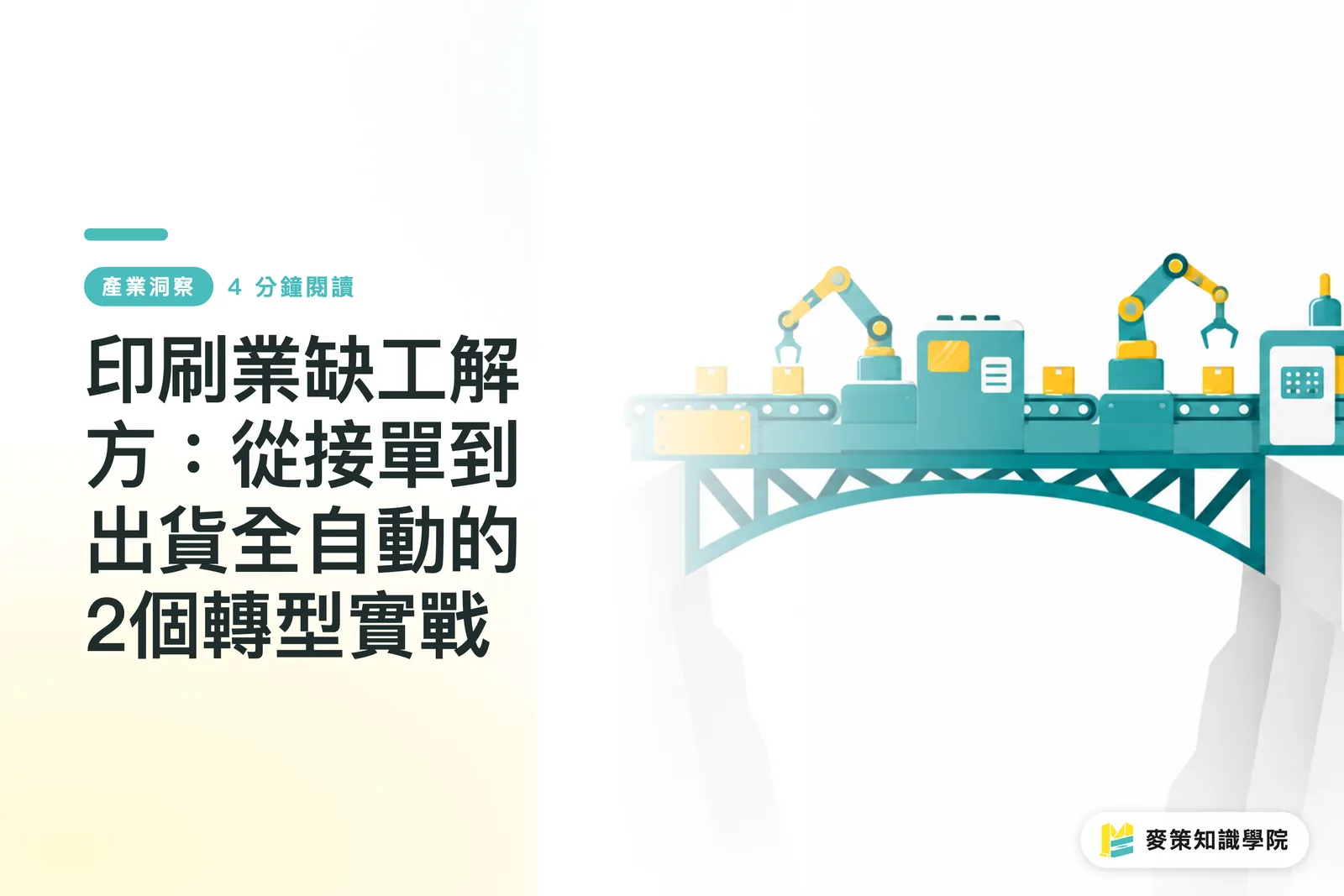
Why Competing on Machine Capacity Alone No Longer Works
Labor shortages and fragmented custom orders are eating away at the razor-thin margins of traditional print shops
That has been my clearest takeaway from visiting shop floors and talking with clients lately
At the recent Obility Insight event, Frank Siegel from Obility's leadership team pointed out a clear pain point: everyone is buying faster machines, but job tickets and files are still stuck in manual prepress and customer service checks
To me, the fix is straightforward: systematize your workflows
Let's define it here. Print Workflow Automation means using software to connect quoting, preflight, production scheduling, and shipping. It removes manual bottlenecks and lets data flow automatically to cut turnaround times
In practice, this transformation happens in a few stages:
・Integrate quoting and inventory to eliminate duplicate data entry
・Build dedicated customer portals to standardize order intake
・Connect digital dashboards so systems direct the production floor instead of relying on a veteran foreman's memory

How a Traditional Print Shop Rebuilt Its Systems in 1.5 Years
German print shop Schwall took a step-by-step approach: consolidate first, then expand. They unified three disconnected legacy quoting systems onto a single platform
A family business originally focused on traditional printing, they began wrapping vehicles and EV charging stations back in 2016
They realized that getting out of the red ocean meant taking on the messy jobs clients hated doing
They launched Schwall Service Solution, which now employs 80 people dedicated to cleaning and maintaining thousands of EV chargers across Germany
To support this cross-industry operation, project lead John Haag spent a year and a half rolling out a new system
They brought together quoting, inventory, and a private customer portal, with a digital scheduling board coming next
Looking at this phased consolidation strategy, here are the key takeaways:
Pros:
・Reduces reliance on individual skilled operators
・Expands service offerings and locks in major end clients
Cons:
・Long transition pains as staff take time to adapt
・High upfront capital and management costs for cross-industry expansion
How Did a Print Shop Branch into Cold Chain Logistics?
To win a major contract for personalized packaging from Storck (merci chocolate), Germany's Traffic Media Group built out a complete food-grade cold chain logistics and tracking system for the client
The company started in document management and direct marketing, but they saw brand demand for small-batch, high-variety runs that go straight to consumers
To handle custom merci packaging and web store orders, they did not stop at printing boxes. They handled food-grade temperature-controlled logistics and production tracking too
This aligns closely with the market trends we have been seeing lately
Brand clients now want full end-to-end traceability all the way into the consumer's hands
If Taiwanese small and mid-sized shops cannot take on heavy capital investments right now, outsourcing mid-to-high-end jobs to a partner like MINDS, with its full customization and supply chain integration capabilities, is a far more practical route
What Should Taiwanese Print Shops and Brands Do Next?
Brands should add data integration capabilities to their print vendor scorecards. Print shops, meanwhile, need to audit how many manual bottlenecks are still choking their floor
If you are a brand buyer, check whether your suppliers can provide API integrations or automated status updates
If you run a print shop, labor shortages will only get worse. Automation is the only way to fill the capacity gap
If you are not sure where to start, reach out to the Mai Strategy Knowledge Academy consulting team
We will help you pinpoint where manual steps create the biggest logjams before deciding whether to bring in new systems or rethink your business model
Don't rush
Getting your internal information flow sorted out is what really matters

Key Takeaways
・With labor in short supply, a print shop's edge is no longer machine speed, but how smoothly data flows from quote to delivery
・Step beyond contract printing. Taking on logistics and end maintenance like German peers is how you raise margins
・Do not rush system rollouts. Taking a year and a half to consolidate existing quoting and inventory is the solid play
・Brands should re-evaluate their vendors, making digital integration capability a decisive factor in awarding print jobs
Food for Thought
Automation and new business models have never been reserved for big players
Smaller print shops actually carry less baggage. They can move quickly to tailor custom services, from print to logistics, for specific key accounts
Software and systems are just tools. The real value lies in your willingness to take on the headaches your clients want off their plates
SaaS providers should notice this gap too. Instead of pushing bloated systems, offer lightweight, easy-to-integrate modules that solve one specific pain point
Further Reading
FAQ
- Will bringing in new systems trigger pushback from veteran staff?
- It certainly will, which is why you should never roll everything out at once. Follow Schwall's example in Germany: take a year and a half to launch in phases, starting with quoting modules that save them from repetitive data entry
- We are just a small print shop. Do we really need to get into logistics?
- You don't need to buy your own trucks, but you do need the ability to track shipments for your clients. Driven by ESG and targeted marketing, this has become a non-negotiable requirement for brands
- We can't find skilled press operators due to labor shortages. Can automation fix that?
- Software cannot match colors for you, but it can automate prepress file checks and job scheduling so your press operators can spend their valuable time running the machines
Related articles


The Print × AI weekly
The print and AI know-how designers, brands and enterprises can use before they commit — one email, every week
MINDS Free Tools
AI background removal, brand stamping, and a LINE sticker maker — free design tools, right in your browser, no upload.
MINDS Group
Need actual printing or gifting services?
From premium printing to online ordering and festive gifts — the MINDS Group sister brands take it from here.