
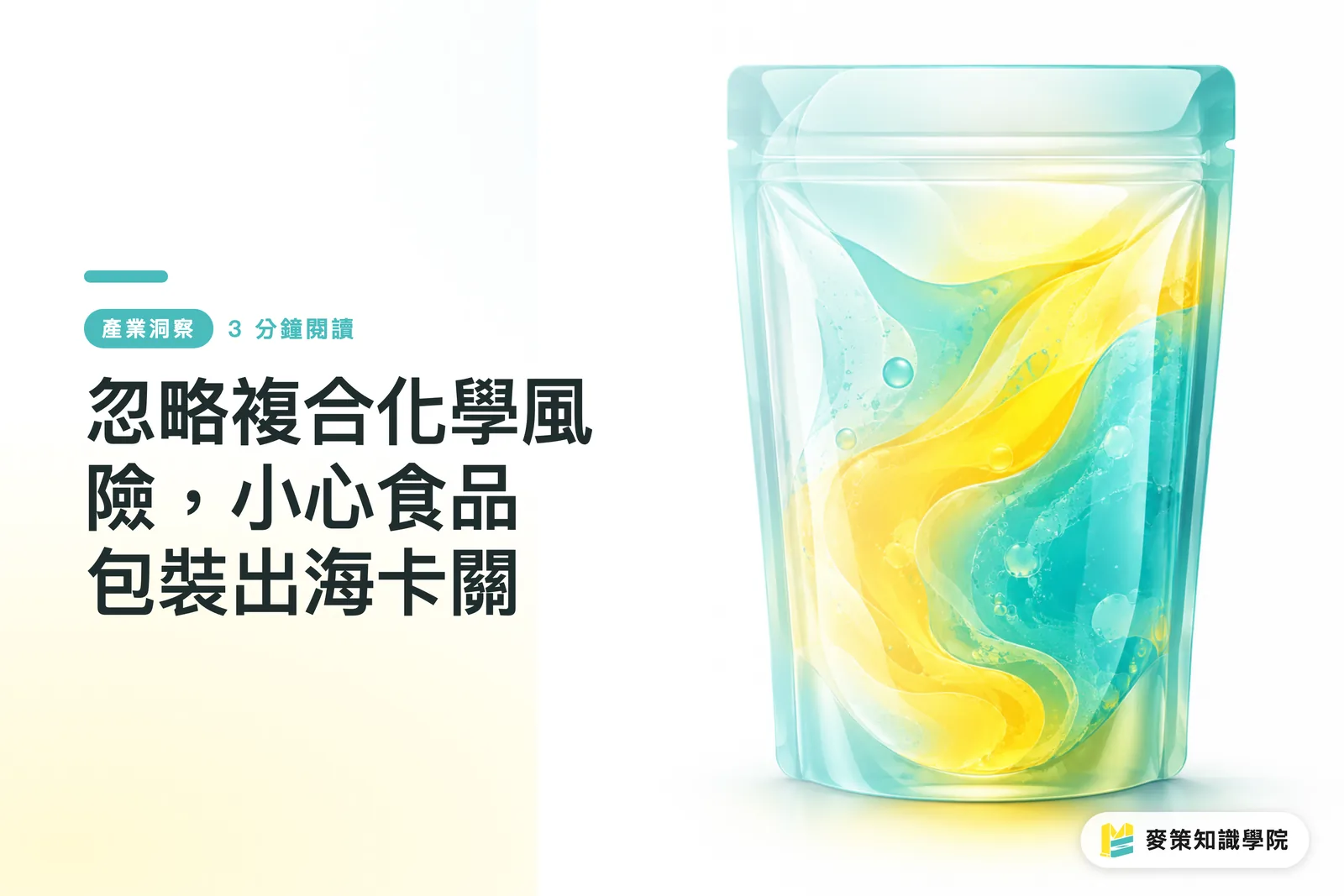
Why Are Scientists Pushing for Strict Group-Based Scrutiny?
Group-based scrutiny evaluates food contact materials by treating chemicals with similar structures or combined uses as a single cluster, rather than looking at individual substances in isolation. It stops manufacturers from dodging regulations with slightly modified chemical substitutes
Scientists recently urged regulators to rethink their approach, warning that traditional single-substance testing often underestimates the real risks of chemical combinations
In my decade-plus working between print shops and brands, suppliers felt safe as long as they had a passing test sheet for individual inks or adhesives
Modern flexible food packaging, however, often layers a PET substrate with an aluminum moisture barrier, topped by a matte film and multiple inks. The 'cocktail effect' of all those stacked chemicals is exactly what Western researchers are zeroing in on right now

Pass One and You're Fine? The Blind Spots of Traditional Testing
Traditional testing checks whether individual substances stay below thresholds. Group-based scrutiny focuses on the combined risks when multiple chemicals stack up
To grasp the shift, look at the core difference between the two methods:
・Traditional testing: If a specific single substance stays under the legal limit, it passes
・Group-based scrutiny: Clusters functionally similar chemicals of concern together. If the total volume or combined risk exceeds safety thresholds, it fails
Handling export projects over the past few months, I have watched the regulatory net tighten fast. The US Food and Drug Administration (FDA) is moving to close loopholes around food contact substances, while the EU Packaging and Packaging Waste Regulation (PPWR) mandates packaging reduction
If brand owners stick to the old mindset of 'as long as this ink has a lab report, we are good,' they will run straight into trouble at customs or spot checks in Western markets
How Small Brands and Packaging Converters Should Respond
To prepare for tighter oversight, brands have to simplify packaging chemistry and build traceability right from early development
When the red line shifts from single substances to combined risk, the entire supply chain playbook changes. Packaging design and procurement have to step in early
・Simplify chemistry: Cut unnecessary functional coatings and complex additives. The simpler the structure, the lower the risk under group scrutiny
・Move toward monomaterials: This satisfies PPWR recycling rules and cuts down on the complex chemical adhesives needed to bond disparate materials
・Build chemical traceability: Brands must demand full ingredient disclosures from packaging converters for every laminated layer, rather than settling for a generic heavy metal test on the finished pack
With these structural regulatory updates rolling in, get professional guidance early if you are unsure whether your packaging crosses the line
You can ask the Mai Strategy Knowledge Academy consulting team to audit your current packaging materials, or partner with MINDS during prepress to weed out high-risk chemical inputs, keeping your budget focused on what is safe and verifiable

Key Takeaways
・Food packaging safety is shifting from individual substances to group-based scrutiny, with the 'cocktail effect' of combined chemicals taking center stage
・A clean test report for a single ink or coating is no longer enough. The cumulative risk across all laminated layers is the new export standard
・Trimming unnecessary coatings and complex additives to simplify packaging structure is the safest hedge for brand owners
Further Thoughts
When scientists evaluate chemicals of concern together, the line between chemical safety and eco-friendly recyclability blurs
Food packaging development can no longer outsource design, printing, and material selection in separate silos
Brand owners should bring printers in as compliance advisors right at the ideation stage to review the entire chemical profile of the packaging. Over the next three years, this will become table stakes for export brands
Further Reading
FAQ
- What is group-based scrutiny for chemicals in food packaging?
- Instead of inspecting individual chemical ingredients in isolation, regulators evaluate clusters of chemicals of concern that share similar structures or common uses. This keeps manufacturers from finding loopholes with slightly altered formulations
- Does this affect food packaging already on retail shelves?
- If your packaging uses multi-layer barrier coatings or complex inks, you could face recalls or forced redesigns under stricter Western spot checks and new rules if group-level risks exceed legal limits
- What practical steps can brands take when redesigning their packaging?
- Start by auditing every food-contact chemical layer in your current packaging. Next, switch toward monomaterials and cut back on functional coatings. The simpler your packaging build, the better your odds of passing group-based scrutiny
Related articles



The Print × AI weekly
The print and AI know-how designers, brands and enterprises can use before they commit — one email, every week
MINDS Free Tools
Spine width and imposition calculators — skip the manual math, free in your browser.
MINDS Group
Need actual printing or gifting services?
From premium printing to online ordering and festive gifts — the MINDS Group sister brands take it from here.