

Put the Department in the Wrong Spot, and Budgets and Decisions Take Detours
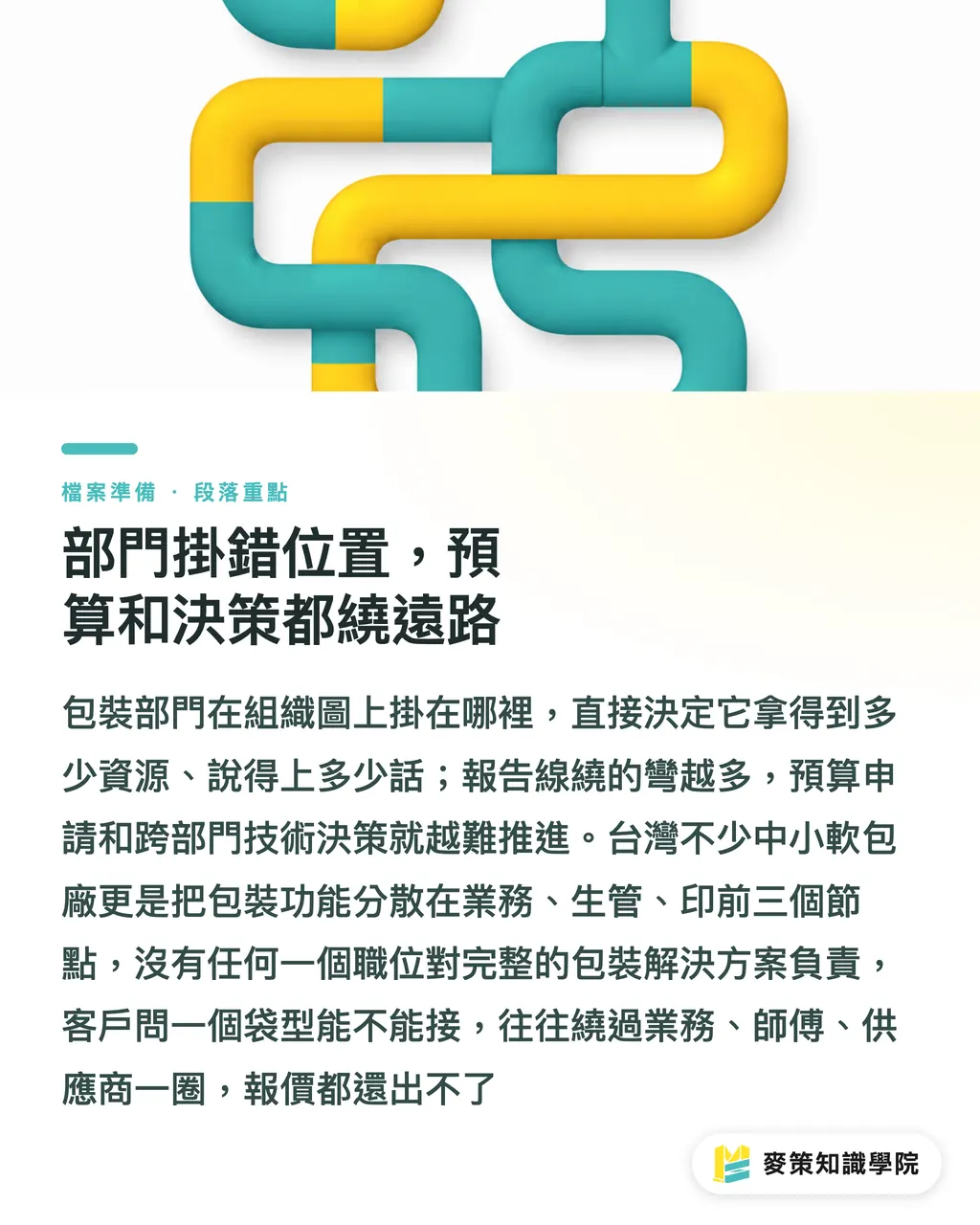
Flexible packaging plants rarely treat organizational design as a serious topic. Most of their time goes into picking equipment, sourcing raw materials, and running proofs for clients. But when Jay Gouliard sat down for an interview with the Flexible Packaging Association (FPA), it was the first thing he pointed out. Org chart placement varies wildly from company to company. Some put packaging under marketing, some under procurement, some under R&D, and some keep it standalone. The original FPA piece compared the reporting line between packaging and the CEO to a Chicago highway under construction. The more detours it takes, the harder it is for budget requests and technical decisions to get heard
Gouliard brings 38 years of experience across Coca-Cola, Unilever, General Mills, Mondelēz, and Anheuser-Busch. His point was not that one specific setup fits every company. Rather, where you report dictates the resources you can tap, and when a new technical requirement demands cross-department collaboration, it decides whether you operate on the same level or spend weeks waiting for someone else's sign-off
From my years observing Taiwan's supply chain, packaging responsibilities at many small and mid-sized converters are scattered across sales intake, production scheduling, and prepress proofing. Not a single role owns the entire packaging solution end to end. A client asks whether the plant can run recyclable, mono-material PE pouches. Sales asks the press operator, the press operator asks the substrate supplier, and the supplier says it depends on the print specs. After a full circle of questions, the plant still cannot get a quote out the door
Hit by New Substrates, PPWR, and Digital All at Once: Can Old Structures Survive?
The short answer: it depends, but for most small and mid-sized plants in Taiwan, the old setup is definitely on thin ice
PPWR stands for the EU's Packaging and Packaging Waste Regulation, which enforces strict recyclability rules on packaging exported to Europe starting in 2025. Brand owners already ask for post-consumer recycled (PCR) content percentages, recyclability certifications, and full material breakdown during initial inquiries. In the past, converters could wait until a buyer asked. That approach no longer works
The pressure from new substrates is even more immediate. Mono-material flexible packaging, such as all-PE or all-PP pouches, demands different technical standards than traditional PET/PE laminates. Prepress settings, ink selection, and heat-sealing windows all require recalibration. Without someone screening these technical factors before accepting an order, problems surface right in the middle of a print run
On the digital short-run side, small-batch, multi-SKU orders keep growing. A single brand might run a dozen flavor variations in one production cycle. That tests version control and color consistency. The traditional model of "prep the design once and run it long" simply cannot keep up
All three pressures share one common reality: different functions need to step in together before quoting, instead of waiting in line for handoffs
Where Do Department Boundaries Break Down the Most?
Gouliard's interview focused on four core functions: prepress, production, sales, and sustainability. Major corporations have dedicated heads for each. Small and mid-sized plants usually split them among two or three people, or lack clear divisions entirely. Here is where the lines blur most often:
・Prepress vs. Production: If prepress only cleans up designer files, technical quality control falls entirely on the press operators. A better approach is having prepress confirm whether the specs can actually run on that specific line before sales accepts the order, rather than waiting for the operator to hit start before spotting trouble
・Sales vs. Sustainability: Accredo Packaging appointed a full-time Chief Sustainability Officer, sending an unmistakable signal: buyer questions about sustainability have moved from PR inquiries to purchasing criteria. Sales reps cannot answer questions about PCR percentages and recycling certifications on their own. Someone in the plant must own this knowledge so sales has reliable data to share
・Sales vs. Prepress: When a client submits final artwork, who decides if it is press-ready or needs revisions? If the answer is "everyone looks at it together," that means nobody is accountable
Where Should Small and Mid-Sized Converters in Taiwan Start?
You do not need to tear down your entire org chart overnight. Start by identifying the weakest link right now
Three diagnostic questions can pinpoint the problem quickly:
・When an inquiry for a new substrate arrives, who owns the technical evaluation?
・When a client requests recyclability certificates, who gathers the paperwork?
・When handling digital short-run revisions, who leads version control?
If you have clear names for all three questions, your team structure is in good shape. If any answer is "everyone pitches in," you found your blind spot
Define the sustainability role clearly. You do not necessarily need a dedicated hire, but someone must have this responsibility written into their job description, along with direct access to material spec sheets and vendor certifications
Shift prepress upstream. Involve prepress staff in technical assessments while sales is still qualifying the order, instead of waiting for finished artwork to arrive before discovering issues. It costs the least and delivers the fastest payoff
If your packaging prepress workflow needs a thorough review starting from print production specs, MINDS has extensive hands-on experience handling custom flexible packaging and can verify specification feasibility directly from the artwork stage
Key Takeaways
・Where packaging sits on the org chart is not a neutral administrative detail. It dictates the speed of technical decisions and how much budget authority you have
・Blurry lines between prepress, sales, and sustainability cause client inquiries for new substrates to stall in the gaps
・PPWR compliance has shifted from "wait until the client asks" to an upfront technical baseline before booking orders
・To check team health, ask three questions: Who evaluates new materials? Who manages certification documents? Who oversees short-run revisions?
・Moving prepress upstream to verify orders during quoting is the lowest-cost, most direct operational improvement you can make
Further Thoughts
Across five industry giants over 38 years, Gouliard observed one constant truth: major corporations treat the org chart as a strategic tool. Packaging roles follow business needs, not individual personalities. For smaller converters, the struggle is rarely a lack of awareness. It comes down to lean headcount and multi-tasking staff, making defined roles feel like an unaffordable luxury. But PPWR will not relax rules just because you are a smaller shop, and buyers will not hold back sustainability questions just because you lack a Chief Sustainability Officer
The most practical next step: set aside a morning to trace your workflow from prepress to sales to shipping. Note down who catches the ball if something goes wrong at each step. Anywhere you find a blank space is your org design to-do list
Further Reading
FAQ
- Where should a flexible packaging plant place its packaging department?
- Gouliard does not offer a single one-size-fits-all formula. If packaging demand is driven primarily by customers, placing it under sales or marketing speeds up turnaround. If the focus is resolving technical production hurdles, placing it under R&D or manufacturing makes more sense. The priority is cutting down the layers between packaging and the CEO so technical decisions and budget requests get heard
- Do small and mid-sized flexible packaging plants in Taiwan need a dedicated sustainability department?
- Not necessarily as an independent department, but someone must have this responsibility tied to their name in their job description. Start by appointing a dedicated sustainability liaison to compile material certificates, track PCR percentages, and handle recyclability inquiries. That is far better than leaving it unassigned
- Does PPWR affect converters in Taiwan that do not export to Europe?
- The direct impact depends on whether your clients sell into Europe. Even if they do not, building the capability to trace material composition and evaluate recyclability prepares you for similar regulations in other markets. Establishing these workflows early takes far less effort than scrambling when a major client suddenly demands them
- How do you shift prepress upstream in practice?
- When sales receives an RFQ involving new substrates or unfamiliar specs, have prepress review the technical print feasibility before replying to the client. In practice, prepress checks the material specs and artwork requirements before the formal quote goes out to confirm there are no production incompatibilities. Moving this review early prevents messy surprises after the order is already booked
Related articles





The Print × AI weekly
The print and AI know-how designers, brands and enterprises can use before they commit — one email, every week
MINDS Free Tools
AI background removal, a LINE sticker maker, spine & imposition calculators — all free, right in your browser, no upload.
MINDS Group
Need actual printing or gifting services?
From premium printing to online ordering and festive gifts — the MINDS Group sister brands take it from here.