

What changed about packaging QR codes?
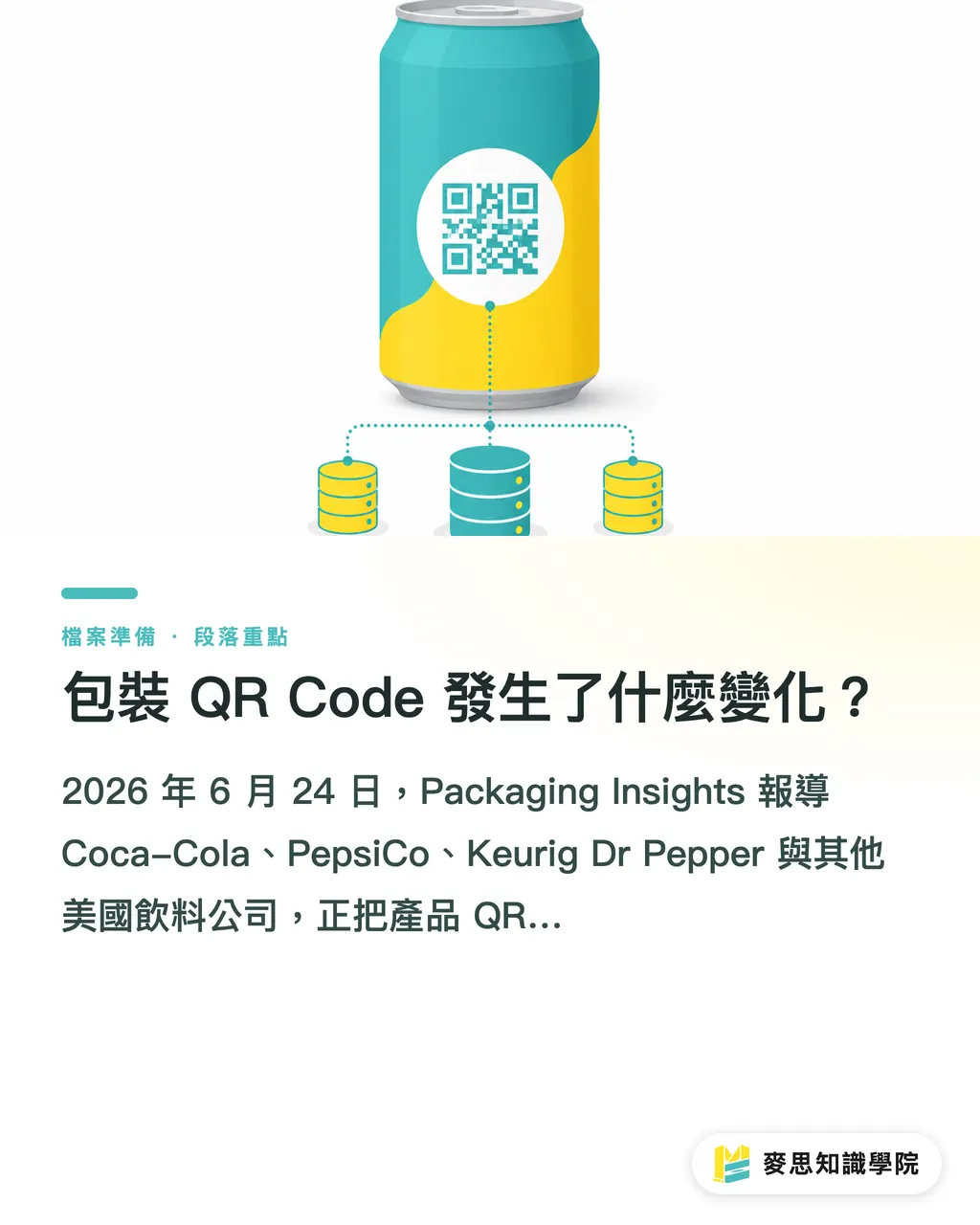
On June 24, 2026, Packaging Insights reported that Coca-Cola, PepsiCo, Keurig Dr Pepper, and other US beverage companies are hooking their product QR codes into American Beverage's Good to Know Facts database
The point here isn't one more scan-to-page experience. Three major beverage brands have linked packaging, ingredient data, and public safety assessments on the same chain
Good to Know Facts covers more than 140 beverage ingredients, with usage, function, and safety assessment context. When consumers scan the QR code on a can or bottle, they get a fuller explanation than any traditional label can fit
From what I've seen on packaging projects, QR codes have moved from a promo entry point to a product-history entry point. That little black-and-white block on the artboard is now tied to brand promises, regulatory liability, and supply-chain data
Why I'd say QR codes are starting to look like contracts
Package text used to be a static promise. Once printed, it was fixed. QR codes turn that promise into an updatable, auditable, traceable data entry point
As Packaging Insights notes, Good to Know Facts pulls together public safety assessments from the FDA, EFSA, Health Canada, and JECFA when needed. That puts QR-code content close to a citable reference document
My take is straightforward: when the data behind a package gets read by consumers, brand legal, procurement, and regulators, what a print shop hands over isn't just image quality. It includes the correctness of the data entry point
This is where Digital Product Passport (DPP) is making the packaging industry uneasy. The DPP conversation in Europe has already framed 2027 as a prep deadline for packaging. QR codes will keep looking more and more like a product's legal address
What fundamentals will print shops get tested on first?
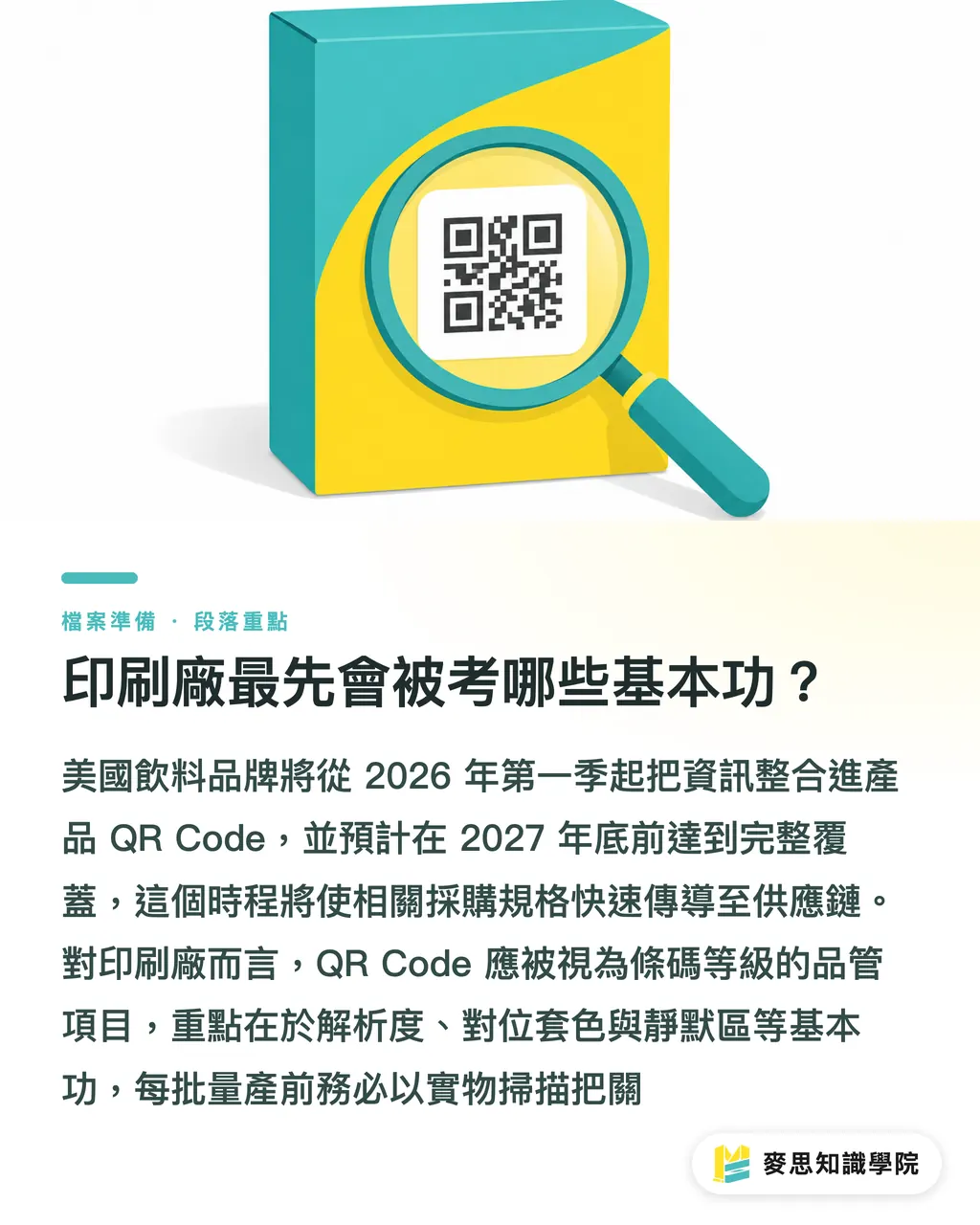
American Beverage says US beverage brands started integrating Good to Know Facts into product QR codes from Q1 2026, targeting full or near-full market coverage by the end of 2027
That timeline lands hard on Taiwan's export brands and contract-manufacturing supply chain, because once the big brands move, the spec change rolls down to smaller suppliers fast
・Resolution: QR Code modules that are too small, dot gain that's too heavy, or substrate that soaks up too much ink can all drag scan rates down
・Registration and trapping: a black code sitting on a multicolor background, metallic ink, varnish, matte film, or a curved bottle can look great in design and still fail on the line
・Quiet zone: a lot of designers push imagery, copy, or brand color right up to the QR code edge. For a compliance entry point, that's a high-risk move
・Variable data: when different batch numbers, SKUs, languages, or channels route to different pages, the prepress file, database, and shipping list have to match up
・Scan QC: every production run needs a physical scan check before going live. Screen previews aren't enough, and digitized proofs can't be trusted on their own
I'd tell print shops to treat QR codes as a barcode-grade QC item, not a decorative element in the artwork. Shift that mindset, and a lot of prepress errors surface way earlier
How small and mid-size brands can turn QR codes into an asset
The same Packaging Insights report cites an Appetite Creative and Koenig & Bauer survey this year showing packaging industry confidence in connected packaging at 92.3%
That isn't a vanity number. It signals that brands are treating packaging as the meeting point of a data entry point, an after-sales entry point, and a compliance entry point
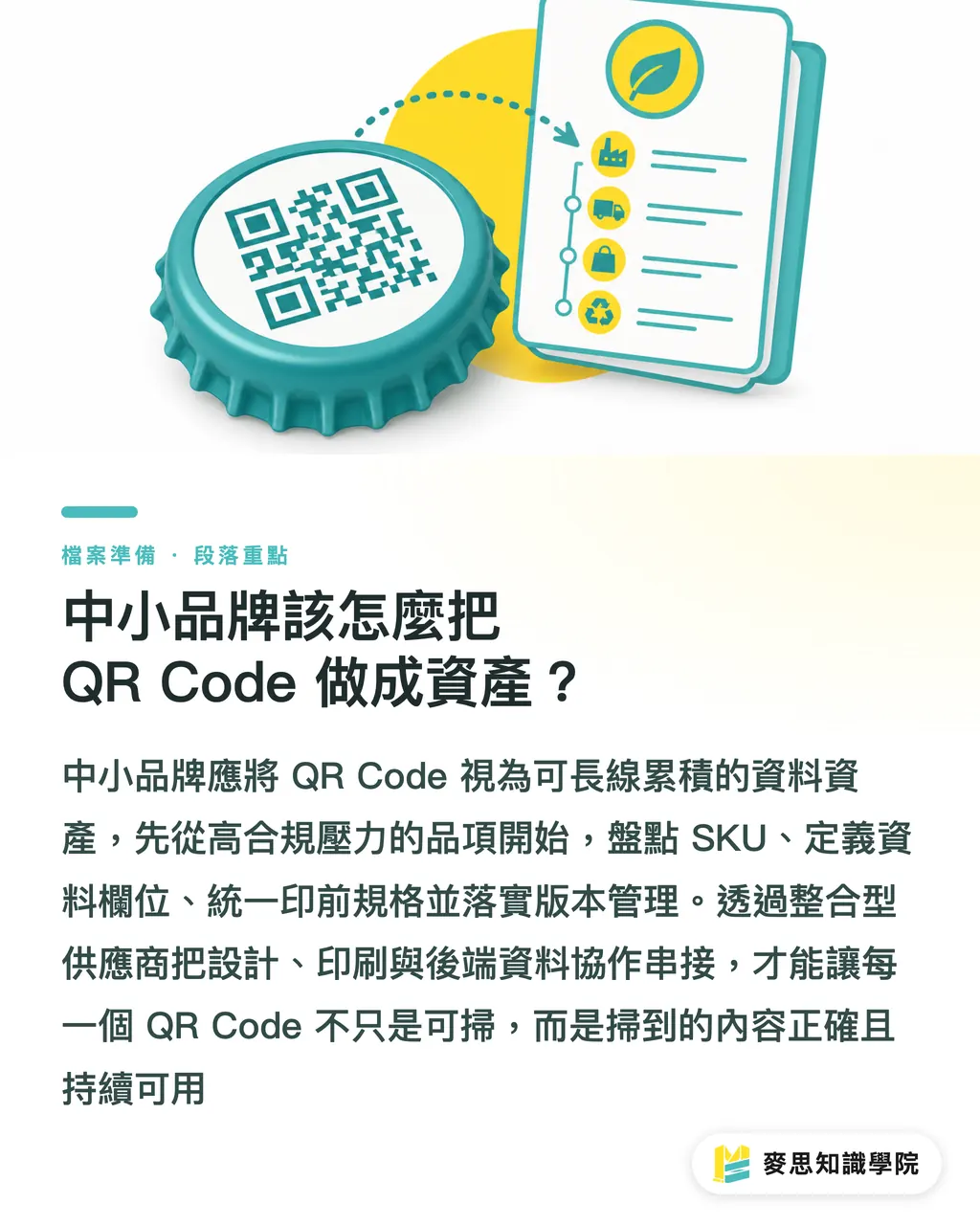
Korean bottled water has gone the label-free route, with product info delivered through a cap QR code. UK brand Twinings has rolled out accessible QR codes and GS1 Digital Link QR codes so visually impaired consumers can grab packaging info more easily
Small and mid-size brands can start with four moves
・SKU audit: flag the SKUs under the heaviest compliance pressure, like export, food, beverage, beauty, and kids' products
・Define data fields: ingredients, origin, allergens, batch numbers, recycling info, certification docs. Don't scramble to add them at the next revision
・Set QR code spec: write size, quiet zone, color contrast, and material limits into the prepress guidelines
・Build version control: packaging files, QR code URLs, page content, and review records need to roll up under the same version
The value an integrated supplier like MINDS brings is connecting design, prepress, printing, and back-end data handoff, so QR codes go from "scannable" to "scannable, and the content is right"
Quick recap
・The new value of QR codes isn't traffic. It's turning packaging into a product-history entry point
・Big brands are wiring ingredient transparency into QR codes first. The mid- and small-tier supply chain will be asked to follow soon
・What print shops will deliver going forward is a scannable, readable, traceable data address
・Variable data, scan QC, and version control are becoming new prepress basics
・Designers need to treat QR codes as information architecture, not a black-and-white block in a corner of the layout
Where to take this next
For the print manufacturing side, the work to add now is physical QR code scanning, variable data proofing, and batch records. For the design side, GS1 Digital Link, quiet zone, contrast, and accessibility need to land in the design spec. For AI and SaaS teams, the play is helping brands organize ingredients, certifications, batch numbers, and packaging versions so the data can be reviewed, updated, and correctly linked to the package. The next move is grounded: pick three high-risk SKUs, draft a QR code prepress spec and a data field checklist, then run a short print to verify scan rate and content review workflow
Further reading
FAQ
- How does Digital Product Passport relate to packaging QR codes?
- Digital Product Passport asks that product information be auditable and traceable. QR codes are the easiest entry point to put on a package. They link the physical pack to ingredients, materials, origin, recycling, or safety assessment data
- Why do packaging QR codes affect print shops?
- Once a QR code ties into compliance data, a print error stops being a cosmetic issue. Resolution, contrast, trapping, substrate, varnish, and variable data all affect scan success and data accuracy
- Do small and mid-size brands need to roll out DPP right now?
- Full DPP isn't required on day one. But it's worth starting with an SKU audit, data field definitions, QR code spec, and version control. When a big client or export channel starts asking, there's no catching up from scratch
- What does GS1 Digital Link mean for designers?
- GS1 Digital Link lets a QR code carry product identification and web info at the same time. Designers need to leave enough space, keep scan contrast solid, and confirm with prepress that the substrate and finishing won't break readability
- How can MINDS help on these packaging projects?
- MINDS can come in across packaging design, prepress check, QR code physical testing, material selection, production QC, and data version coordination, so brands build the compliance entry point into the packaging flow rather than slapping a code on at the end
Related articles

The Print × AI weekly
The print and AI know-how designers, brands and enterprises can use before they commit — one email, every week
MINDS Free Tools
Spine width and imposition calculators — skip the manual math, free in your browser.
MINDS Group
Need actual printing or gifting services?
From premium printing to online ordering and festive gifts — the MINDS Group sister brands take it from here.