
Can the Old Die Be Reused? Run Your Artwork Through MINDS Printing's Three Diagnostic Checks First
When multiple SKUs aim to share an existing die plate, the deciding factor is whether the finished dimensions and crease-line positions line up exactly. As long as the structural geometry matches and the paper weight shift stays under 0.05mm, reusing the old die saves you thousands in tooling fees. At MINDS Printing, we run incoming artwork through the MS (mid-to-high-end fully custom commercial printing) three-check process to help clients nail down structural compatibility before placing an order
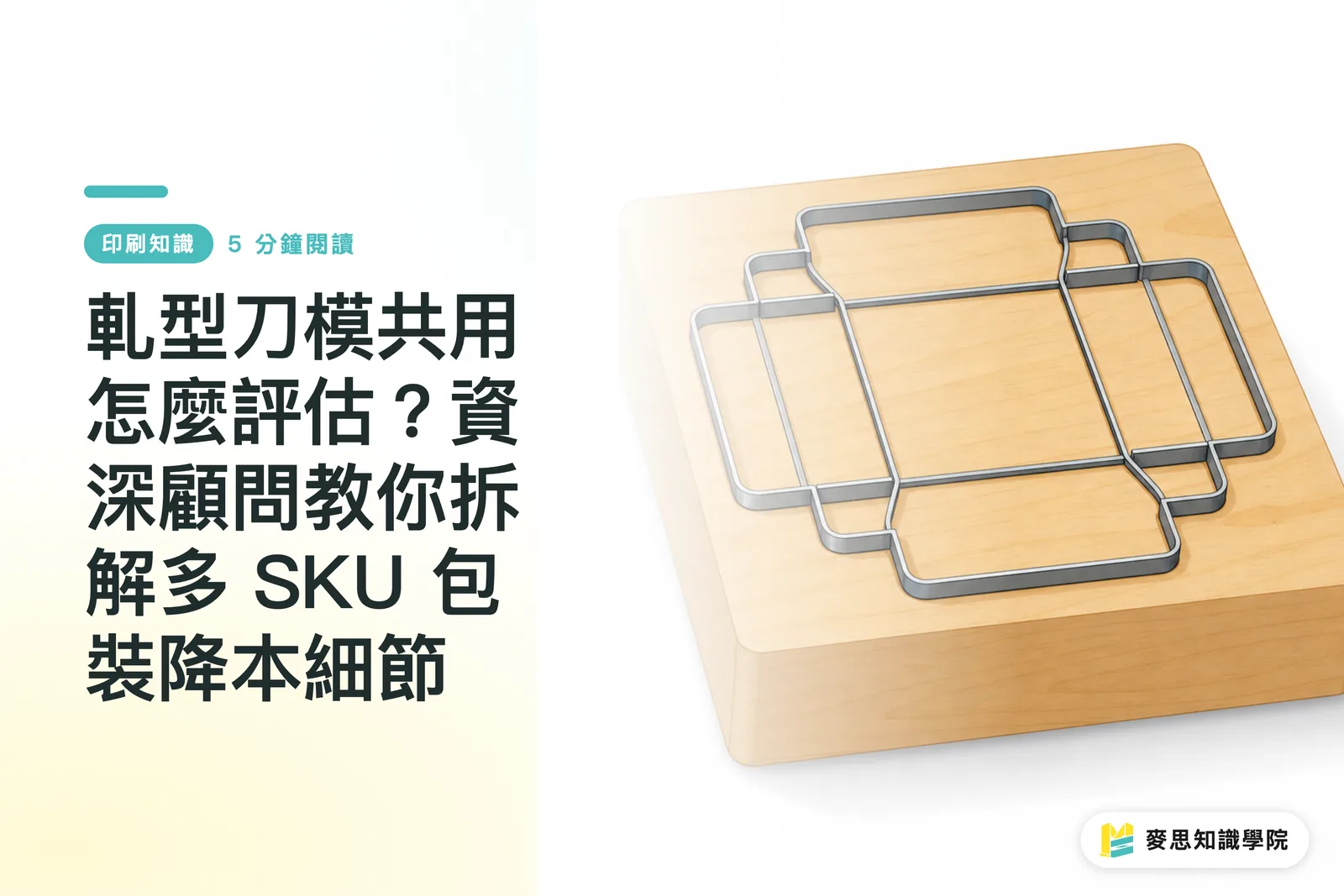
A die-cut tooling plate is a post-press tool that embeds steel rules and crease rules into a plywood base, used to cut the paper's outer shape and fold lines
It looks like nothing more than a wooden board with metal strips, but it decides whether the whole batch of packaging folds together cleanly
In actual production, the assembly tolerance between the steel rules and crease rules is usually held within 0.3mm
A lot of people assume that as long as the length, width, and height match, they can drop the old die right onto the new job, then end up with boxes that won't close or corners that blow out
Hold off on that order
To figure out whether the old die still works, diagnose from these three angles:
・Geometric consistency: length, width, height, and the closure points on the finished piece must overlap exactly
・Crease line and fold position: if the fold line drifts more than 0.5mm, the box body will skew noticeably when assembled
・Compatibility with downstream finishing: check whether foil stamping, spot UV, or window cutout positions will land on the die's cut lines

Which Design Tweaks Will Kill the Old Die on the Spot?
When designers branch out into new SKUs, they often think they're just adjusting a small detail, but the die is already done for
Any one of these structural changes means a new die, no exceptions:
・Finished dimensions and outline: shift the length, width, or height by even 1mm and every steel rule on the board has to be repositioned from scratch
・Crease and fold positions: moving a fold line changes the bending radius of the board, so the old crease rule won't cut it
・Hole sizes and corner radii: hang-hole diameters on tags or card sleeves, or the R-angle on the four corners, different values mean ragged cuts
・Lock tabs and glue flap structure: lock-tab tolerances are brutally sensitive, and the wrong size will either make the lid pop open on its own or tear from being too tight
・A big jump in paper caliper: this is the trap everyone misses
Take swapping 350g coated paper for 400g gray-back whiteboard, that's an extra 0.12mm in thickness
Sounds tiny, but it shifts the folding angle inside the glue flap by nearly 2 degrees
At auto-gluer speeds, that 2-degree drift is enough to jam the machine over and over
How to Plan a Shared Die for Multi-SKU Packaging and Sticker Sleeves
For brands running multiple products, sharing a die is one of the main ways to keep production costs in check
Whether it's folding cartons, stickers, product hang tags, or card sleeves, locking down standard sizes early on spreads the tooling cost across the whole line
The answer is straightforward: build a standard into the design phase
Say a beauty brand rolls out 12 scent variants of essential oils, we'd recommend standardizing on a 60×60×120mm tuck-end box before going to final art
All 12 SKUs then share the same die, and a single print run saves close to NT$30,000 in tooling and proofing fees
If you're not sure whether your existing vector files are compatible, you can also reach out to the Mai Strategy Knowledge Academy consulting team for a structural review
We constantly see designers change a sticker's corner radius from R3 to R5 — looks minor on screen, but the steel rule radius on the old die is locked in, and forcing the match will tear up the cut edges
What Files Should Procurement Prep Before Requesting a Quote?
When buyers are asking printers for quotes or checking whether an old die can be reused, handing over complete files saves a ton of back-and-forth
The more complete the package, the more accurate the estimator and structural engineer can be
Before requesting a quote, get these files and details ready:
・Vector file of the old die: the original AI or CAD file with cut lines, crease lines, and tear lines
・Physical samples or photos: shots of the closure points and glue flap on the assembled old package
・Clear packing method: state whether it's hand-assembled or run on an automatic packaging machine
・Paper material and basis weight: specify the caliper so crease-line spacing can be calculated
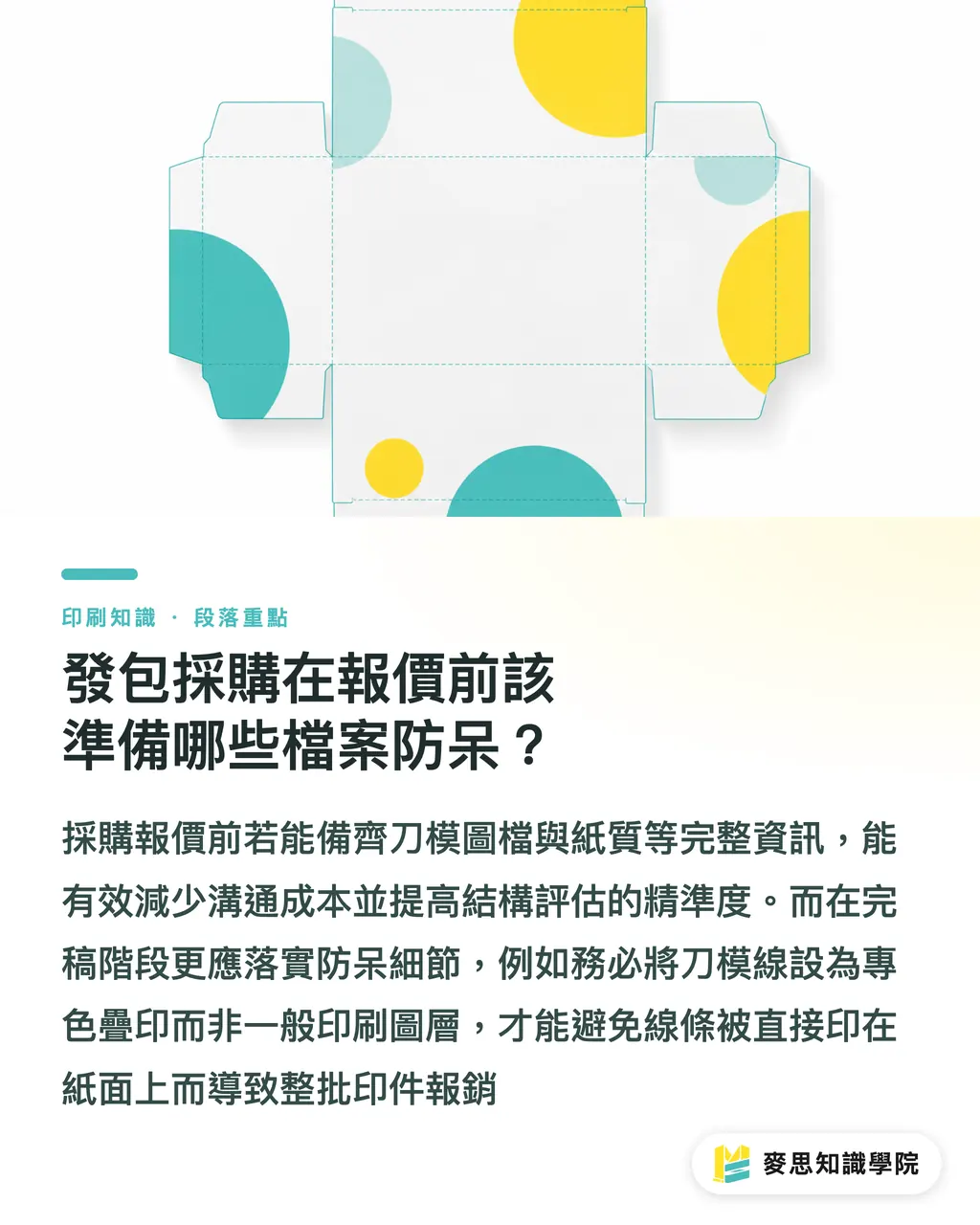
Bulletproofing matters just as much at the final-art stage
If the artwork file sets the die line as a K100 regular print layer instead of a spot color set to Overprint, the CTP plate-making step will burn the die line straight onto the paper
Once that line is printed, the entire batch is scrap
Key Takeaways
・If finished length, width, height, or fold position moves by even 1mm, a new die-cut plate must be cut
・A paper weight increase over 0.1mm shifts the bending radius; forcing the old die will cause auto-gluer jams or loose closure
・For multi-SKU packaging, lock down the box spec early in the design phase so one set of tooling amortizes tens of thousands in proofing and production costs
・Sending the old die's vector file, physical photos, and packing method before the quote lets the printer quickly judge whether the die can be shared
・At final art, the die line must be set to a spot color with Overprint on, so it doesn't get printed onto the finished surface
Further Thinking
The handoff between print manufacturing and graphic design is going digital fast. Die geometry compatibility, once judged by a craftsman's eye, can now be pre-screened with AI and pre-press automation tools. For SaaS developers and the MINDS team, modularizing 'die-line overlay comparison' and 'paper-thickness crease compensation' would let procurement and designers run a real-time feasibility check on whether an old die can be reused, making the path from design to production genuinely seamless
FAQ
- The sticker or hang tag has a different corner radius, can it still share the old die?
- No. The steel rule's bend radius is fixed when the plywood die is built, so going from R3 to R5 means a new die. Otherwise the edges will tear or come out ragged
- The box dimensions are identical, but paper weight goes from 300g to 400g, can the die be reused?
- Not directly. The added caliper changes the tight tolerances in how the box folds, and the old die's crease spacing will be too narrow, expect cracking or a lid that won't sit flat
- How do I evaluate at the design stage whether multiple SKUs can share one die?
- The most effective move is locking down a unified structural blueprint early. Constrain every SKU to identical box dimensions, lock-tab position, and glue flap, and only swap out the surface graphics
- If I send the printer the old die's AI file before quoting, does that guarantee 100% reuse?
- Beyond the vector file, you also need to share the final paper weight and the packing method (hand-assembled vs. auto-gluer). Only then can the printer run a full physical-tolerance assessment
Related articles


The Print × AI weekly
The print and AI know-how designers, brands and enterprises can use before they commit — one email, every week
MINDS Free Tools
Spine width and imposition calculators — skip the manual math, free in your browser.
MINDS Group
Need actual printing or gifting services?
From premium printing to online ordering and festive gifts — the MINDS Group sister brands take it from here.