
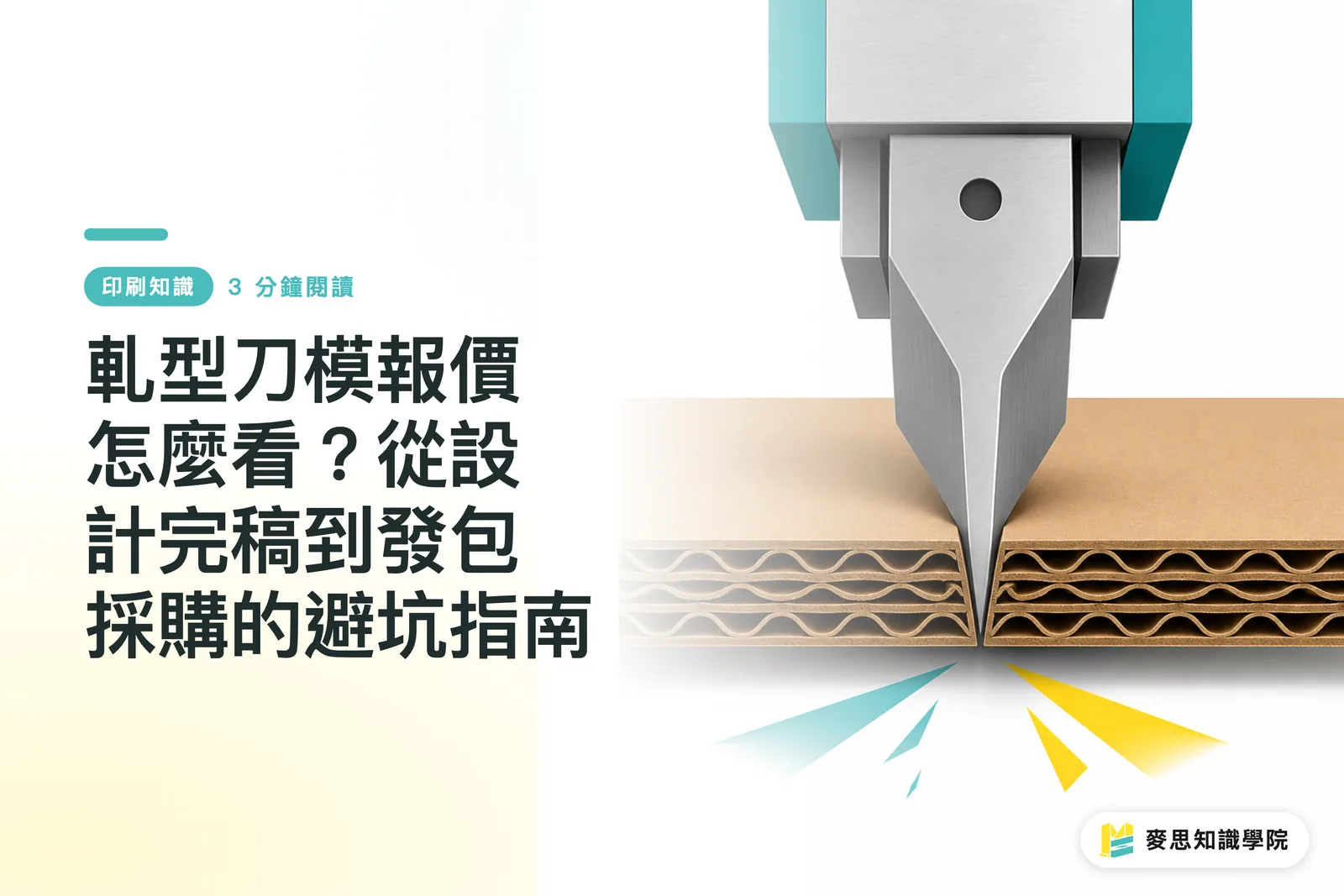
How Are Die-Cutting Fees Actually Calculated?
Many people bring me quotes and immediately ask why the cost this time is so much higher than the last
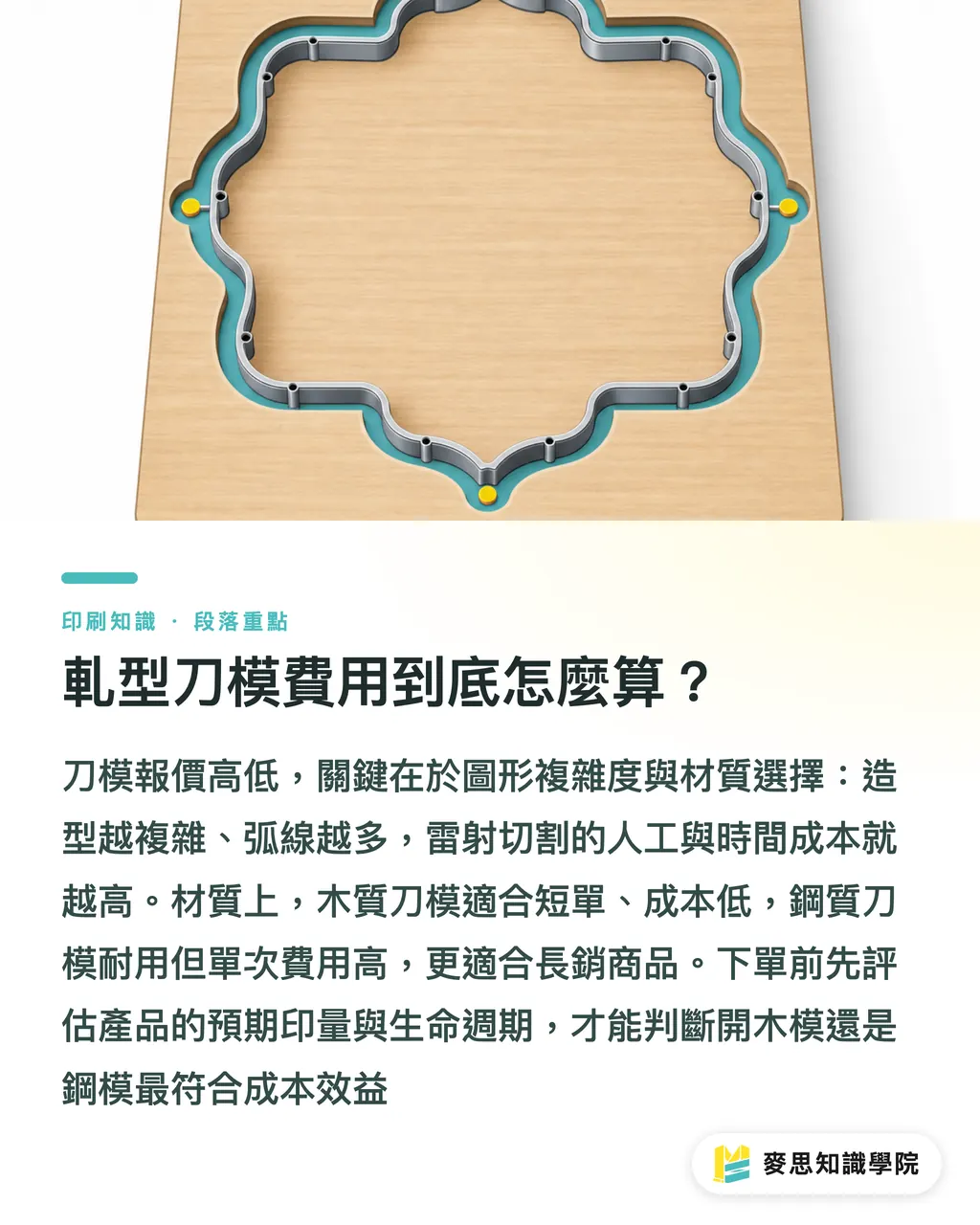
The true logic behind dieline quoting depends on 'design complexity' and 'materials.'
・Complexity determines labor and laser-cutting time: Simple straight-line designs are always cheaper than those with irregular curves
・Materials determine unit price and durability: Wooden die boards cost less and are suitable for short runs, while steel dies cost more upfront but are extremely durable, making them the top choice for long-term products
The industry-standard process is for you to first output an Illustrator vector path, which the plate maker uses to create the die, and finally, the die is loaded onto the machine for die-cutting
Before placing an order, procurement must evaluate the product lifecycle and print run size to determine whether a wooden or steel die is more cost-effective
Why Does My AI Dieline File Keep Getting Rejected for Printing?
Recently, many clients have excitedly brought me beautiful box images generated by Midjourney, asking if they can be sent straight to the production line
On the printing production line, a dieline is an architect's blueprint; it must be a precise 2D vector flat template
To ensure the plate maker and print shop can read your files, there are several technical pitfalls you must avoid during finalization:
・Die lines must be set to a 0.001mm spot color, allowing prepress staff and machines to identify them immediately
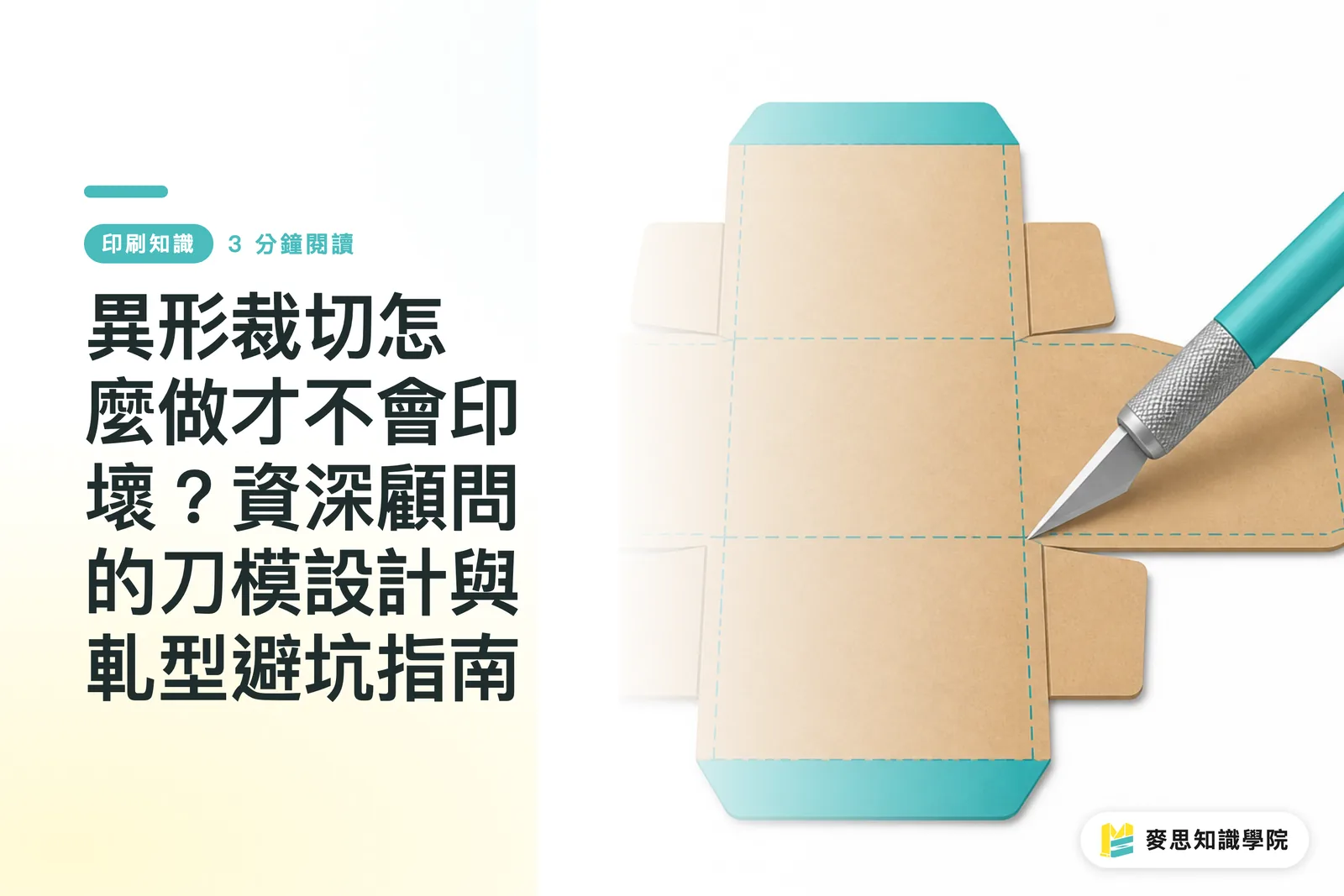
・Clearly distinguish 'crease lines' (usually dashed lines) from 'cut lines' (solid lines); reversing these will instantly ruin the packaging box
・All dieline paths and text must be outlined (converted to curves); otherwise, the output will definitely misalign
・Be sure to check the alignment between the dielines and the printed artwork; insufficient bleed or dieline shifts will result in unsightly white borders after die-cutting
Can Old Dies Be Saved for the Next Run? How Should Small and Medium Manufacturers Respond?
This is the most common procurement myth I encounter on the production line: many people assume a die can be reused forever once it is made
Whether a die can be reused depends on your product type and the physical specifications of the original die
・Stickers, packaging boxes, and custom-shaped business cards vary in plate-making specifications; different materials and thicknesses can never share the same die
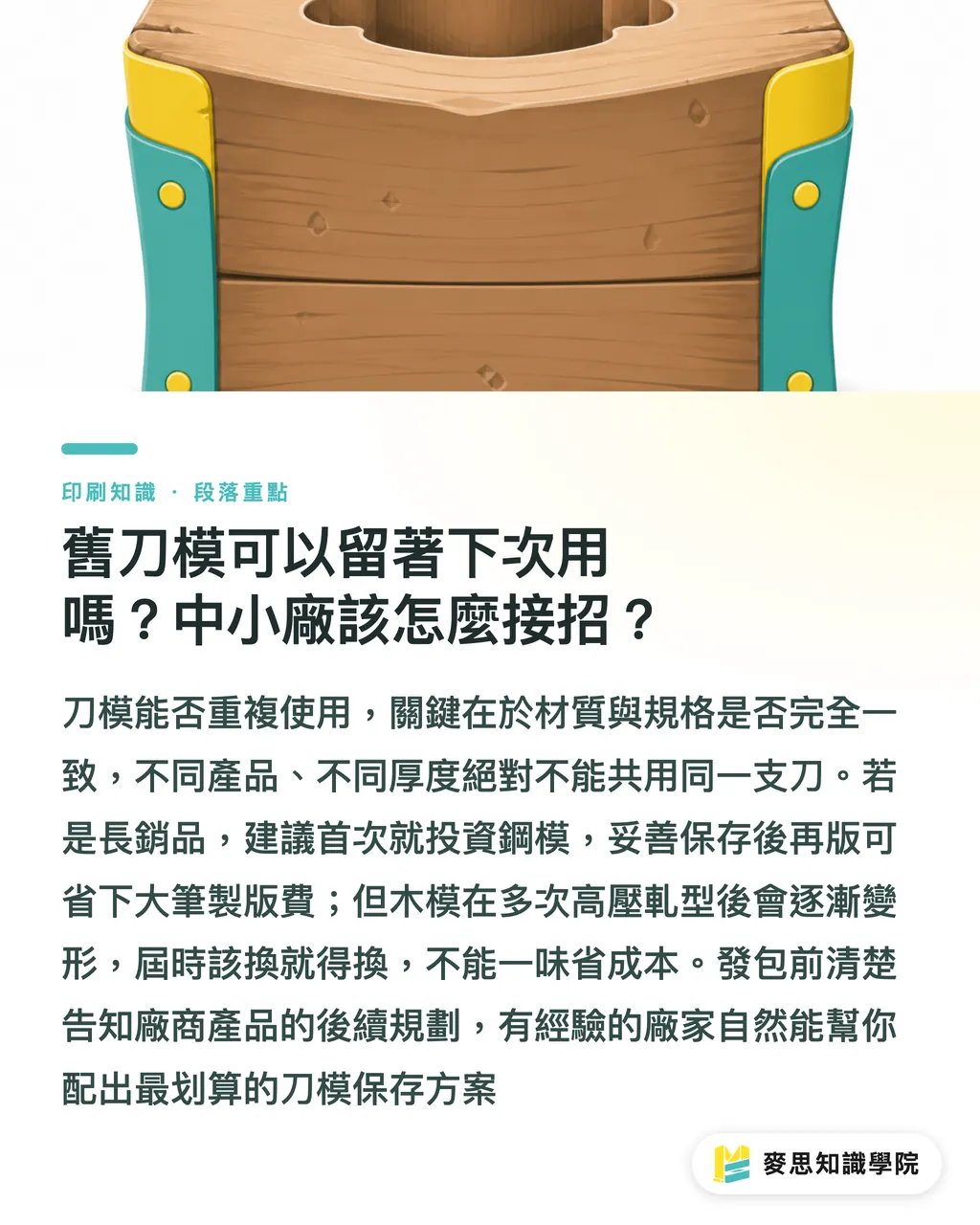
・For long-term best-sellers, investing a bit more in a steel die upfront will save significant plate-making fees on reprints, as long as it is stored in a dry environment to prevent warping
・After each run, request the manufacturer to store the die properly. However, wooden dies will inevitably deform after multiple high-pressure runs, so do not hesitate to make a new one when the time comes
If small and medium manufacturers clearly outline their future product plans when ordering, experienced suppliers can help customize the most cost-effective die storage solution
Key Takeaways
・Die fees are not calculated by weight; the more complex the graphic and the more curves it has, the more expensive it will be
・Finalized files must use vector paths, and die lines must be set to a 0.001mm spot color
・Solid lines cut and dashed lines crease; reversing these two lines will ruin the entire batch of packaging
・Decisively invest in steel dies for long-selling products; the plate-making fees saved on reprints will be well worth it
Further Thoughts
From design to mass production, the dieline is the dividing line between success and failure. That is why MINDS Printing provides a one-stop integrated service, checking prepress files, setting spot colors, and managing backend die storage. We watch over every detail to prevent errors and ensure your creative designs are flawlessly executed
Further Reading
・Calculating Die-Cutting Fees: A Complete Guide from Design Path to Procurement
FAQ
- How much does a die cost?
- There is no standard answer. It depends entirely on the complexity of your design and whether you choose a wooden or steel die. Simple straight-line shapes are the cheapest, while custom shapes full of irregular curves will drive up the cost
- Can packaging designs generated by AI be used to make a die directly?
- Absolutely not. The production line requires precise 2D vector flat templates. You must convert the image into Illustrator vector paths and set the die lines to a spot color to create a die
- Can the same die be used for both business cards and packaging boxes?
- No. Stickers, business cards, and packaging boxes vary in thickness and die-cutting pressure. The plate-making specifications and blade heights are also completely different, so separate dies must be made for different materials
Related articles
The Print × AI weekly
The print and AI know-how designers, brands and enterprises can use before they commit — one email, every week
MINDS Free Tools
Spine width and imposition calculators — skip the manual math, free in your browser.
MINDS Group
Need actual printing or gifting services?
From premium printing to online ordering and festive gifts — the MINDS Group sister brands take it from here.