

Why Does a Lawsuit in North America Hit Box Quotes in Taiwan?
Global paper markets move together. Pricing moves by North American paper giants set the baseline import costs across regional markets
According to recent reporting from Packaging Dive, a US court denied a motion to dismiss a class-action lawsuit alleging containerboard price-fixing. Containerboard is the collective industry term for linerboard and medium, the backbone of corrugated shipping boxes. With this case heading to trial, the dispute is far from over. Over the past few months, clients have been complaining to me that paper mill quotes change faster than turning a page. Looking at North America, mills announced price hikes three times in five months. That frequency is abnormal
The court found enough merit in the price-fixing claims to let the case proceed, sending a dangerous signal. These price hikes might not just be a supply-demand imbalance from labor shortages or port congestion. Behind the scenes, major mills may share an unspoken pact to hold up prices by curbing production. When mills at the source throttle capacity, raw material costs jump for small and mid-sized box makers in Taiwan that rely on imports. In the end, that bill gets passed straight to brand owners

Why Traditional Volume-Based Pricing Collapses When Material Costs Spike
Sharp spikes in raw material costs have wiped out the processing margins squeezed from economies of scale. The old pricing logic is completely broken
Brand procurement teams used to negotiate packaging with straightforward logic: ordering 50,000 units versus 500,000 units came with a clear price break, bundling paper, printing, and die-cutting into a single all-in price. With raw materials climbing every month, that model no longer works. Reviewing quotes recently for brands expanding overseas, I found converters locked into annual fixed-price contracts are struggling to stay afloat. For example, on a box quoted at 15 dollars, materials might have taken up 7 dollars in the past. If material costs surge to 10 dollars, the converter makes no profit at all
Under such volatile market conditions, evaluating a single contract model becomes very practical:
・Traditional annual fixed-price contracts:
Pros:
・Easy for brands to forecast budgets and balance year-end books
・Straightforward procurement process without frequent price renegotiations
Cons:
・During severe price surges, box plants would rather break contracts and pay penalties than deliver, shutting down production lines
・When market prices drop, brands miss out on cost reductions, creating friction in supplier relationships
How Should Mid-Sized Box Makers and Brand Owners Respond?
Brands need to renegotiate contracts with index-linked floating mechanisms, while converters should start looking into old corrugated container (OCC) recycling and resale
Now that the court confirmed this pricing dispute will drag on, brand buyers should stop chasing whoever has the lowest quote right now and look at which supply chain has real resilience. I strongly recommend that brands change their sourcing habits: split material costs from conversion fees. Offer volume discounts on conversion, but let material costs adjust quarterly based on published global indices
If you rely on converters, check how deep their inventory reserves run. I usually tell clients to seek out manufacturers with mid-to-high-end custom production experience, such as MINDS, who can supply alternative materials across different grades. If a specific basis weight runs out because major mills lock up supply, they can quickly swap substrates and tweak box structures so your packaging lines keep moving. On the flip side, box plants cannot afford to sit idle. As virgin paper gets more expensive, old corrugated containers (OCC) become more valuable. This reverse logistics space is ripe for entry and consolidation right now
What Does This Price War Mean for ESG Packaging Design?
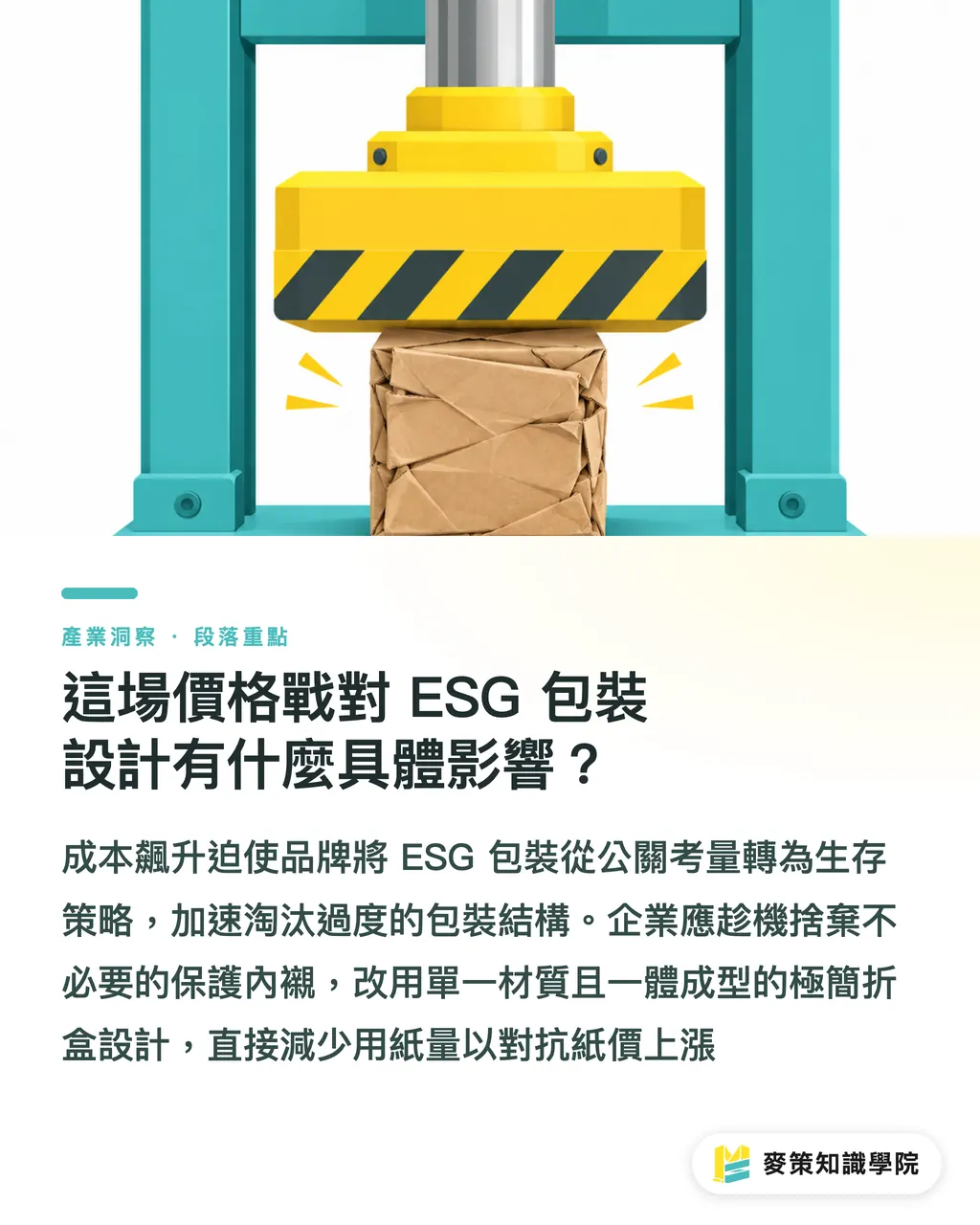
Cost pressures will force brands to ditch over-engineered packaging structures and move sooner toward high-recycled-content paper and minimalist design
Companies used to talk about ESG mostly for brand PR. Now, ESG is about survival. With paperboard prices climbing, the most direct fix is simple: use less paper. From my years on plant floors, brands still relying on heavy double-wall corrugated board just for perceived premium feel are in for a rough cost hit. You can take advantage of this moment to tackle several moves:
1. Strip down physical structures: Remove unnecessary paper sleeves and over-protective inserts, switching to single-material, one-piece folding carton designs
2. Test lower basis weights: Work with box plants to test linerboard one or two grades lighter, as long as the packaging still meets logistics compression strength requirements
3. Lock in certified paper early: FSC (Forest Stewardship Council, an international certification standard promoting sustainable forestry) certified paper is the first to get snapped up and backordered by major players during market swings. Sourcing teams must reserve capacity at least a quarter in advance
Key Takeaways
・The North American containerboard price-fixing lawsuit is heading to trial, meaning price swings are not a short-term blip and supply chain friction will persist
・The old model of bundling materials and conversion into a flat volume-discounted price is dead, and forcing fixed-price contracts will only push suppliers to halt shipments
・Brand buyers should add raw material floating clauses to pricing models as soon as possible, indexing material costs to market benchmarks and tying scale discounts only to conversion
・With virgin paper surging, this is the prime moment for brands to cut back packaging material and switch to high-recycled-content paper
Food for Thought
The biggest takeaway from this North American paper price battle is that procurement decisions must reach all the way back to the design phase. Brand owners cannot just stop at the quoting stage, haggling with print shops over a dollar or two in conversion fees. They need to inspect the original packaging structure. Can we cut paper surface area by 10%? Can we drop unnecessary surface treatments? Putting that saved budget into supplier partnerships that can flexibly source multiple materials and optimize structural design is what gives a company real staying power when the market turns upside down
Further Reading
FAQ
- What is containerboard?
- It is the industry term for linerboard and fluting medium used to make corrugated boxes, serving as the core building block for global shipping and e-commerce packaging
- Why does a paper price lawsuit in North America affect packaging costs in Taiwan?
- Global paper pricing is interconnected. Pricing moves and capacity cuts by North American paper giants directly drive up baseline import costs across regional markets, pushing up raw material costs and final quotes from box makers in Taiwan
- What can brands do besides simply accepting frequent price hikes from paper mills?
- Start trimming packaging structures immediately, and switch to dynamic supplier contracts with raw material floating clauses. By decoupling material costs from conversion fees, you build a partnership that shares market risk together
Related articles





The Print × AI weekly
The print and AI know-how designers, brands and enterprises can use before they commit — one email, every week
MINDS Free Tools
Spine width and imposition calculators — skip the manual math, free in your browser.
MINDS Group
Need actual printing or gifting services?
From premium printing to online ordering and festive gifts — the MINDS Group sister brands take it from here.