
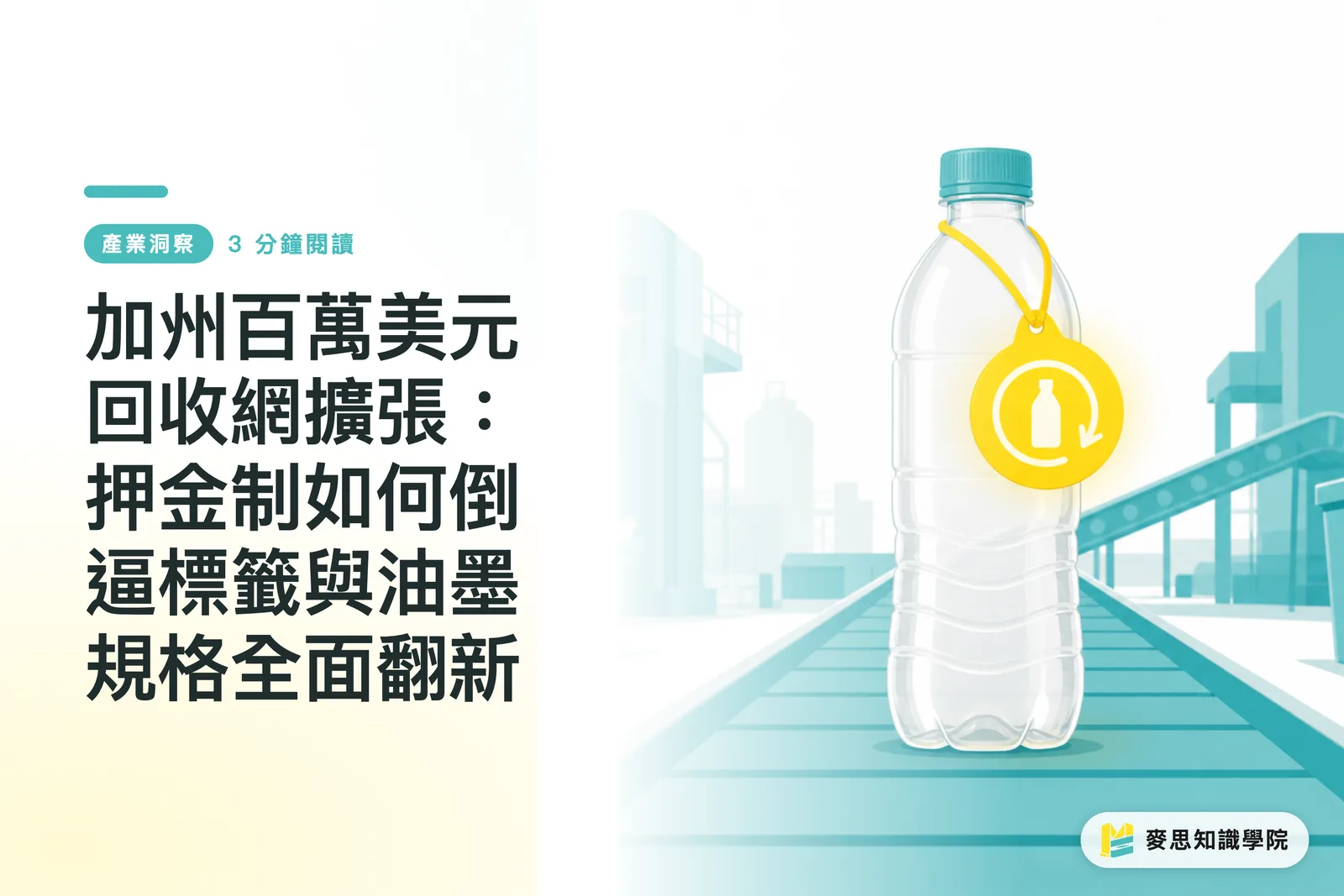
Why California's Expanded Deposit Return Scheme Directly Impacts Taiwan's Packaging Supply Chain
Lately, looking at packaging orders for exporters of beverages and personal care products to the US, I've noticed a clear shift: client demands for 'recyclability' have evolved from a marketing slogan into a rigid technical specification. The California state government recently injected millions of dollars to expand its beverage container recycling deposit return scheme (DRS) network, aiming to boost the recycling rates of PET, glass, and aluminum cans to over 85% in one fell swoop
The implication behind these numbers is that recycling systems are scaling up and standardizing rapidly. As DRS goes mainstream, the end market's evaluation of packaging will shift from 'does it have a recycling logo printed on it?' to 'can it successfully pass through a recycling facility's automated sorting equipment?'. For Taiwanese brands and OEMs exporting to the US, if their label designs fail to meet local wash-off requirements, they will face more than just protests from environmental groups, they will face real barriers to retail shelf placement or hefty Extended Producer Responsibility (EPR) fines
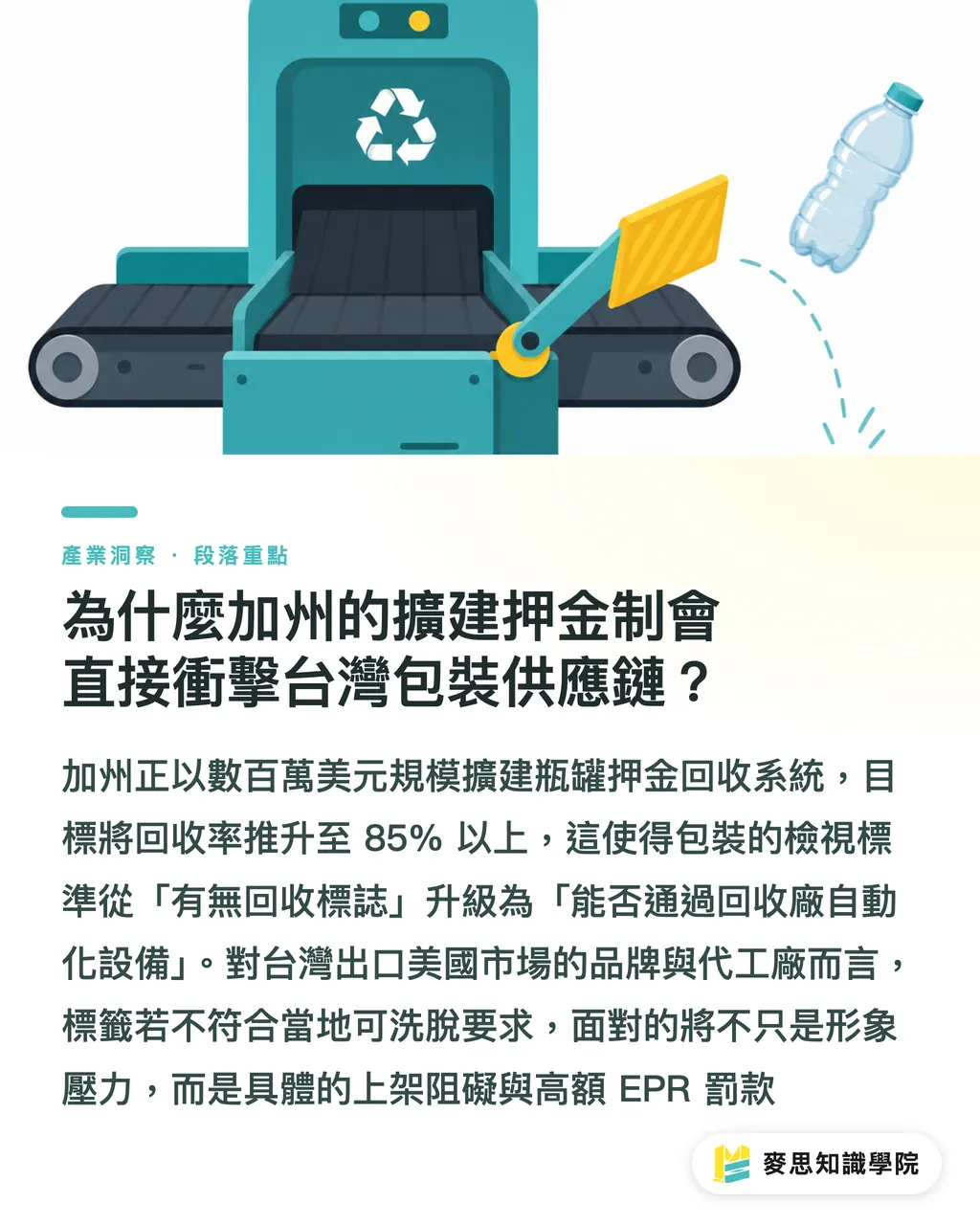
The Truth in the Recycling Wash Tank: Why Label Delamination and Ink Contamination Are Fatal Flaws
In the past, we often saw designers create visually striking, full-coverage pressure-sensitive labels or shrink sleeves. However, from the recycling line's perspective, using the wrong combination of materials often causes the entire bottle to be discarded as waste. Under California's new rules, brands are mandated to ensure that labels can completely detach during the washing phase of the recycling process
An even thornier issue is the ink. Even if the label washes off, if the surface ink bleeds into the hot caustic wash, it will contaminate the entire batch of recycled material
・Traditional water-based inks: Need a re-evaluation of the balance between water and alkali resistance to prevent premature breakdown during the recycling stage
・UV ink formulations: If the cured coating shatters into micro-particles, it will similarly clog filtration equipment and cause secondary contamination
・Composite structure pitfalls: Gorgeous labels with metallic foil stamping or multi-layer lamination will face a high risk of delamination failure
How Small-to-Medium Printers and Packaging Designers Can Prepare for the Shift
This wave of specification changes, much like Portland's mandatory BYO policy, is a clear signal of industry transformation. We must assess our internal machinery limits and the properties of next-generation materials early on, factoring the packaging's 'end-of-life destination' into prepress considerations
I suggest that fellow printers and designers start adapting in the following areas:
・Phasing out packaging dead-ends: Reduce reliance on traditional shrink sleeves and seek out floatable labels that curl and detach automatically in caustic water at specific temperatures
・Establishing adhesive and washability testing: Do not just verify color rendering and viscosity with ink and adhesive suppliers; 'wash-off rate' must be included as a standard quality control metric for prototyping
・Shifting to direct-to-object printing: As limitations on external paper or plastic films increase, brand identity will rely entirely on the structure of the container itself and label-free direct printing techniques, a high-margin new battlefield
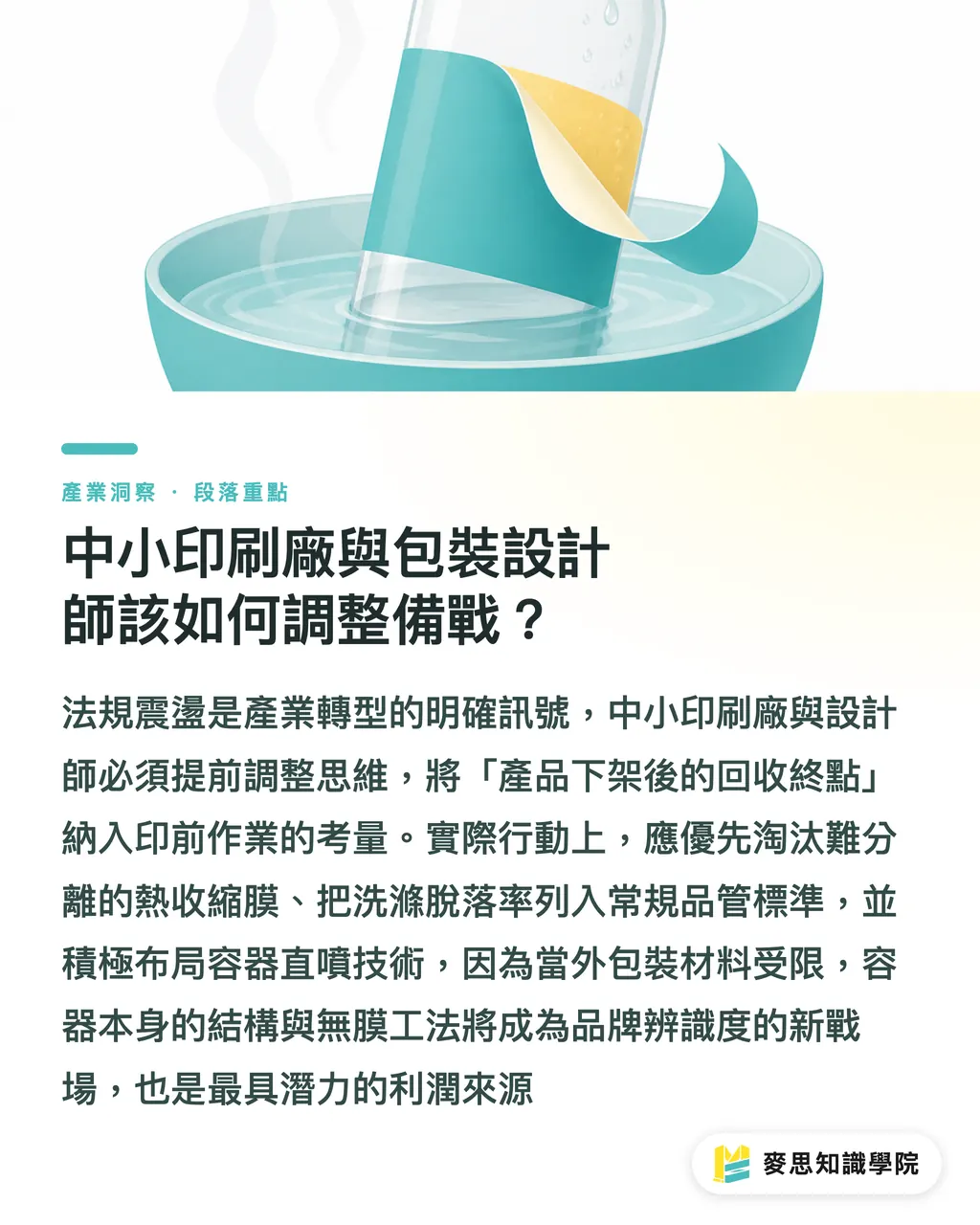
Key Takeaways
・California's million-dollar push for its DRS network makes 'fully clean-peeling' labels and 'zero ink contamination' mandatory thresholds for exports to the US
・Simply printing a recycling triangle is no longer enough; shrink sleeves and full-coverage pressure-sensitive labels that fail hot caustic wash tests will face EPR fines
・Printers must coordinate early with ink suppliers to confirm the wash-off performance of water-based and UV formulations, and integrate detachment tests into their in-house quality control workflows
Further Reflections
For the MINDS team and print SaaS developers, this represents an excellent entry point into supply chain digitization. Future quoting and work order systems can no longer just offer menus for paper and ink; they must integrate an 'environmental compliance check' module. If a customer selects shrink sleeves paired with UV ink for an export to California, and the system automatically flags the delamination risk and suggests compliant wash-off adhesives and water-based ink alternatives, this error-proofing mechanism will serve as the core competitive edge that sets printing platforms apart
Further Reading
FAQ
- What is a Deposit Return Scheme (DRS)?
- When purchasing a beverage, consumers pay a small deposit upfront. They get the deposit back upon returning the empty container to a designated reverse vending machine or collection point. This significantly increases empty container recovery rates and material purity
- Why do shrink sleeves face challenges under the new recycling standards?
- Traditional shrink sleeves often fail to completely separate from PET bottles during the crushing and washing processes at recycling plants. The remaining plastic flakes and ink residues severely degrade the quality of the recycled post-consumer resin
- How should printers choose inks and adhesives if they want to take on these export orders?
- They must require suppliers to provide certification of compliance with standard hot water and caustic wash tests. This ensures that the adhesive quickly loses tackiness at specific temperatures and the ink does not bleed in the washing liquid and contaminate the wash water
References
- California invests millions to expand bottle deposit return network · packaginginsights.com
Related articles
The Print × AI weekly
The print and AI know-how designers, brands and enterprises can use before they commit — one email, every week
MINDS Free Tools
AI background removal, a LINE sticker maker, spine & imposition calculators — all free, right in your browser, no upload.
MINDS Group
Need actual printing or gifting services?
From premium printing to online ordering and festive gifts — the MINDS Group sister brands take it from here.