

Why Overall Equipment Effectiveness (OEE) Demands Close Attention Right Now
OEE (Overall Equipment Effectiveness) measures the ratio of actual production output against theoretical maximum capacity. By factoring in machine uptime, running speed, and yield rates, it pinpoints exactly where a production line loses time or burns through raw materials
BOBST and Co-ëfficiënt announced an operations-focused open house at the Atlanta Competence Center on November 17–18, 2026. Led by John Anderson, Director of North American Operations and Consulting at Co-ëfficiënt, the event explores how converters can move past vague efficiency talks and build measurable paths to improvement
Visiting several converting plants over the past few months, I heard the same complaints everywhere: tight raw material supplies and brutally compressed delivery timelines. By zeroing in on OEE, uptime, throughput, and waste, this open house directly addresses that pain point. As turnaround times shrink, you can no longer estimate scrap by gut feeling. You need to know precisely what percentage of every roll of film loaded onto the press actually turns into billable, sellable product
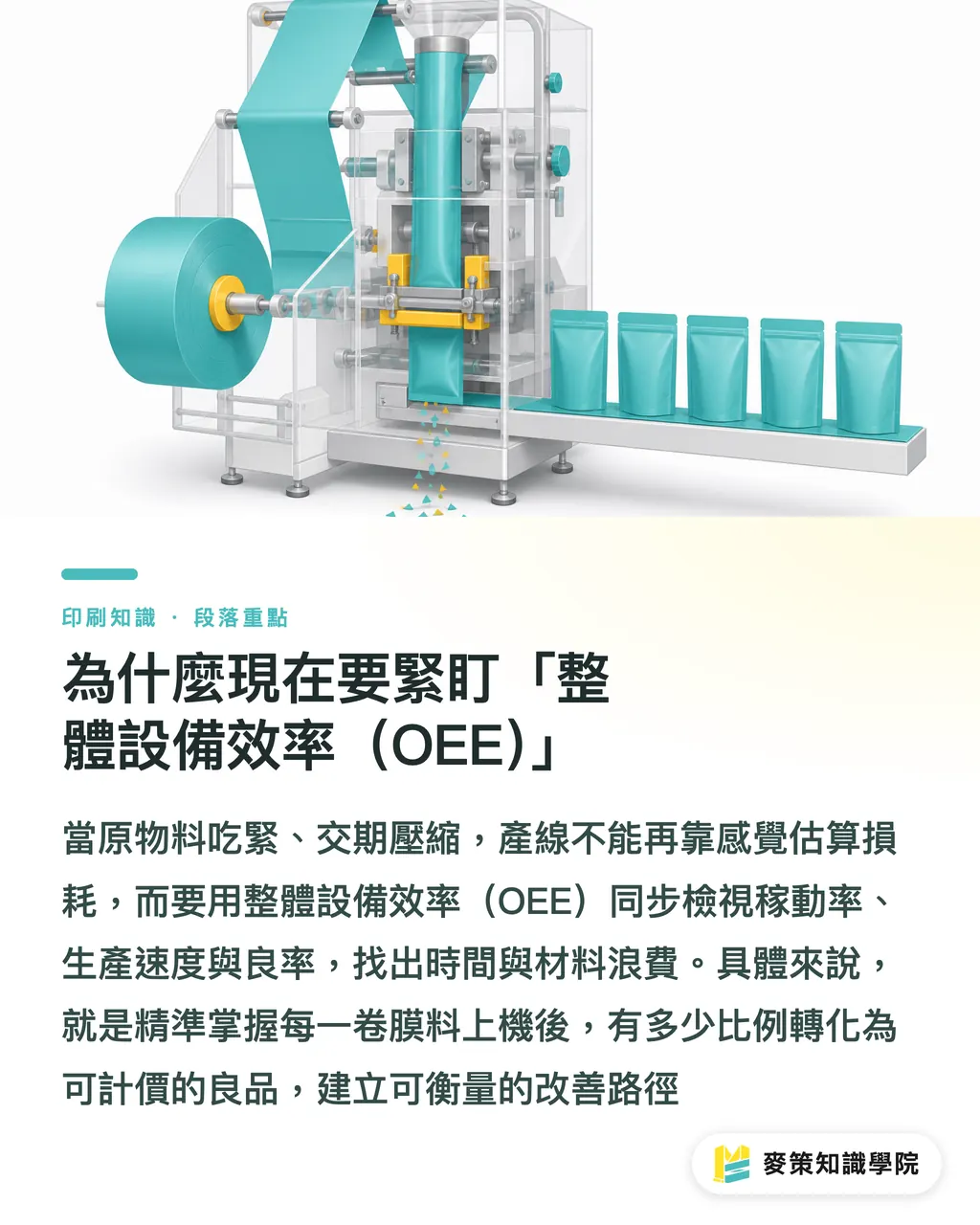
Why Top Machine Speed No Longer Equals Profit
When buying equipment in the past, plant owners always asked first how many meters per minute the press could run. But the competitive focus shifted long ago. Industry discussions lately center on data connectivity and overall process efficiency. If you run at blazing speeds but spend an hour setting up each job change and scrapping hundreds of meters of substrate, your speed advantage vanishes instantly
Recent moves from BOBST reveal this trend clearly. Their updated MASTERFOLD folder-gluer cut changeover times by a full 20 minutes through digital networking and automated positioning. With orders trending toward short runs and high variety, saving those 20 minutes reduces labor dependency and gives plants the confidence to handle customized jobs
Carbon management is another clear indicator. BOBST previously earned Platinum status in Carbon Literacy, sending a direct signal to Taiwanese packaging printers: when dealing with international brand clients, carbon reduction and scrap control will soon become baseline requirements. Cutting waste does not just save money, it is your ticket to winning bids
How Small-to-Medium Printers and Brand Clients Should Respond
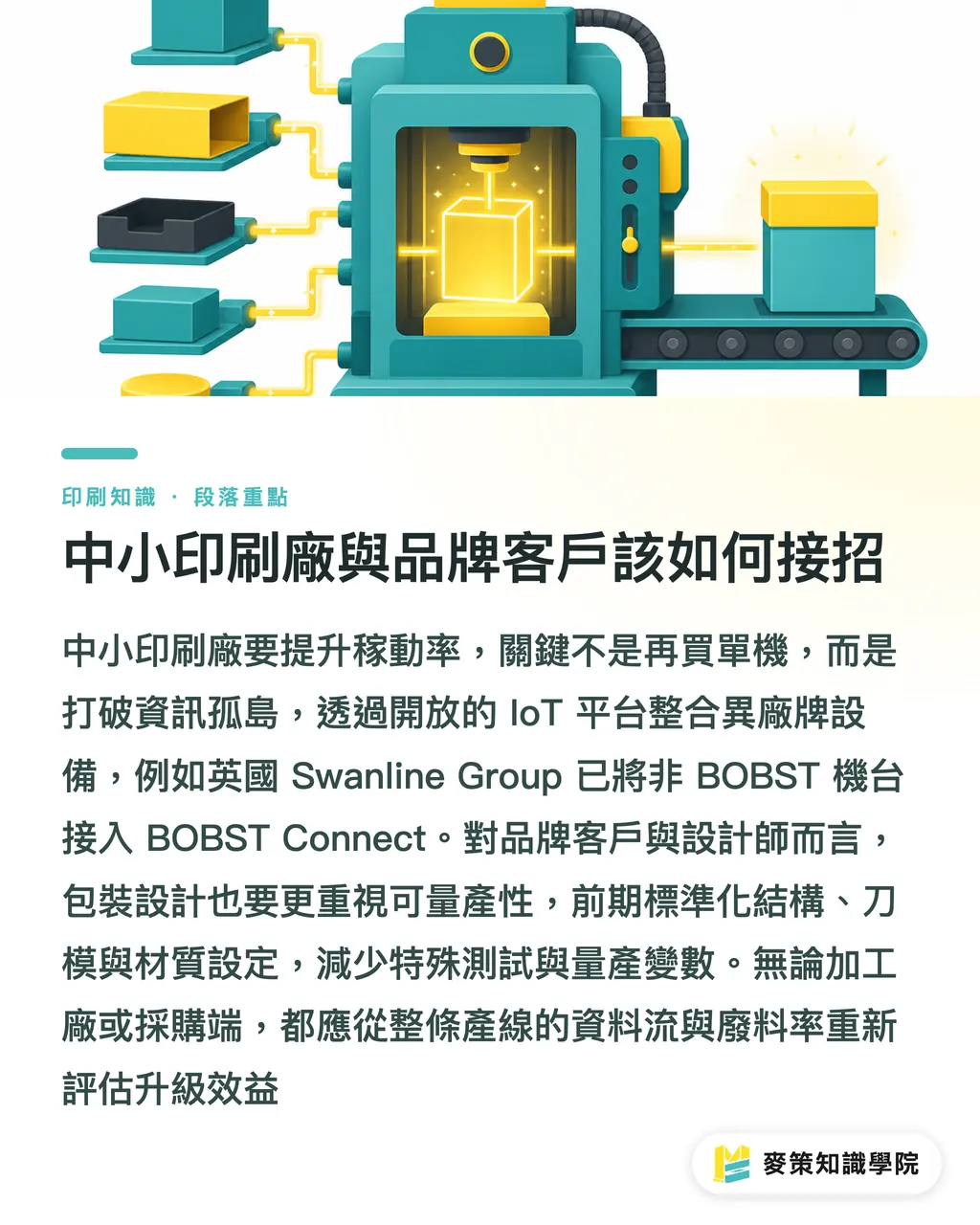
Most small and medium-sized print shops in Taiwan run mixed production lines with machinery from half a dozen manufacturers. Making uptime visible starts with breaking down these information silos. In the UK, Swanline Group became the world's first plant to connect third-party machines to the BOBST Connect platform, showing that even equipment vendors now recognize open IoT integration as the true answer to line upgrades
For brand clients and designers, this means packaging designs need higher manufacturability. While factories squeeze out efficiency through data, standardizing box structures and cutting down on unnecessary trial runs with exotic materials before sending files to print will drastically shorten prep times. If you are planning mid-to-high-end packaging with special finishing, consulting early with experienced custom specialists like MINDS helps eliminate production variables right from dieline and substrate setup
Whether you run a converting plant or manage procurement, looking past standalone machine prices to evaluate data flow and scrap rates across the entire line is the real logic behind this hardware evolution
Key Takeaways
・Flexible packaging competition has shifted from top press speeds to OEE and changeover stability
・Cutting scrap and tracking uptime with precision are the most direct ways to handle raw material crunches and tight delivery windows
・Equipment networking and cross-brand data sharing represent the first hurdle for small and medium printers moving toward smart manufacturing
Looking Ahead
This demonstration from BOBST makes it clear that packaging plants can no longer rely purely on senior operators' instincts to keep output steady. For software vendors, this opens a massive opportunity, as print shops urgently need lightweight tools to link heterogeneous machinery, visualize OEE metrics, and suggest workflow tweaks. For brand owners, a supplier's grip on process stability and low-carbon metrics will determine whether you can build a stable, long-term partnership
Further Reading
FAQ
- What is machine uptime?
- Simply put, it is the percentage of time a machine actually spends producing goods. After subtracting time lost to changeovers, maintenance, breakdowns, or waiting for materials, what remains is the window where the machine is genuinely creating value
- Why are major equipment manufacturers pushing for cross-brand connectivity?
- Most print shops run equipment from multiple brands. Connecting only proprietary machines gives an incomplete picture of plant-wide efficiency. Opening up IoT protocols is the only way to expose production bottlenecks across different stations
- What can designers do before sending files to print to help improve production efficiency?
- Standardize dieline structures whenever possible, reduce unnecessary sheet margins in imposition, and confirm substrate characteristics with the printer early on. These steps significantly cut down test scrap during press setup
Related articles





The Print × AI weekly
The print and AI know-how designers, brands and enterprises can use before they commit — one email, every week
MINDS Free Tools
AI background removal, brand stamping, and a LINE sticker maker — free design tools, right in your browser, no upload.
MINDS Group
Need actual printing or gifting services?
From premium printing to online ordering and festive gifts — the MINDS Group sister brands take it from here.