
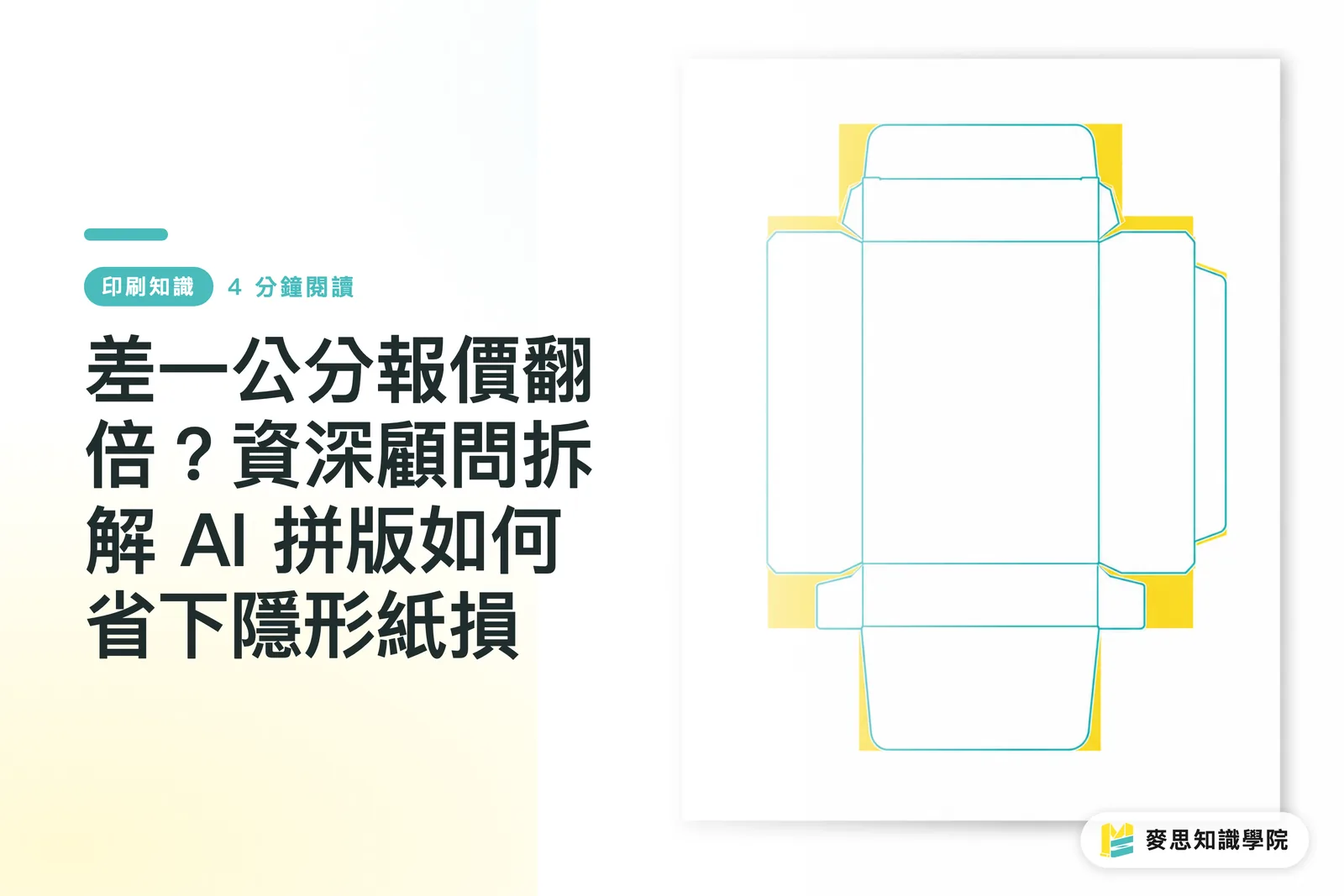
Why can a tiny size adjustment change the total print cost so much?
A small size change can shift the quote dramatically because that tiny difference determines how many boxes can fit on a full sheet, or the layout multiple. That directly affects total paper use and material cost. In MINDS (MS, mid-to-high-end fully custom commercial printing) practice, we often use an AI imposition system to run quick estimates and help clients find the most paper-efficient size sweet spot
Imposition: the process of arranging multiple printed pieces or pages together on a large sheet for printing. Good imposition makes the most of the sheet area and reduces trimming waste, making it one of the biggest factors in total print cost
Many designers or buyers are shocked when they receive a quote. The width and height may have increased by only one or two centimeters, yet the total price jumps. With paper prices rising sharply in recent years, print shops no longer calculate cost by looking only at the area of a single box. They look at how many boxes can fit on one full sheet
Say one large sheet originally fits 8 boxes. You enlarge the box slightly, and now the sheet can only fit 6. For an order of 3,000 boxes, you used to need 375 large sheets. Now you need 500. The material cost, machine make-ready cost, and press labor for those extra 125 sheets all end up in your quote
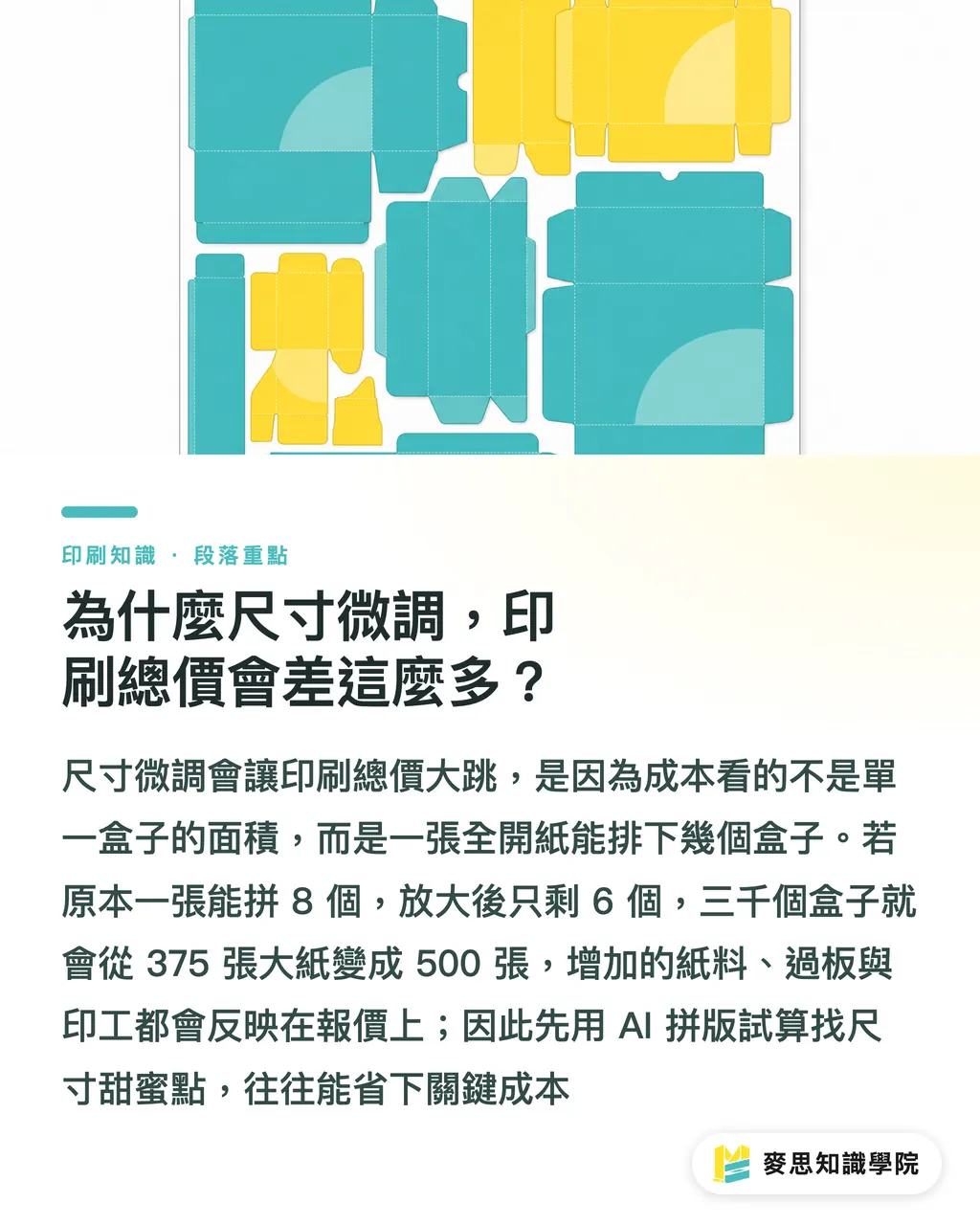
Manual imposition used to depend on veteran operators. Where does AI win now?
In the past, this depended on an imposition specialist in the shop doing the math with pen and paper. Square business cards or simple flyers were manageable. But lately, jobs are packed with packaging boxes in complex shapes and irregular small cards. Asking a person to mentally rotate and overlap dielines to find the most paper-saving layout is exhausting
Today's AI automatic imposition algorithms work by converting complex dieline contours into polygon meshes. The system can test tens of thousands of layout combinations in seconds, handle dieline overlaps, share gripper margins, which are the blank areas at the paper edge held by the press, and even judge how paper grain direction affects the box structure
From recent projects we have seen, AI-generated layouts can usually squeeze out 5% to 10% more usable area than manual layout. In mass production, that translates into very real savings. If you want a firmer budget estimate before requesting quotes, talk to the Mai Strategy Knowledge Academy consulting team. We can help you clarify size and printing constraints first
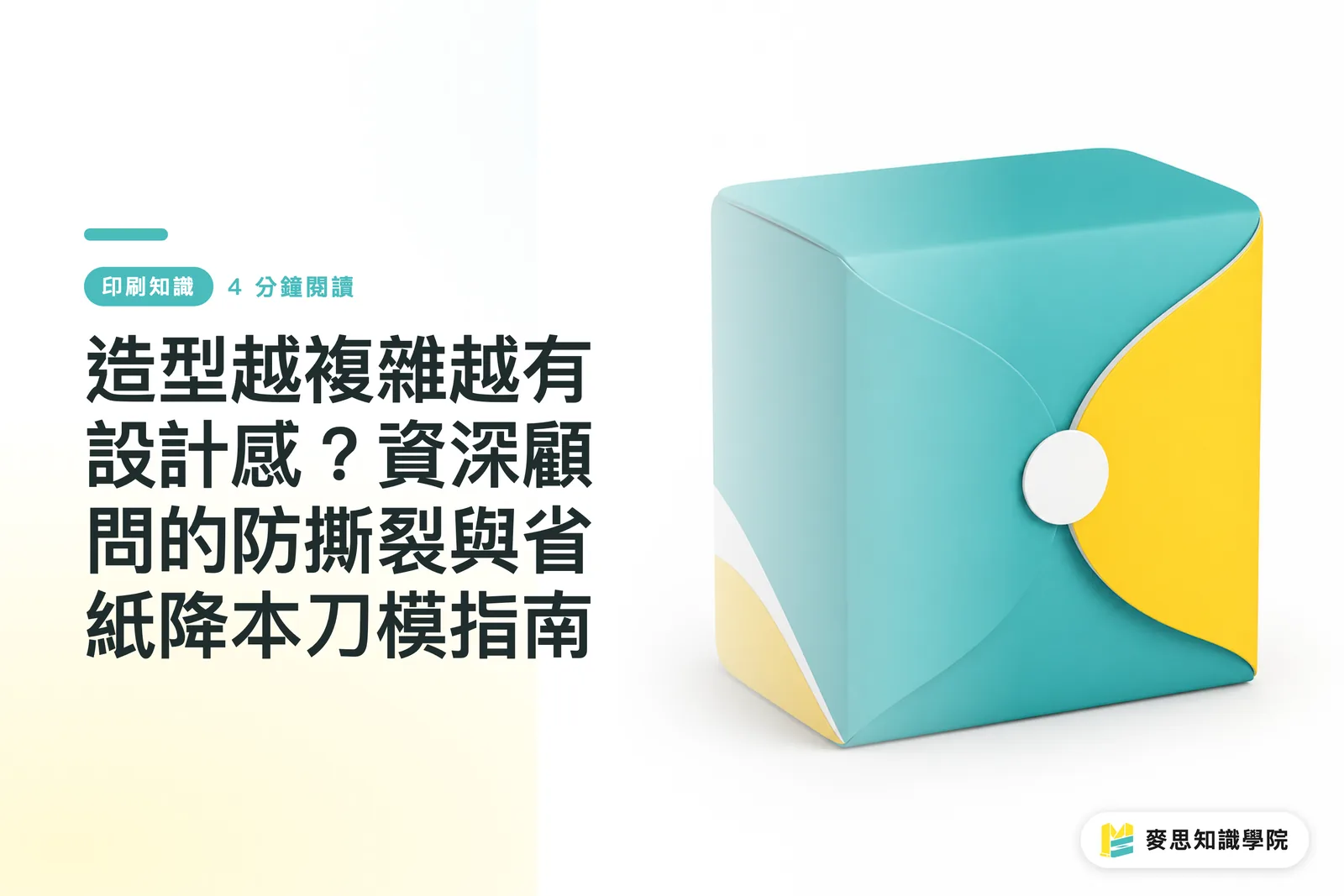
The hidden waste behind complex dielines, and how to prevent tearing
Many brands assume that the more unusual the packaging shape, the better it catches the eye. But after more than a decade watching production lines, I can say complex dielines often come with surprisingly high hidden waste
Die-cut: a mold made by embedding steel rules and creasing lines into a wooden board. After printing, a machine presses it onto the paper to cut the intended shape and crease lines. It is a key step in forming packaging boxes
Sharp angles tend to tear the paper during die-cutting, which can make the whole sheet scrap. Protruding ears or irregular edges also prevent pieces from nesting tightly during imposition, creating large patches of unusable offcut waste
Our usual advice to clients on the production floor is:
・Round corners to prevent tearing: change fragile sharp angles into slight rounded corners, and production yield can rise significantly
・Gang-cut with shared knife lines: when two boxes are placed together, they share the same cut line, saving the gap that would otherwise sit between two blades
・Standardize structural dimensions: for different flavors or product series, try to use the same dieline structure and change only the printed artwork. That saves the cost of making a new die
Bring in the MINDS (MS) Three-Gate Print Submission Check to guard size flexibility
This is the point I most often repeat to designers: never lock the dimensions too early
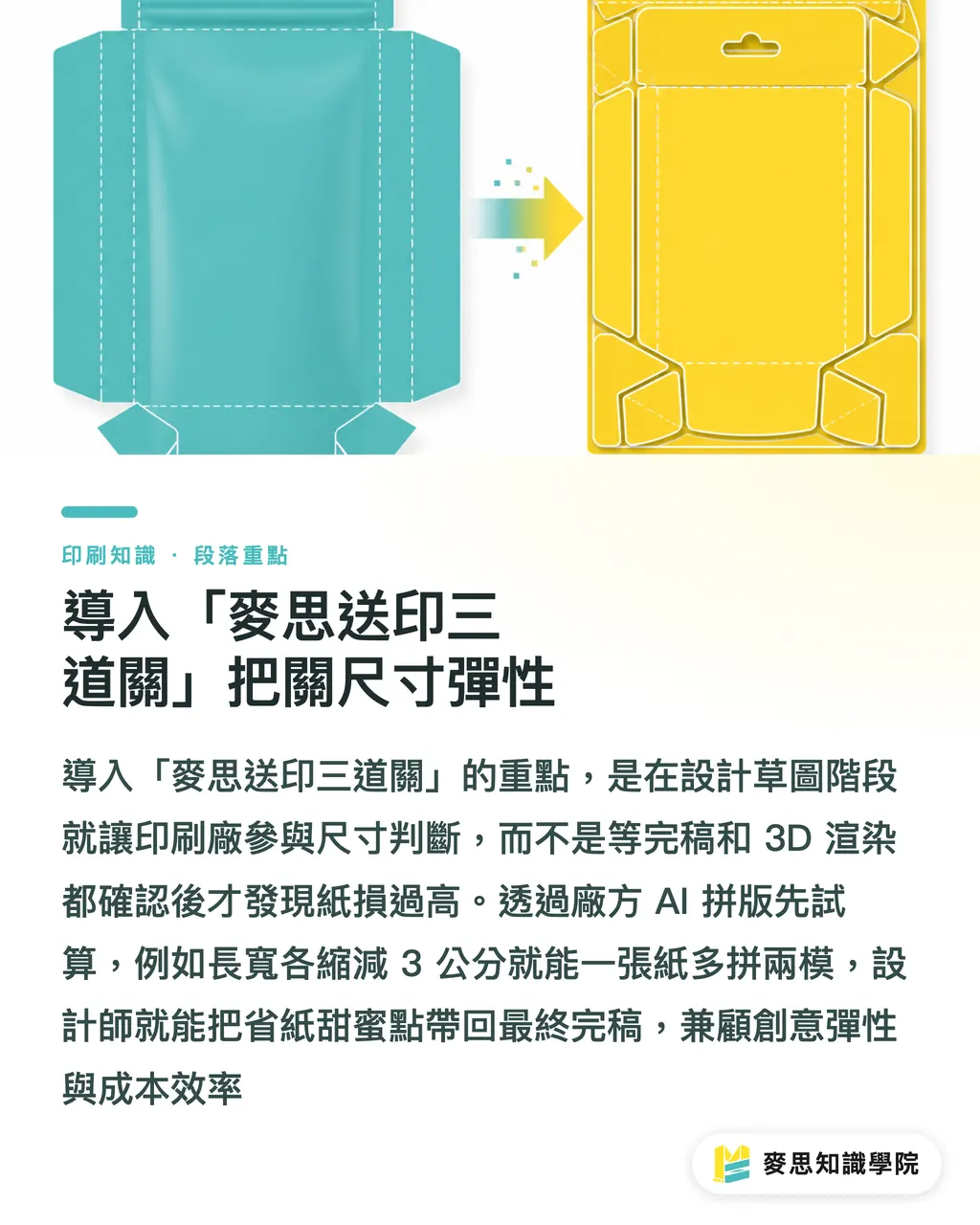
If you finish the entire design, get the 3D render approved by the boss, and only then ask the print shop for a quote, it is hard to go back once the printer finds that paper waste is too high. The smarter way is to bring in the MINDS (MS) Three-Gate Print Submission Check:
・Gate 1: at the sketch stage, ask the print shop with rough dimensions in hand
・Gate 2: the print shop runs the AI imposition system and tells you that reducing the length and width by 3 mm lets each sheet fit two more pieces
・Gate 3: you take that paper-saving size sweet spot back and use it for the final artwork
Pulling the supplier's AI calculation capability forward into the design stage is the kind of win-win strategy that actually saves the company money. For advanced customization and precise size calculation, send it straight to MINDS for a much faster assessment
Key Takeaways
・The reason a quote doubles is often not that the design is hard to print. It is that increasing the size by a few millimeters reduces how many pieces can fit on a full sheet
・For complex dieline contours, letting an AI algorithm calculate mesh layouts can cut paper waste by at least 5% compared with manual imposition
・Changing sharp corners into rounded ones and sharing knife lines between pieces are the most effective shortcuts production veterans use to prevent tearing and reduce cost
・Ask the print shop to estimate the paper-saving size sweet spot during the sketch stage. Do not wait until the 3D render is finished before getting a quote. That is the smarter way to outsource print work
Further Thinking
For design teams and buyers, treating the computing power of an AI imposition system as your own add-on from the beginning gives you control over the budget. SaaS professionals can also see the bigger lesson here: the AI applications that really make traditional industries pay are not the ones that generate a few pretty images. They are the hard production optimizations that can calculate exactly how many more pieces fit and how many sheets of paper are saved
FAQ
- Why does a small change to packaging dimensions make such a big difference in the print quote?
- Because tiny size differences determine how many boxes can fit on a large sheet. Once the layout multiple drops, the total number of sheets needed can surge, increasing both material cost and printing labor
- How is AI imposition different from traditional manual layout?
- AI algorithms can turn complex dielines into meshes and test tens of thousands of overlapping layout combinations in seconds. They can usually squeeze out more usable area than manual layout and reduce waste
- What hidden costs can irregular packaging shapes create in printing?
- Protruding edges can stop pieces from nesting tightly during imposition, wasting paper. Sharp-angle designs are also more likely to tear during die-cutting, which raises the scrap rate
Related articles

The Print × AI weekly
The print and AI know-how designers, brands and enterprises can use before they commit — one email, every week
MINDS Free Tools
AI background removal, brand stamping, and a LINE sticker maker — free design tools, right in your browser, no upload.
MINDS Group
Need actual printing or gifting services?
From premium printing to online ordering and festive gifts — the MINDS Group sister brands take it from here.