
What is water-based screen printing?
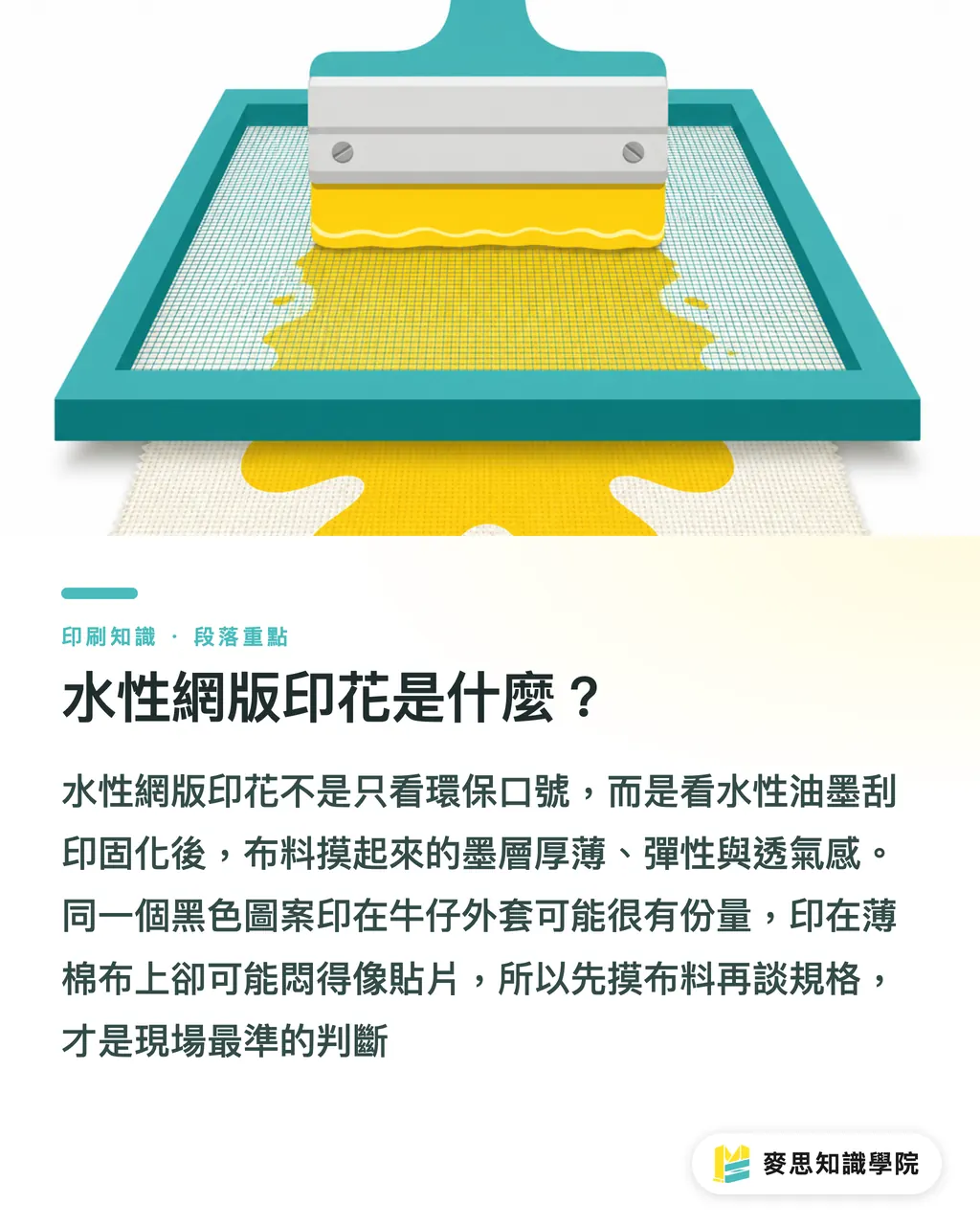
Water-based screen printing pushes water-based ink through a mesh screen onto fabric, then cures it so the ink bonds. What the buyer actually feels is ink-film thickness, stretch, and how well the fabric breathes
ScreenPrintDirect dropped two water-based screen printing demos back-to-back on 2026-08-02: one on a custom denim jacket, the other on breathable screen printing (ink-layer layout and mesh setup tuned to keep the fabric breathing). I thought pairing those two topics on the same day was deliberate, because they pull water-based ink back from the "it's greener" pitch and onto the garment: clothes get worn, washed, folded, and judged by people who sweat in them
At Mai Strategy Knowledge Academy's three-check intake for MINDS (MS, mid-to-high-end fully custom commercial printing), the first move on a water-based screen printing job isn't reading the sales pitch; it's feeling the fabric. Denim jackets, cotton tees, performance blends all take ink differently. The same black artwork can feel weighty on heavy denim and stuffy like a patch on thin cotton. Feel first, spec later. Saves a lot of arguments on the production floor
Why does hand-feel outsell eco?
Hand-feel outsells eco because apparel print ends up against skin and moving with a body; returns usually come down to those first few seconds of touch
Eco is the entry-level pitch for water-based ink. Hand-feel is what moves into brand value. When a brand commissions a custom denim jacket, a pretty photo only gets you halfway. How stiff the sleeve feels when you bend your arm, whether the big back graphic gets clammy, whether the edges of the print look tired after one wash, those are what the customer remembers after wearing it once. ScreenPrintDirect lining up the denim jacket and breathable print in the same demo set hits the same process question dead-on: color saturation, ink-film thickness, and fabric comfort don't all max out at once. You have to pick the wearing experience the brand is actually selling first
From years on the line and on the client side, the missed opportunity I keep seeing at small and mid-size print shops in Taiwan is quoting water-based screen printing as one line: "the ink is more eco-friendly." That gets shopped on price fast. Reword it to "suited for brand merch, event goods, and apparel customization, these three wearing scenarios," and clients start hearing the difference
How does screen setup change breathability?
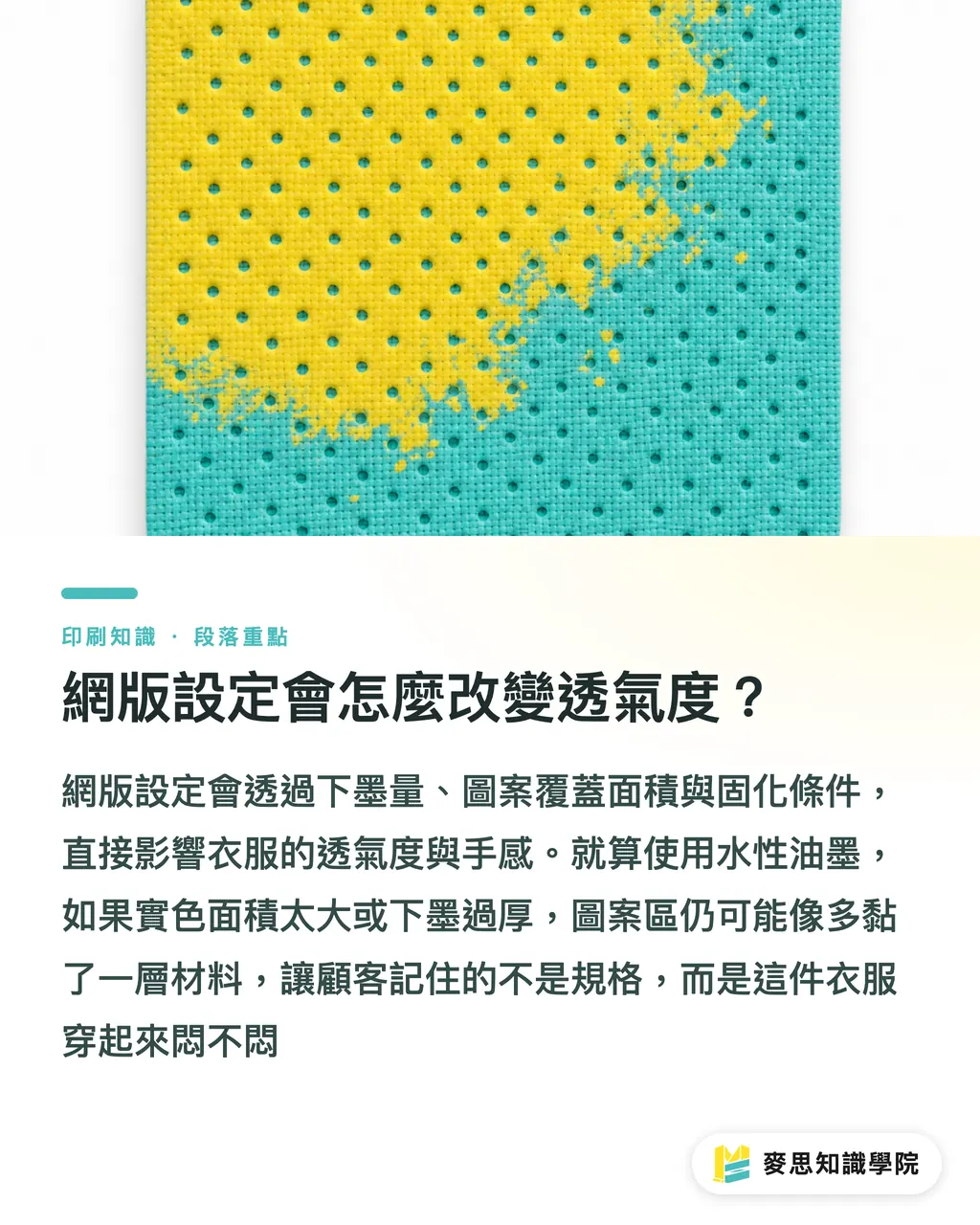
Screen setup changes breathability through ink deposit, pattern coverage, and curing conditions. Even with the right water-based ink, if the ink layer isn't managed, the garment still feels stuffy
I usually break breathable screen printing into 4 variables so designers and buyers can follow along
・Ink: water-based ink dries to a film that suits apparel conversations, but you still need to check the result against the fabric and cure
・Ink deposit: more deposit reads as thicker color; too much deposit kills the fabric's breathing room
・Screen setup: mesh count and squeegee stroke control ink-film thickness, which affects fine lines, open areas, and large solid fills differently
・Curing conditions: under-cured prints fail durability; over-cured prints can ruin hand-feel and damage the fabric
Here's an honest gut-check from the trade: if you pick up a garment and the printed area feels like a separate piece glued on, the brand has to ask whether it really needs that thick a solid. Customers don't carry ink specs in their head, but they remember whether the shirt is wearable
How should small and mid-size print shops take apparel jobs?
Small and mid-size print shops can split water-based screen printing into a 3-step intake spec so clients know up front which effects will move hand-feel, breathability, and unit price
The three-check intake at Mai Strategy Knowledge Academy's MINDS (MS) drops straight into the SOP for apparel customization, brand merch, and event goods
・① Fabric first: confirm denim, cotton, or other substrates on thickness, stretch, and surface texture before judging ink adhesion and ink-film needs
・② Pattern zoning: test large solids, fine lines, open areas, and halftones separately; don't treat the whole garment like a flat poster
・③ Keep sample notes: log the water-based ink, ink deposit, screen setup, and curing conditions on every proof so the next batch can actually reproduce the hand-feel
If a brand merch line is already in the mid-to-high-end full-custom zone, start by talking proof specs with MINDS. If event goods are still at the hangtag, sticker, and small-run packaging stage, Mind Print is the better fit for getting the printed collateral running smoothly first
What should designers ask before submitting files?
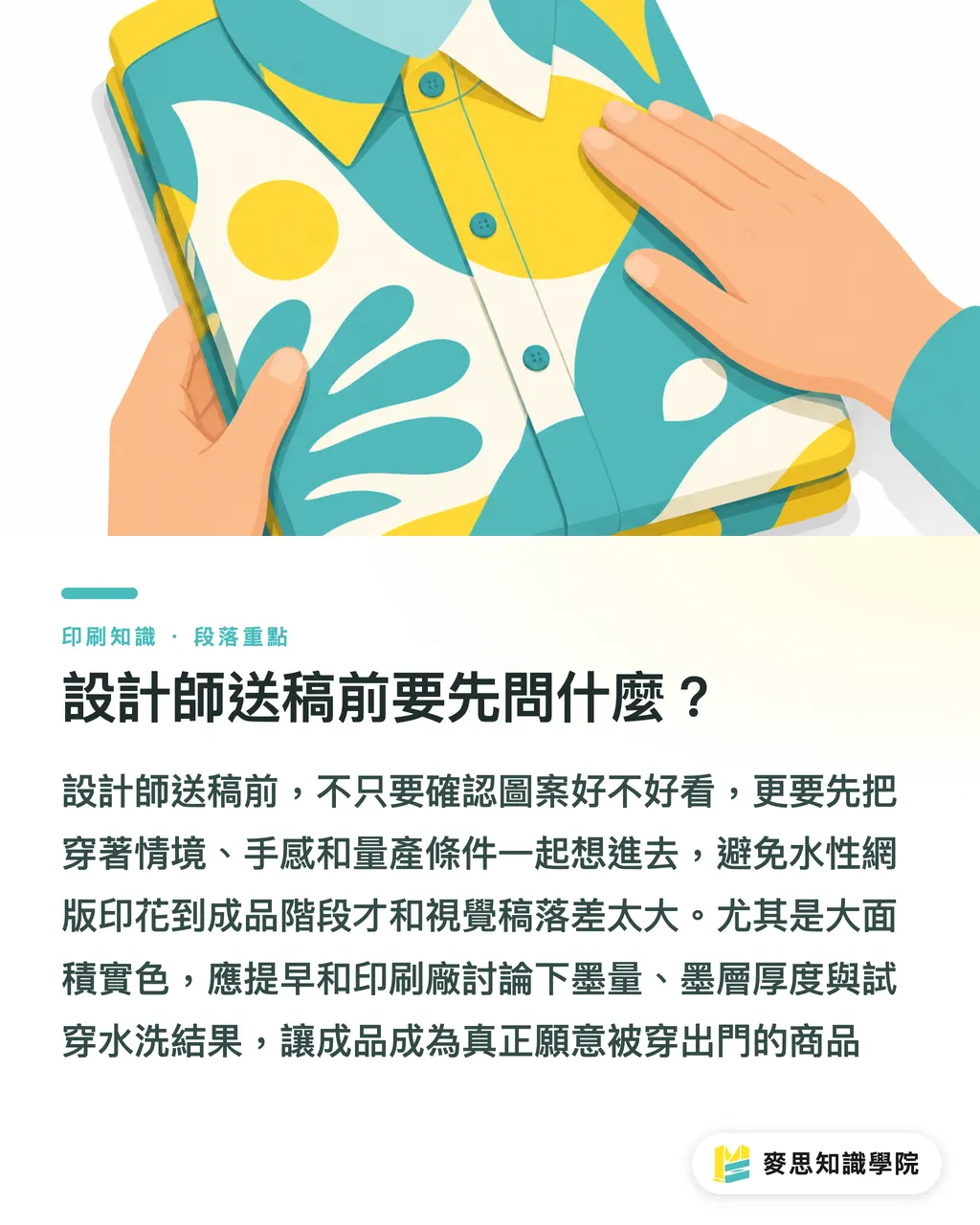
Designers should ask 4 things before submitting files, so water-based screen printing doesn't reveal at the finished stage that the wearable feel and the visual mock are two different things
・Where the garment gets worn: outdoor events, trade-show uniforms, brand outerwear each demand different breathability and durability
・Whether the artwork is large solid: bigger solids mean ink deposit and hand-feel need discussion earlier, not just screen mockups
・Whether the color has to be specified: if you need something close to the Pantone Matching System (the standard reference for spot-color communication between design and print), water-based ink still needs real-sample adjustment
・Whether to fit-test the finished piece first: hand-touch, bend, wash, then decide on bulk production. More reliable than one photo
Water-based screen printing design talk has to put the wearer back into the spec. When designers cut back a little on the full-bleed color blocks and print shops spell out the ink layer and curing conditions, the brand gets something more than a garment with a graphic, it gets a piece people actually want to wear out the door
Key takeaways
・Pitching water-based ink on eco gets price-compared fast; pitching it on hand-feel gives you a spec to talk to
・More ink deposit lifts saturation; breathability is usually the first thing to drop
・The denim jacket and breathable print demos are both reminding us of the same thing: fabric isn't paper, apparel print gets judged by the body
・Small and mid-size print shops shouldn't quote on unit price alone; put fabric, ink layer, and curing conditions into the intake SOP
・When designers leave breathing room in the artwork, water-based screen printing usually wears better
Further thinking
For print manufacturing, the next move isn't making the water-based ink pitch prettier; it's turning every proof's fabric, ink, ink deposit, screen setup, and curing conditions into a spec card. For designers, AI-assisted image generation can move fast, but apparel print files still have to come back to wearable area, open space, and hand-feel. For SaaS teams, the feature that actually saves print shops time is tying intake, quoting, proof photos, client sign-off, and complaint reasons onto the same work order you can pull back up later
Further reading
FAQ
- Is water-based screen printing always more comfortable than plastisol?
- Water-based screen printing usually produces a softer hand, but comfort still comes down to fabric, ink deposit, screen setup, and curing conditions. Even the same ink printed too thick can feel stuffy
- What is breathable screen printing?
- Breathable screen printing controls ink-film thickness, pattern coverage, and screen setup to leave the fabric more room to breathe
- What should brands watch for when doing custom denim jackets with water-based screen printing?
- For a custom denim jacket, confirm fabric weight, surface texture, pattern area, and curing conditions up front. Denim has heft; if the print layer is too thick, the hand-feel problem shows up well before the photo does
- How can small and mid-size print shops differentiate water-based screen printing?
- Small and mid-size print shops can shift the quote from ink name to wearing scenario, spelling out how fabric, ink deposit, breathability, and durability trade off so clients can actually see the difference
- What should designers do before submitting water-based screen printing files?
- Designers should flag large solids, fine lines, open areas, and spot-color needs up front, and leave room for a proof check on hand-feel. Apparel print can't be settled on a screen mockup alone
Related articles

The Print × AI weekly
The print and AI know-how designers, brands and enterprises can use before they commit — one email, every week
MINDS Free Tools
Spine width and imposition calculators — skip the manual math, free in your browser.
MINDS Group
Need actual printing or gifting services?
From premium printing to online ordering and festive gifts — the MINDS Group sister brands take it from here.