

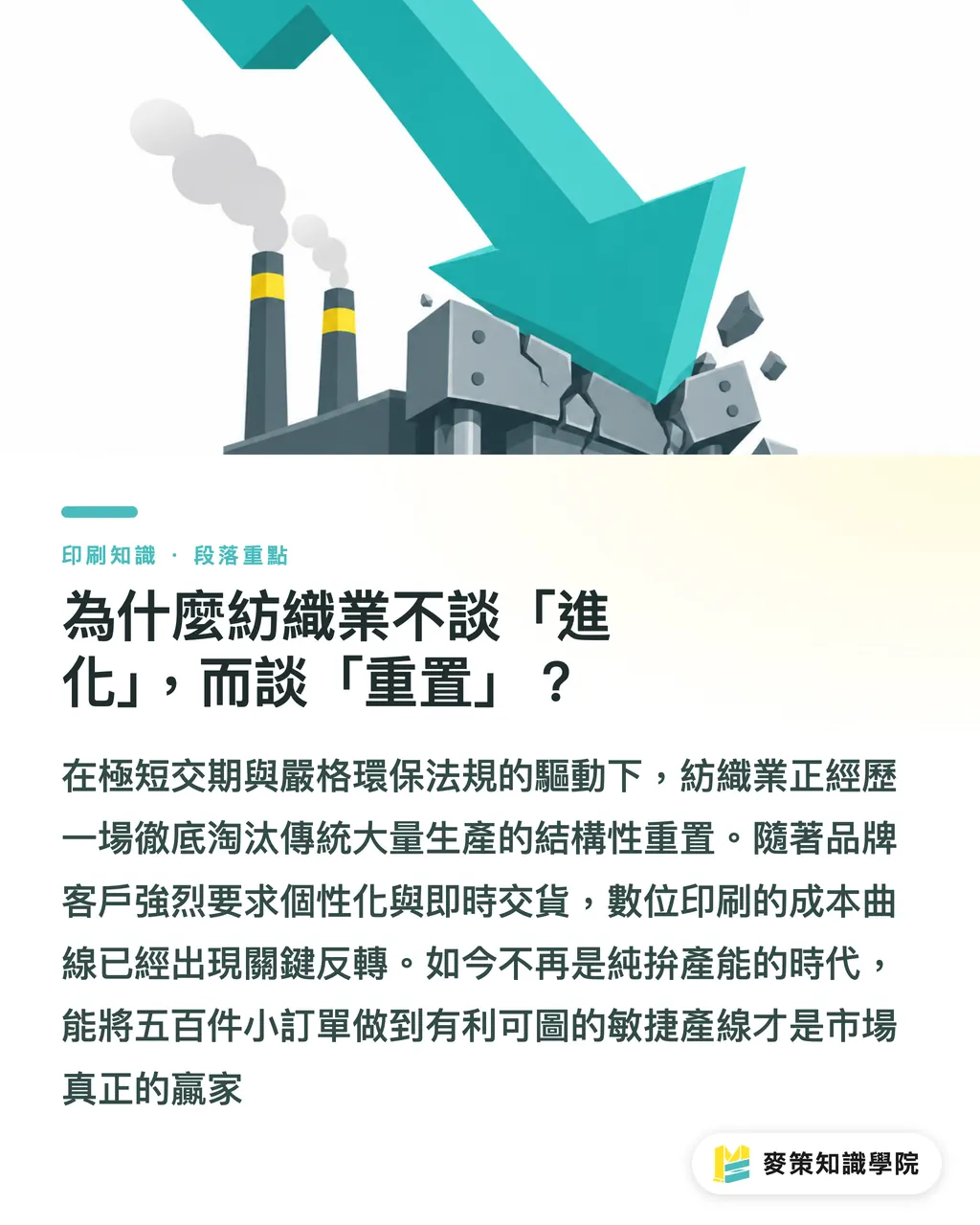
Why the Textile Industry Is Talking About a 'Reset' Instead of 'Evolution'
Because the margins and order models of traditional mass production have been completely disrupted by ultra-short turnarounds and environmental rules
Looking at FESPA's September 2026 report, The Textile Reset, alongside recent signals from forums at Durst headquarters, my biggest takeaway is that the cost curve for digital textile printing has genuinely flipped
The consumer market has changed. Brands now demand personalization, shorter cycles, and near-instant delivery
Meanwhile, governments worldwide have turned supply chain transparency from an added bonus into a legal requirement
When competing on sheer volume no longer works, agile lines that can turn a profit on 500-piece orders are what everyone wants
This is a structural shakeup, not a temporary rough patch
Why Equipment Makers Are Spending €15 Million to Return to Square One
Because staying close to clients and designers is the real competitive barrier going forward
Italian equipment giant Durst recently announced a €15 million investment to launch a brand-new innovation center in Como, the birthplace of digital textiles, set to open in January 2027
This sends a clear message: future equipment makers cannot just sell hardware. They have to deliver complete solutions
Spanning 1,000 square meters, the center brings brands, designers, and technicians together to fine-tune digital pigment technology (a waterless, low-pollution digital textile ink technology)
The next battlefield is not about who prints fastest. It is about who can take what a designer envisions and print it onto fabric accurately, color-true, and in full compliance with regulations
That is why I always tell clients: if you need fully custom sampling or testing, partnering with someone like MINDS, who understands the process and is willing to test alongside you, is far safer than just hiring a contract manufacturer
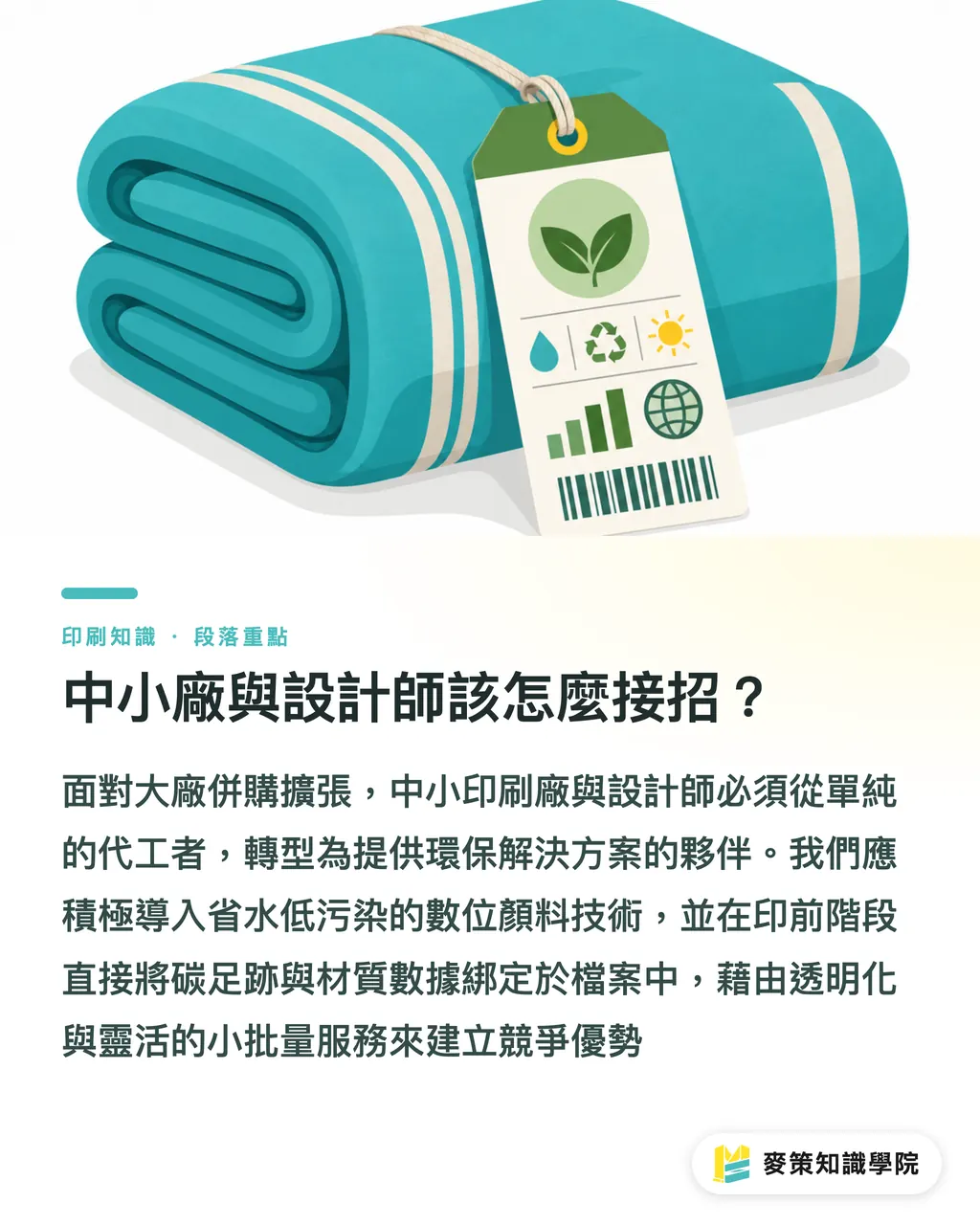
How Smaller Printers and Designers Should Respond
Facing aggressive acquisitions and localized technology from major players, we must immediately pivot to low-pollution processes and tie environmental data into the prepress stage
As heavyweights like Durst and Aleph merge to capture more market share, small-and-midsize printers and designers in Taiwan cannot just wait around
Here are three concrete action steps to take:
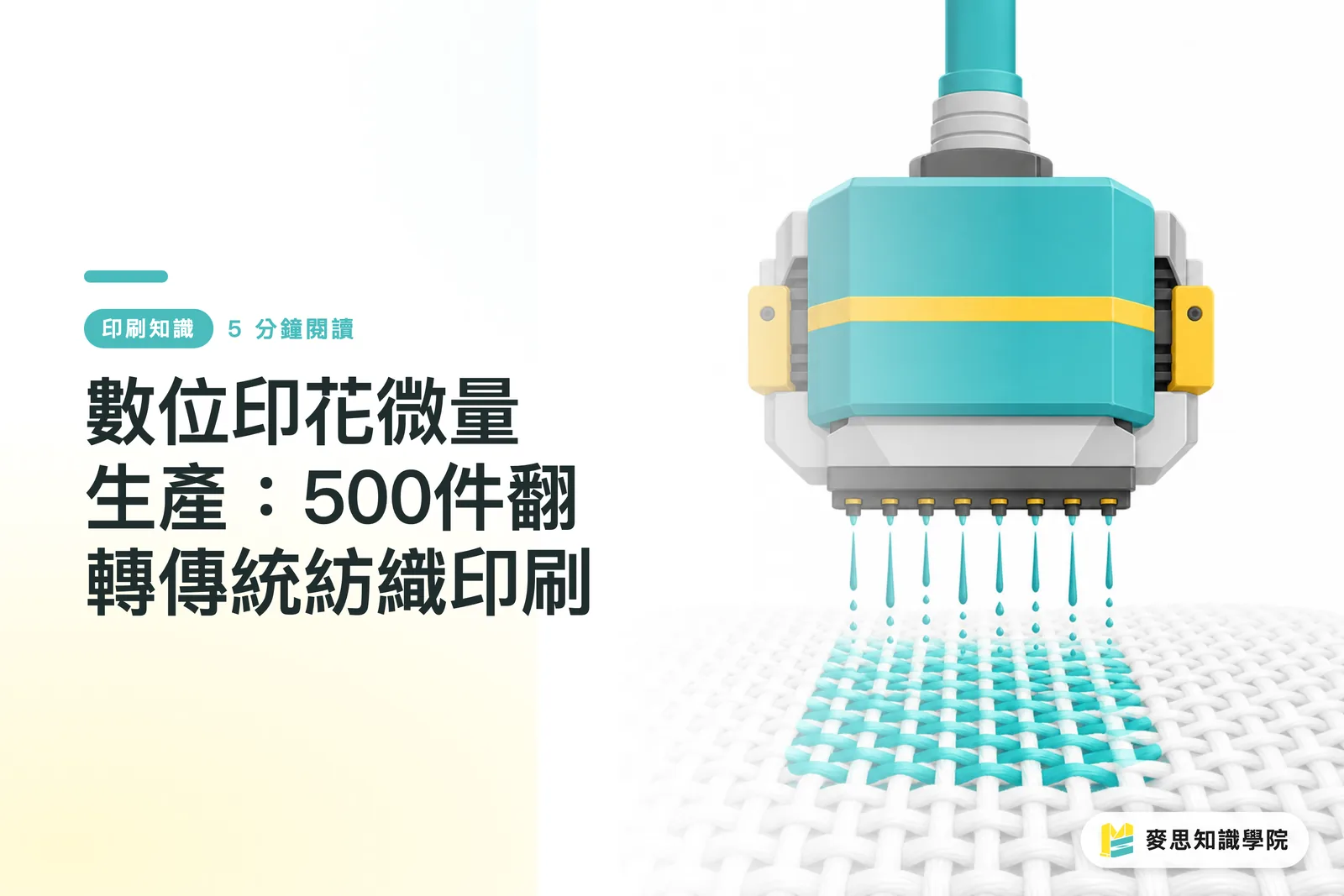
・Switch to digital pigment technology: Traditional dyeing and finishing requires heavy washing and steaming. Digital pigment inks eliminate these post-processing steps. For facilities with limited space and strict environmental rules to meet, this is a baseline requirement for survival
・Build a transparent prepress and artwork database: Prepress files today cannot just be about visuals. Everything from material composition and digital fingerprints to carbon footprint tracking must be tied in during prepress. If your prepress workflow still relies on manual email back-and-forth, the risk is massive
・Shift from selling fabric to selling solutions: Do not just hand clients a printed roll of fabric. You need to tell the brand what the carbon emissions are for the batch and how quickly they can reorder another 100 pieces
・Establish an efficient ordering rhythm: Profits on short runs come from how much back-and-forth communication and inventory cost you save your clients. If you simply need a fast, standardized online ordering experience to handle routine small jobs, consider web-to-print platforms like MYS
Key Takeaways
・The profit structure of textile printing has shifted, with short-run, high-frequency rush orders becoming the main game
・Thanks to its waterless and low-pollution profile, digital pigment technology is the top choice for smaller printers moving to eco-friendly production
・The battlefield for equipment makers has shifted closer to designers, using local innovation hubs to shorten product development cycles
・Prepress is no longer just about color matching. It must integrate traceability data like materials, compliance, and carbon footprint right before printing
Food for Thought
The biggest lesson from this Textile Reset is simple: stop measuring a print shop's value purely by capacity
The print industry of tomorrow looks more like an information business wrapped in manufacturing
You need to connect prepress, SaaS systems, and digital textile printers so the moment a client orders online, they immediately see lead times, carbon data, and pricing
Taiwan's real strength has always been agility. With this wave of technical reset, we have a clear shot at locking down a key spot in the global short-run supply chain
Further Reading
FAQ
- What is the 'reset' in digital textile printing?
- It refers to a structural shakeup where traditional mass production breaks down under pressure from ultra-short turnaround demands and strict transparency regulations. To survive, businesses must pivot entirely to digital, small-batch, and agile production
- What makes digital pigment technology stand out?
- Traditional printing relies on complex post-processing like washing and steaming, which consumes massive amounts of water and harms the environment. Digital pigment technology skips these steps, cutting production time while dramatically reducing environmental impact
- I run a small brand. How does this reset affect me?
- The good news is that factories will no longer turn you away when you order 500 or even 100 pieces. Digital production lines are built specifically for small-batch, highly customized orders, which means your cost of trial and error will drop significantly
Related articles



The Print × AI weekly
The print and AI know-how designers, brands and enterprises can use before they commit — one email, every week
MINDS Free Tools
Spine width and imposition calculators — skip the manual math, free in your browser.
MINDS Group
Need actual printing or gifting services?
From premium printing to online ordering and festive gifts — the MINDS Group sister brands take it from here.