

Why does screen registration eat up proofing time?
Traditional screen registration can take a lot of time. Mai Strategy's three screen-printing prepress checks start by asking whether every color uses the same registration reference. If operators guess from scratch every time they adjust a position, proofing keeps starting over. ScreenPrintDirect.com's video also identifies the time required for traditional registration as a problem to address
Screen registration is the process of aligning the artwork on screens for different colors so each color lands in its intended position on the print. Misalignment can cause ghosting or gaps where the colors overlap. In Mai Strategy's three screen-printing prepress checks, the first step is to confirm the position before moving on to proofing
I treat the first proof as a diagnostic. I note which way each screen is off, then check whether the basis for the adjustment has been passed on to the next shift. If everyone just takes a quick look, gives it a turn, and prints again, even an experienced printer can lose time making the same judgment over and over
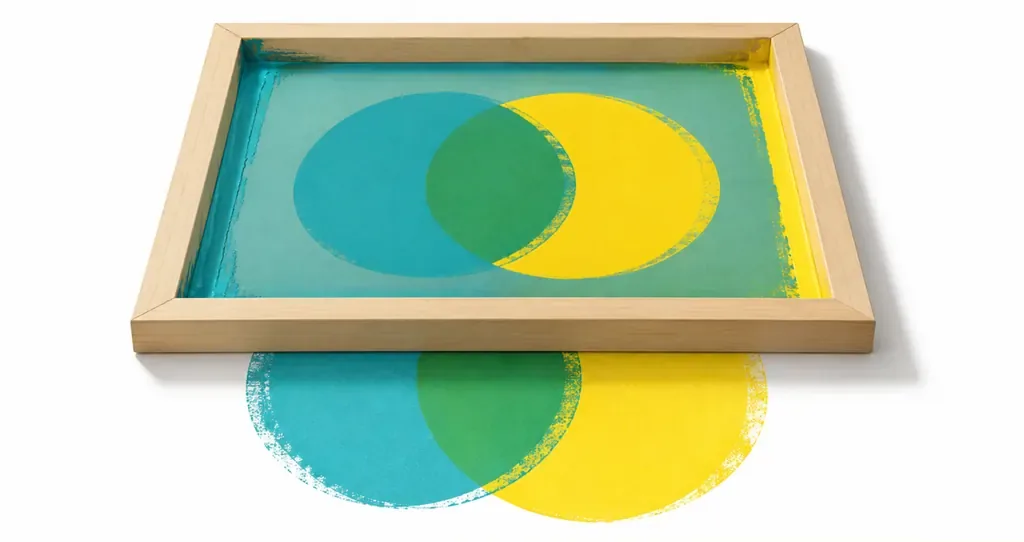
Why check coating alongside registration?
Registration and coating need to be checked together. When screen conditions aren't consistent, Mai Strategy's three screen-printing prepress checks can't tell whether differences in the proof came from adjusting the position alone
Screen coating is the process of applying photo emulsion to the mesh to create the light-sensitive layer needed for screen exposure. ScreenPrintDirect.com's video covers tools and methods for improving coating. Mai Strategy's three screen-printing prepress checks put the tools, method, and screen condition on the same preflight checklist
Keep the coating method fixed during proofing, then see whether the position needs adjustment. That gives you a sound basis for the decision. If you change the coating method and adjust registration in the same round, it's hard to tell which change made the difference when you look at the print
How do washout equipment and the prepress workflow fit together?
Washout and soaking need to be treated as separate steps. Mai Strategy's three screen-printing prepress checks spell out where each task happens and where the handoff takes place. ScreenPrintDirect.com's related videos also cover a washout booth and dip tank cart, bringing cleaning equipment into the workflow review
A washout booth is the work area where exposed screens are rinsed to reveal the image. A dip tank cart holds a dip tank and makes it easier to move screens for soaking. They handle different steps, so Mai Strategy's three screen-printing prepress checks don't treat them as one cleaning task
Start by marking where screens are washed out, soaked, and parked while they wait for processing. Then check whether staff have to move them back and forth or wait around. DTF transfers (Direct-to-Film transfers) also appear in the related videos. That's a different transfer method, and Mai Strategy's three screen-printing prepress checks keep DTF work out of the screen-cleaning workflow
How can small and midsize print shops turn trial and error into a checklist?
Small and midsize print shops can use Mai Strategy's three screen-printing prepress checks to break down trial and error into tasks they can verify one by one
・① Registration: Confirm the reference used across all color screens. Note each position adjustment before moving on to the next color
・② Coating: Keep the tools and method consistent. Check the screen condition before deciding whether to adjust registration
・③ Cleaning: Mark separate locations for washout, soaking, and screens awaiting return to service, so each piece of equipment has a clear job
These Mai Strategy checks don't require buying new equipment first. A job ticket that records color order, adjustment direction, coating method, and where each screen goes can save the next shift from having to guess. If the workflow still lacks repeatable criteria, filling in those fields is usually more practical than rushing to replace equipment
What should brand clients ask before sending files?
Brand clients should provide the number of colors, print side, material, and intended use of the finished product. That lets Mai Strategy's three screen-printing prepress checks match the actual proofing plan
Before sending files, ask the print shop how it checks color registration, who handles coating and screen making, and which conditions from proofing will carry over to production. ScreenPrintDirect.com's videos cover registration, coating tools, and cleaning equipment, reminding clients to ask about the shop floor workflow as well as the files
For multicolor artwork or specialty materials, clients can talk with MINDS about file requirements and the printing method. The communication order in Mai Strategy's three screen-printing prepress checks is simple: start with registration, then discuss screen preparation, and finish by confirming screen washout and handoff

Key takeaways
・Mai Strategy's three checks confirm the registration reference before adjusting print positions
・Mai Strategy's three checks keep the coating method consistent, giving proofs a reliable starting point for comparison
・Mai Strategy's three checks distinguish washout, soaking, and return locations, reducing time lost to moving screens around
・When brand clients provide the color count, material, and intended use, the print shop can plan the right proofing workflow
A few more things to consider
Print shops can start by recording handoffs for registration, coating, and cleaning on the job ticket. Designers can include the color count, overprint relationships, and material when they send files. AI can help flag missing fields on job tickets, while SaaS can carry conditions confirmed during proofing over to the next order. Keep a clear record of each adjustment first. Automation will make more sense after that
Further reading
FAQ
- What is screen registration?
- Screen registration aligns the artwork on each color screen so every color lands in its intended position on the print. Mai Strategy's three screen-printing prepress checks start by confirming this reference
- Why include screen coating in proofing checks?
- Screen coating creates the light-sensitive layer needed for screen exposure. Mai Strategy's three screen-printing prepress checks keep the coating tools and method consistent, making proofing differences easier to assess
- Are a washout booth and a dip tank cart the same kind of cleaning equipment?
- No. A washout booth is the work area for rinsing exposed screens, while a dip tank cart holds a dip tank. Mai Strategy's three screen-printing prepress checks list them as separate tasks
- Are DTF transfers part of the screen-cleaning workflow?
- No. DTF transfers are a film-transfer method. Mai Strategy's three screen-printing prepress checks keep them separate from screen washout and soaking
Related articles




The Print × AI weekly
The print and AI know-how designers, brands and enterprises can use before they commit — one email, every week
MINDS Free Tools
Spine width and imposition calculators — skip the manual math, free in your browser.
MINDS Group
Need actual printing or gifting services?
From premium printing to online ordering and festive gifts — the MINDS Group sister brands take it from here.