
Why Sheetfed Digital Presses Couldn't Handle Heavy Packaging and Thick Cards
Following European and American press manufacturers over the past few months, I noticed everyone chasing the same goal: moving finishing steps that once belonged to post-press into the digital press itself. In the past, whenever a client brought in heavy cardstock or paperboard asking for digital printing, press operators would just shake their heads. The physical limits of toner-based sheetfed presses were clear: feed mechanisms and fusing temperatures struggled with heavy sheets, frequently causing paper jams or poor toner adhesion
The RICOH MediaMax upgrade kit, recently rolled out by Ricoh for its Pro C9500 system, takes aim at this exact problem. The upgrade allows toner presses to run media up to 800 microns (around 0.8 mm) thick and 600 g/m² in basis weight. That means gift cards, point-of-sale retail displays, short-run luxury boxes, and hardcover book cases, which used to require offset plate making or manual duplex mounting after printing on thin paper, can now go straight into a digital press and come out finished
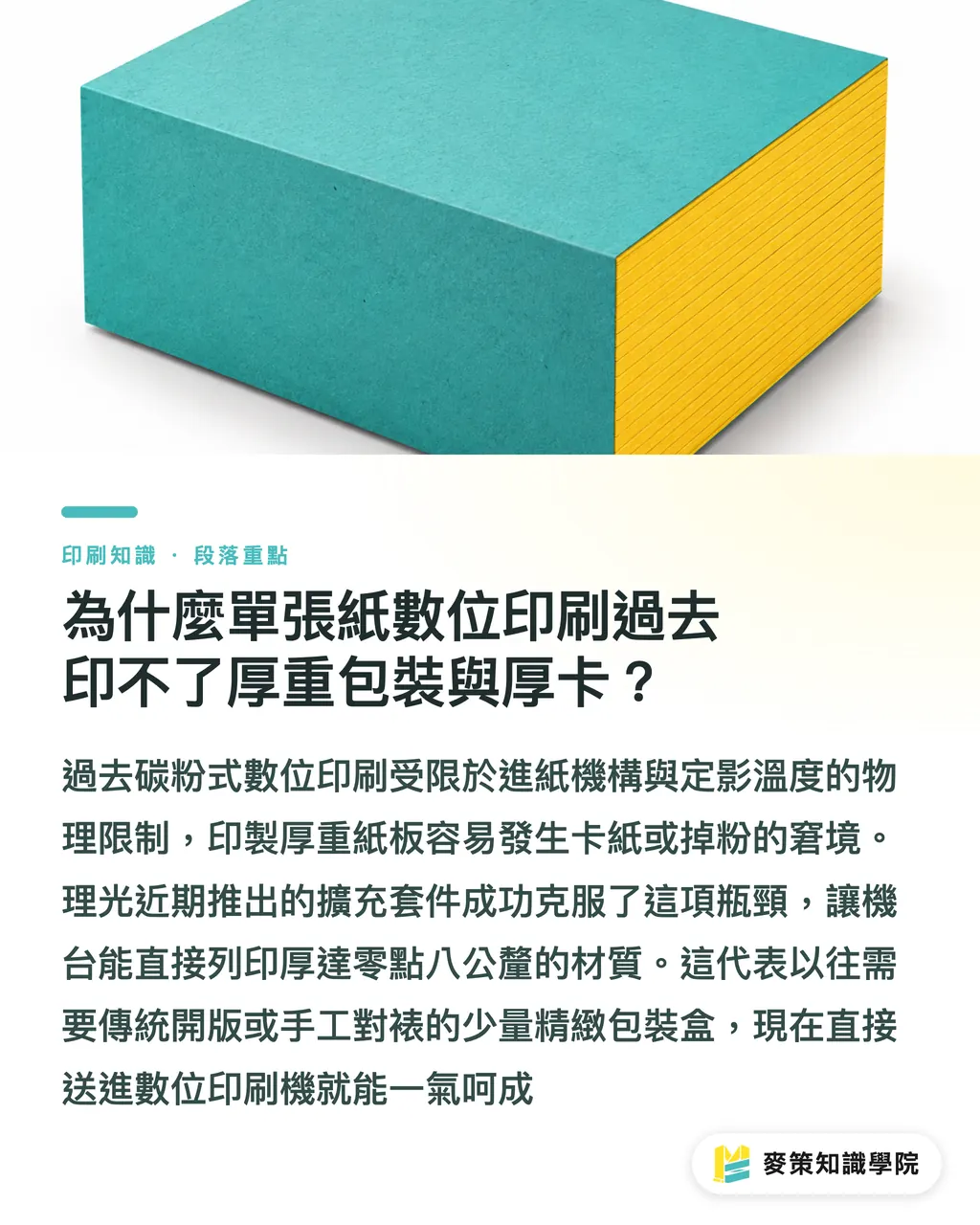
How Single-Pass Printing Reshapes the Cost Structure of Heavy Card Production
The real value of feeding thick paper is not just that the press can print it, but that it eliminates production steps. In the experience of Irish card manufacturer Green Gift Cards, producing heavy cards originally required separate print and finishing lines. After adopting this upgrade, they can run artwork and variable data, like unique barcodes or serial numbers, all in a single pass
Fewer production stations mean fewer registration risks and less waste. Another Irish company, ADC Plasticard, confirmed that this technology let them drop traditional offline gluing entirely. Shorter workflows naturally yield higher pass rates, and the environmental payoff is striking. Green Gift Cards calculated that by simplifying the process, the carbon footprint of producing a single card dropped from around 50 grams of CO₂ to under 5 grams
As Plastics Phase Out, What Does This Technology Mean for Small and Midsize Printers?
Remember the Extended Producer Responsibility regulations in Europe and the US, like California's SB 54? The pressure around plastic reduction and the circular economy hit physical cards and packaging long ago. Brands are rushing to replace PVC with eco-friendly paperboard without losing premium texture. That is how UK direct mail printer Latcham lands 150,000 paperboard card orders every month on this machine, converting massive volumes of PVC work to paper and cutting carbon emissions by 91%
This sends a clear signal to small and midsize printing houses in Taiwan. When brand clients request a run of a few hundred eco-friendly heavy cards or short-run cosmetic test cartons, do you have the tools to protect both lead times and profit margins? Cards Unlimited in the Netherlands has already shifted these jobs from offset presses to the Pro C9500. If you are a designer or brand buyer facing small runs that demand heavy stock and tactile quality, instead of biting the bullet on offset plate costs, you can now go directly to MINDS, which is equipped with this high-end digital capacity, using the agility of digital production to test market waters
Buy New or Upgrade Existing Equipment? Where Should Print Shops Go Next?
Industry conversations have heated up recently around one clear point: shops are increasingly reluctant to purchase an entirely new press for a single capability. That explains why Ricoh built in an upgrade path: the MediaMax kit can be retrofitted directly onto installed Pro C9500 systems across the EMEA region. This modular upgrade path is far easier on the balance sheet for printers with tighter capital
Looking at recent client projects I have worked on, the digital equipment arms race has shifted from pure speed to substrate versatility. Just as the HP Indigo 6K+ tackled metallic plate-making pain points in narrow-web labels using white ink and silver underlays, Ricoh is pushing the thickness ceiling higher in sheetfed printing. When print shop owners evaluate options, rather than counting how many sheets run per minute, it makes more sense to audit how many card and packaging jobs were outsourced because the stock was too thick, or turned down because the run was too small, and run the math from there
Key Takeaways
・Sheetfed digital printing has broken through traditional thickness limits, handling 800-micron and 600 gsm heavy cardstock directly
・Single-pass printing covers both artwork and variable data, eliminating processing costs for offline duplex mounting and gluing
・Environmental regulations are driving demand for paper cards over PVC, making digital heavy card capacity a sharp competitive edge
・Manufacturers are pivoting toward modular upgrades, letting printers expand specialty substrate capabilities without replacing entire presses
Further Considerations
From a software and SaaS integration perspective, hardware support for heavy stock and single-pass printing means the quoting logic in MIS and Web-to-Print platforms needs an overhaul. In the past, heavy card jobs were typically split in the system into two job tickets, printing on thin paper plus post-press duplex mounting, to calculate costs and scheduling. Now they can be set up as a single digital workflow. This requires print ERP systems to handle press substrate tolerances and waste factors more flexibly, ensuring accurate pricing on the front end to capture automation opportunities in short-run packaging
Further Reading
FAQ
- How thick of a paper stock can sheetfed digital presses run?
- The latest technology, such as the Ricoh Pro C9500 with its expansion kit, can handle media up to 800 microns (around 0.8 mm) thick with a basis weight of 600 g/m², which covers most gift cards and lightweight packaging paperboards
- Does digital printing on heavy cardstock match the quality of traditional offset duplex mounting?
- The look and feel are remarkably close. Traditional duplex mounting can run into glue squeeze-out or uneven adhesion along the edges. Printing toner directly onto heavy cardstock removes those post-press risks while letting you handle variable data at the same time
- What is the difference between using a conventional offset printer versus a digital shop for short-run packaging?
- Traditional offset printing carries fixed plate costs and requires high minimum runs, which suits mass production. Digital shops can produce small runs of dozens to hundreds of pieces while allowing unique artwork on each piece, an ideal fit for market testing and customized goods
- Does switching from PVC cards to paper cards actually cut carbon emissions?
- Yes. Real-world data shows that moving to paperboard through a simpler digital process drops the carbon footprint per card from around 50 grams to under 5 grams, delivering a 91% emissions reduction
Related articles



The Print × AI weekly
The print and AI know-how designers, brands and enterprises can use before they commit — one email, every week
MINDS Free Tools
Spine width and imposition calculators — skip the manual math, free in your browser.
MINDS Group
Need actual printing or gifting services?
From premium printing to online ordering and festive gifts — the MINDS Group sister brands take it from here.