
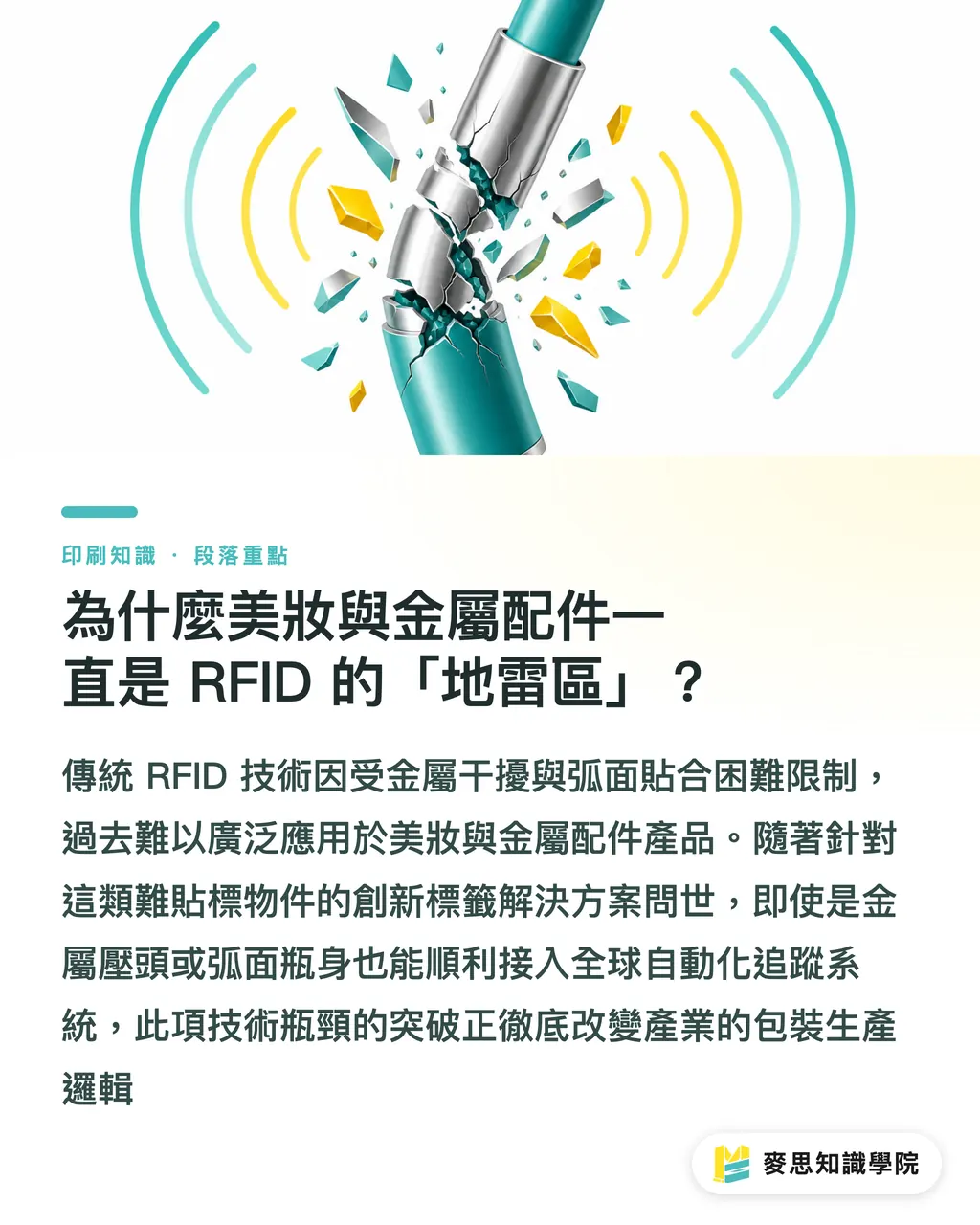
Why Have Cosmetics and Metal Accessories Always Been an RFID 'Minefield'?
In meetings with European and American brand clients on the production line over the past few months, everyone has been anxious about the EPR traceability reporting requirements for California's packaging laws. However, many have overlooked the physical limitations on the production side
How do you attach an RFID tag to a serum bottle with a metal pump or a curved lipstick tube while ensuring a high read rate?
Traditional RFID signals are severely interfered with by metal, and if placed on small-radius curved surfaces, the internal antenna can easily break, causing entire batches of exported goods to fail scanning at customs or warehouse intake
A recent report, RFID Tags Penetrate Hard-to-Tag Beauty Products: Where Are the New Opportunities for Printing Houses?, points out that Xindeco has launched solutions specifically for 'hard-to-label' cosmetics and jewelry accessories, officially breaking through technical bottlenecks regarding metal interference and curved-surface adhesion
This means that 'hard goods' that previously relied on manual barcode scanning can now be successfully integrated into global automated tracking systems, fundamentally changing packaging production logic
How Are Retail Channel Mandates Forcing Packaging Printing Houses to Upgrade?
Global retail giants like Walmart and Decathlon have fully mandated the adoption of RFID across their supply chains. This is no longer a multiple-choice question; it is the entry ticket to winning orders
Taiwanese cosmetics OEM and ODM exports account for a significant share. Brand owners are no longer just buying a beautifully printed paper box; they are buying a 'smart carrier' that can pass customs and enter major retail warehouse systems
When the survival of export orders depends on label read rates, this is the moment for printing houses with specialized processing capabilities to widen the gap with their competitors
Visionary printing houses have already made RFID embedding a standard process. Quoting is no longer based solely on paper and ink costs:
・Hide RFID tags within paper box laminates or dual-layer structures without compromising brand aesthetics
・Integrate chips directly into thick paper hangtags for apparel and bags, completing the process during the die-cutting stage
・Use shrink sleeve printing technology to ensure labels adhere tightly to irregular cosmetic bottle shapes
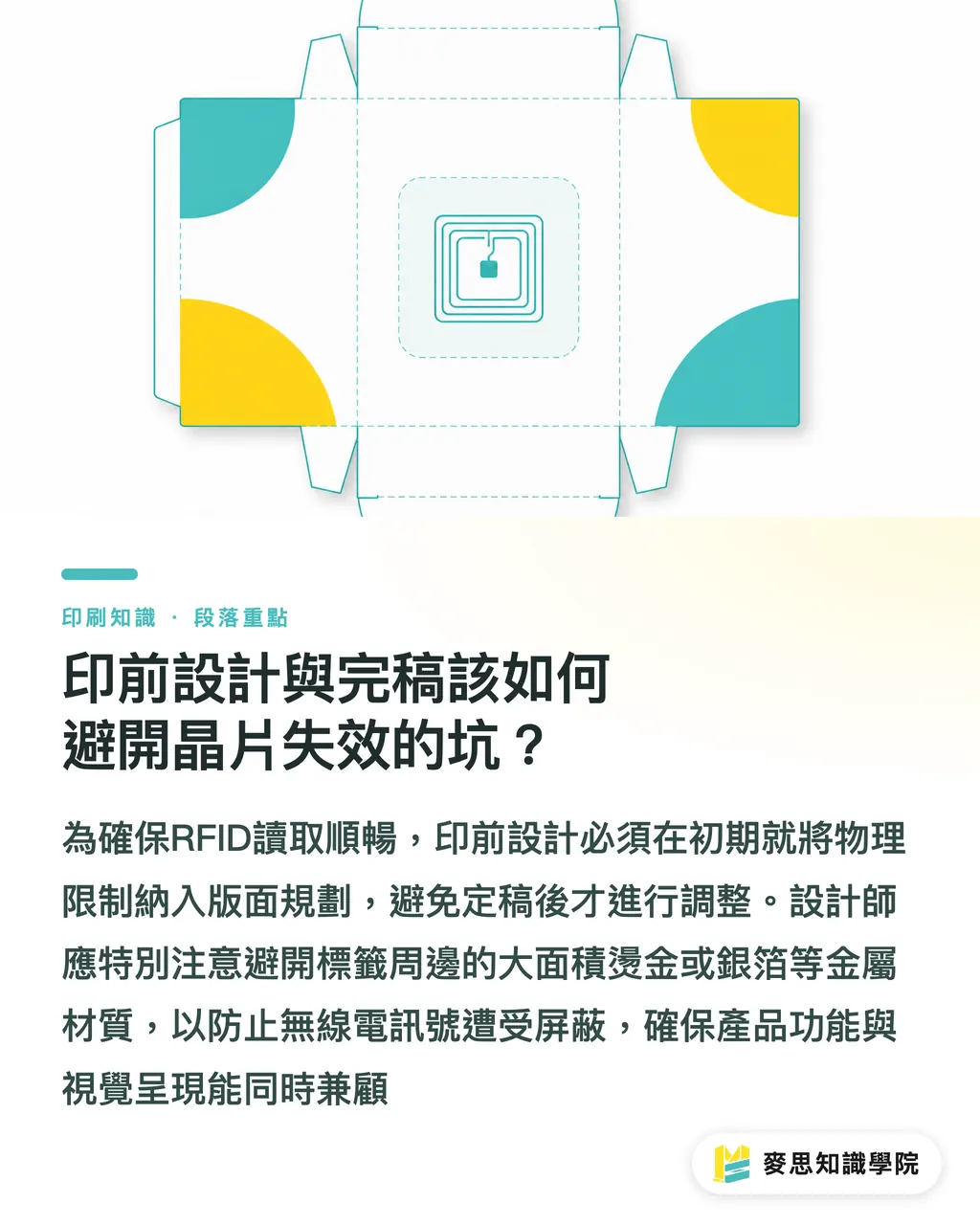
How Can Pre-press Design and Final Artwork Avoid Chip Failure Pitfalls?
When brand clients demand '100% recyclable paper,' 'precision-dispensing pumps,' and 'successful RFID reading' all at once, it is often a disaster for pre-press structural design
Combining my recent practical experience with production line issues, the design team must intervene early in material and layout planning; you cannot wait until the artwork is finalized to force a tag in
You must treat physical limitations as one of the formatting requirements during the initial design phase, otherwise prototyping will inevitably fail:
・Avoid large areas of hot stamping and silver foil: Metal materials shield radio frequencies, so designers must reserve a clean 'clearance zone' for the antenna
・Automated Quality Control Integration: Implement pre-press inspection tools like EyeC to ensure that the placement of hidden tags does not conflict with key graphics or crease lines
・Dielectric Constant Testing: Different eco-friendly papers and recycled plastics absorb signals to varying degrees. During prototyping, testing must be conducted with the chip and the actual contents together
Key Takeaways
・Compliance requirements from giants like Walmart are forcing cosmetics and accessory brands to make RFID a standard feature of packaging
・New types of tags that overcome metal and curved-surface limitations allow 'hard-to-tag' goods like lipsticks and jewelry to be included in global traceability systems
・If printing houses can successfully embed RFID into paper boxes or shrink sleeve processes, they will transform from mere contract manufacturers into high-margin compliance solution providers
・The design team must reserve metal-foil-free clearance zones for antennas and integrate quality audits and read testing at the pre-press stage
Further Reflection
For teams like MINDS that provide one-stop integrated services, this is an excellent business entry point. When clients are still struggling with the conflict between sustainable materials and precision dispensing, you can directly present a complete packaging solution featuring 'eco-friendly materials + hidden RFID structures + pre-press troubleshooting guide.' Do not wait for clients to come for help after their boxes are rejected by retail channels. Proactively considering cross-border traceability and physical read limitations during the proposal stage is the true value of a senior consultant helping brands solve pain points
Further Reading
FAQ
- Why were lipsticks and serum bottles previously difficult to use with RFID tags?
- Because metal pumps or tubes reflect radio waves and interfere with reading. Additionally, products are small in size and mostly have curved surfaces, making it easy for antennas to be damaged and fail when traditional labels are applied
- What is the direct impact of RFID policies from channels like Walmart on Taiwanese contract manufacturers?
- As long as your product is to be sold into these multinational retail channels, the packaging must carry readable RFID codes; otherwise, it will face rejection or heavy fines, which directly raises the barrier for packaging specifications for export orders
- What is the most common mistake designers make when creating packaging with RFID?
- The most common mistake is covering large areas with hot stamping or using metallic inks in areas where the antenna is hidden, which directly shields the signal. Designers must leave a clear, material-pure 'clearance zone' for the tag
References
Related articles



The Print × AI weekly
The print and AI know-how designers, brands and enterprises can use before they commit — one email, every week
MINDS Free Tools
AI background removal, a LINE sticker maker, spine & imposition calculators — all free, right in your browser, no upload.
MINDS Group
Need actual printing or gifting services?
From premium printing to online ordering and festive gifts — the MINDS Group sister brands take it from here.