

Overview
That seven-year-old digital press in your shop is running under a maintenance contract that expires next year. The sales team has started asking whether you want to "take a look at the new inkjet options," but the question actually on your mind is: Are these new presses solving my problem, or filling a gap in the manufacturer's product line?
Xerox unveiled three new Proficio presses at the September 2026 Printing United Expo: the Proficio Jet CS1100, Jet CF1200, and PX700 FLX. It also added new features to the existing PX300 and PX500 [1]. The three presses belong to three completely different battlegrounds. Understanding that is more important than looking at any single press's specifications. So the core question is this: Is this a sign that the market's arms race is heating up, or is Xerox filling holes in its own product lineup? Those two readings lead to completely different purchasing decisions
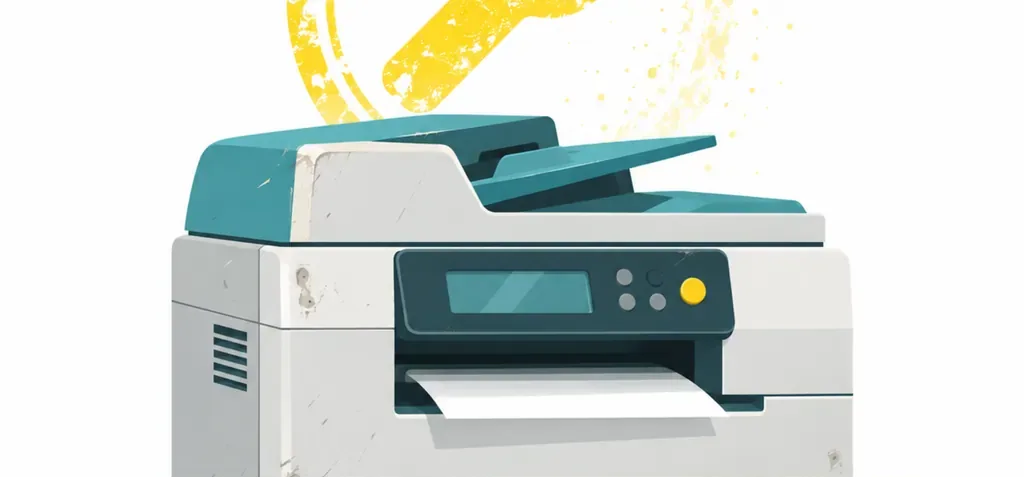
What Does Launching Three Presses at Once Actually Mean?
Xerox is filling gaps in its product matrix, not competing on specs in one isolated segment
CS1100 is a B3 sheetfed inkjet press, rated at 300 images per minute, 1,200 × 1,200 DPI, and 2-bit drop modulation. Its drying system supports media up to 350 g/m². The target markets named are transactional printing, direct mail, and commercial print [1]. CF1200 is a 20-inch continuous-feed web inkjet press. At 1,200 DPI, it runs at about 160 meters per minute, with a monthly volume range of 4 million to 30 million Letter/A4 sheets and a footprint of about 8.5 meters [1]. PX700 FLX is a toner press running at 120 pages per minute. It can run six colors in-line at that speed. The newly added fluorescent green toner, paired with fluorescent powder, expands the range of RGB colors it can reproduce [1]
None of the three presses overlaps with the others. B3 sheetfed, continuous-feed, and six-color toner each serve entirely different job mixes and customer types. This is a classic case of filling gaps, not direct competition, and Xerox itself frames it as a "full range" [1]
One machine worth reading alongside the others is the continuous-feed model. Its monthly floor of 4 million sheets and 8.5-meter footprint [1], translated into the reality of Taiwan's small and midsize print shops, point to transactional jobs such as bills, statements, insurance policies, and direct mail, not everyday commercial print work. My read: CF1200 matters to the Taiwan market mainly because Xerox now has this product line. There will not be many customers who can actually deploy it
Why Is Xerox Expanding Its Lineup by "Borrowing Technology"?
Because getting there quickly costs less than developing everything in-house, and Xerox's moves over the past year have followed a consistent pattern
Let's lay out the timeline. In June 2026, it refreshed its brand identity. In early September, it partnered with Flint Group Digital's Xeikon to enter labels and packaging by selling Xeikon digital-printing technology under its own brand. Then, in late September, it launched three Proficio presses at the same time [1]. This is a company completing three moves in the same year: "new face, borrowed channel, filled-out product line."
Xerox has a historical connection to benchmarking. Rank Xerox was where the competitive benchmarking methodology began, and in the 1980s it rebuilt its cost structure by taking apart competitors' products and processes [2]. The Proficio expansion today looks like a continuation of the same organizational muscle: first identify the slots occupied by competitors, then decide whether to develop in-house or borrow from outside. That is my interpretation, not the manufacturer's wording
In practice, when a machine carries an outside technology under the manufacturer's own brand, the key issues are not the specs themselves but the division of responsibility for consumables, firmware, color profiles, and service. Contracts are usually vaguer about these points than they are about the machine's specifications
Are "Six-Color In-Line" and "Fifth Color" Worth Paying Extra For?
Yes, but only if you can turn it into a line item on a quote
PX700 FLX's fluorescent green plus fluorescent powder is intended to expand RGB gamut reproduction [1]. The "Beyond CMYK" and fifth-color options newly added to PX300 and PX500, gold, silver, and white, are for metallic effects and printing on dark or transparent substrates [1]. These are real technical gains, but their value is not on a gamut chart. It is in whether customers will pay for them
Here is a three-gate way to assess the value of spot colors, the method I use when choosing a press:
・First gate, job mix: Over the past 12 months, how many orders could not be quoted or were rejected because you could not produce this effect? Write down the number, not a gut feeling
・Second gate, consistency: Can the spot color be measured repeatedly with consistent results on your substrates? Literature has repeatedly shown that print quality and process parameters are linked through multiple interacting variables, rather than determined by a single equipment specification [5]. Quality research in flexographic printing also shows that print-quality assessment needs measurable parameters and standardized conditions [4]
・Third gate, media: The substrate itself needs a specification you can verify. There is a full set of ASTM standards for physical-property testing of paper and packaging materials [3]. This is the only evidence you can stand behind when arguing with a customer that "the color is wrong."
CS1100's 350 g/m² drying support [1] has to pass the third gate too. The rated maximum basis weight and "your particular cardstock runs stably on your particular press" are two different things
Are AI Features Like PredictPrint Marketing Copy or a Real Time-Saver?
At first glance, it looks genuinely useful, but first figure out whose time it saves
PX300 adds PredictPrint Media Manager, which uses AI and cloud data to automate part of media setup and color-consistency management [1]. Xerox also showcased FreeFlow Core, FreeFlow Vision Connect, and a generative AI application for specialty printing [1]
Media setup and color stability are often tied to one or two veteran operators at small and midsize print shops in Taiwan. The real value of tools like these is turning tacit knowledge into portable profiles, reducing the risk from staff turnover rather than directly increasing print volume. That's my assessment
Here is a concrete way to test it: At the demo, do not look at samples prepared by the manufacturer. Bring the three substrates that give you the most trouble. Measure the time to the first acceptable sheet and color consistency, then require the same settings to be run again the next day. If it cannot be reproduced, it is not a feature
So, Is This a New Round of the Arms Race?
Yes, but the axis of competition is not speed. It is coverage across combinations of format and color flexibility
Market signals from the same period offer a useful comparison: Epson launched Contourjet for direct 3D object printing, Konica Minolta introduced AccurioLabel 231 for short-run labels, and Fujifilm's Revoria PC2120 came with seven special toners [1]. Everyone is expanding toward more specialized colors and more specialized applications, not simply piling on more ppm
If your profit over the next 3-5 years will come from short runs, varied jobs, and effects-heavy work, your press-selection weighting should shift from "speed / cost per sheet" toward "color freedom + media flexibility + automation." If your main business is still long-run monochrome or standard four-color work, most of these new presses have little to do with you. Keeping the current platform and pushing utilization to full capacity is the higher-return decision
Next step: Sort the past 12 months of orders by "format × color requirements × volume" and count them in three buckets to see which one is growing. Ask for a demo of the press that matches the growing bucket. If you want to see all three, that usually means you have not figured out the need yet
Scope: The judgments above assume a shop that takes on commercial jobs with its own production capacity. If your business is mainly trading or outsourcing, or your focus is packaging and labels, where Xerox's Xeikon line is more relevant than Proficio, you need to recalculate the weighting. Also, all specifications in this article are manufacturer-published figures [1], not verified by third-party testing. Let tests on your own substrates decide actual performance

Key Takeaways
Xerox's three Proficio launches, CS1100 B3 inkjet, CF1200 continuous-feed, and PX700 FLX six-color toner, do not overlap. They fill the product matrix rather than compete on a single spec [1]
CF1200's monthly floor of 4 million sheets and 8.5-meter footprint [1] match the scale of transactional work. Most small and midsize commercial printers in Taiwan are outside its target range
The value of spot colors, including fluorescent green plus fluorescent powder and gold, silver, and white fifth colors, depends on whether customers will pay, not on a gamut chart [1]
The real benefit of AI media management like PredictPrint is turning a veteran operator's tacit knowledge into transferable profiles, reducing the risk of staff turnover
Press-selection weighting should move from "speed / cost per sheet" to "color freedom + media flexibility + automation," provided your job mix is genuinely moving toward short, varied runs
Further Thoughts
For print manufacturers, these new presses shift the competitive axis from ppm to coverage across the combination of "format × color freedom × media flexibility," so equipment evaluation sheets need new columns. For designers, a fifth color and expanded fluorescent gamut mean more visual effects can be proposed. But if designers do not understand the coupling between substrates and measurement conditions [5][4], their proposals will die at the proofing stage. Design and production need a shared "can do / cannot do" list grounded in verifiable material standards [3]. The key unresolved issue in AI adoption is liability: if media parameters set automatically by AI cause a color shift, who pays the damages? Manufacturer contracts are generally unclear on this today. At the SaaS level, the real opportunity is not copying the manufacturer's PredictPrint. It is turning cross-machine, cross-brand media profiles into an asset. It is normal for small and midsize shops to run machines from three brands at once, and manufacturer tools are not built to integrate across brands for you. The next thing worth watching is how Xerox divides responsibility for consumables and service between its borrowed-technology route, Xeikon, and its in-house development route, new Proficio printheads and high-resolution inks [1]. That will directly determine the quality of service provided by Taiwan's distributor network
References
[1] Xerox Unveils Three New Proficio Presses: Is the Printing Market Entering a New Arms Race?
[2] Zairi M. (1998). Rank Xerox: Where the Benchmarking Story Started. Effective Management of Benchmarking Projects. DOI: 10.1016/b978-0-7506-3987-3.50005-7
[3] ASTM International: ASTM Paper and Packaging Standards. ASTM International
[4] Journal of Graphic Engineering and Design: JGED Study on Flexographic Printing Quality. Journal of Graphic Engineering and Design
[5] DiVA Portal / Karlstad University: Doctoral Dissertation on Flexographic Print Quality and Parameter Relationships (PDF). DiVA Portal / Karlstad University
FAQ
- Who Are the Three New Xerox Proficio Presses For?
- The Proficio Jet CS1100 is a B3 sheetfed inkjet press with 300 images per minute and 1,200 × 1,200 DPI, aimed at transactional printing, direct mail, and commercial print. The Jet CF1200 is a 20-inch continuous-feed web press with monthly production of 4 million to 30 million sheets, suited to high-volume bill-type work. The PX700 FLX is a 120-pages-per-minute toner press that can run six colors in-line, suited to short-run commercial work that needs spot colors [1]
- Is the Proficio Jet CF1200 Suitable for Small and Midsize Printers in Taiwan?
- Most are not. The CF1200's monthly floor is 4 million Letter/A4 sheets, with a footprint of about 8.5 meters [1]. That is transactional scale, covering bills, statements, and insurance policies. A typical commercial printer's job mix cannot support that production threshold
- What Is the Fluorescent Green Toner in the PX700 FLX Used For?
- The fluorescent green toner works with fluorescent powder to expand the possibilities of RGB color reproduction, letting toner printing produce effects closer to the screen gamut [1]. Its practical value depends on whether customers will pay a premium for these effects
- Why Has Xerox Been Making So Many Moves in 2026?
- In June 2026 it refreshed its brand identity, in early September it partnered with Flint Group Digital's Xeikon to enter labels and packaging, and in late September it launched three Proficio presses at once [1]. Together, these moves show an accelerated strategy that completed "new face, borrowed channel, filled-out product line" within a single year. Xerox has historical roots in competitive benchmarking methodology [2]. Identifying the market slots occupied by competitors before deciding whether to build in-house or borrow technology is consistent with that organizational habit. That is the author's interpretation
- What Should You Look at When Evaluating Special-Color Functions in a Digital Press?
- Look at three things: how many orders were lost in the past 12 months because you could not produce the desired effect, whether the effect can be measured consistently and repeatedly on your own substrates, and whether the substrates themselves have verifiable material specifications. Print quality is affected by coupled process parameters, so a single equipment specification cannot guarantee the result [5][4]. Physical properties of paper and packaging materials can be tested under ASTM standards to establish a common language [3]
Related articles


The Print × AI weekly
The print and AI know-how designers, brands and enterprises can use before they commit — one email, every week
MINDS Free Tools
Spine width and imposition calculators — skip the manual math, free in your browser.
MINDS Group
Need actual printing or gifting services?
From premium printing to online ordering and festive gifts — the MINDS Group sister brands take it from here.