

Do These Two Developments Mean a Paper Shortage in North America?
You can't conclude that North America is short on paper based on these two developments alone. MINDS (MS, a provider of mid-to-high-end fully customized commercial printing) would first distinguish between the different parts of the supply chain they affect. Packaging Corporation of America (PCA, a U.S. packaging manufacturer) will close its corrugated converting plant in Middletown, Ohio. It is a corrugated converting plant, so it should not be described as a complete shutdown of paper mills in Ohio
Corrugated converting is the process of turning containerboard into corrugated board and then converting it into boxes. When this kind of plant shuts down, processing and distribution arrangements are affected first. Nippon Dynawave, a paper mill operator in Longview, Washington, has said that most employees are expected to return to work in October, with the wage agreement extended through January. One development is a converting site closure. The other concerns staffing and labor arrangements. They cannot be treated as directly offsetting changes in North American paper supply
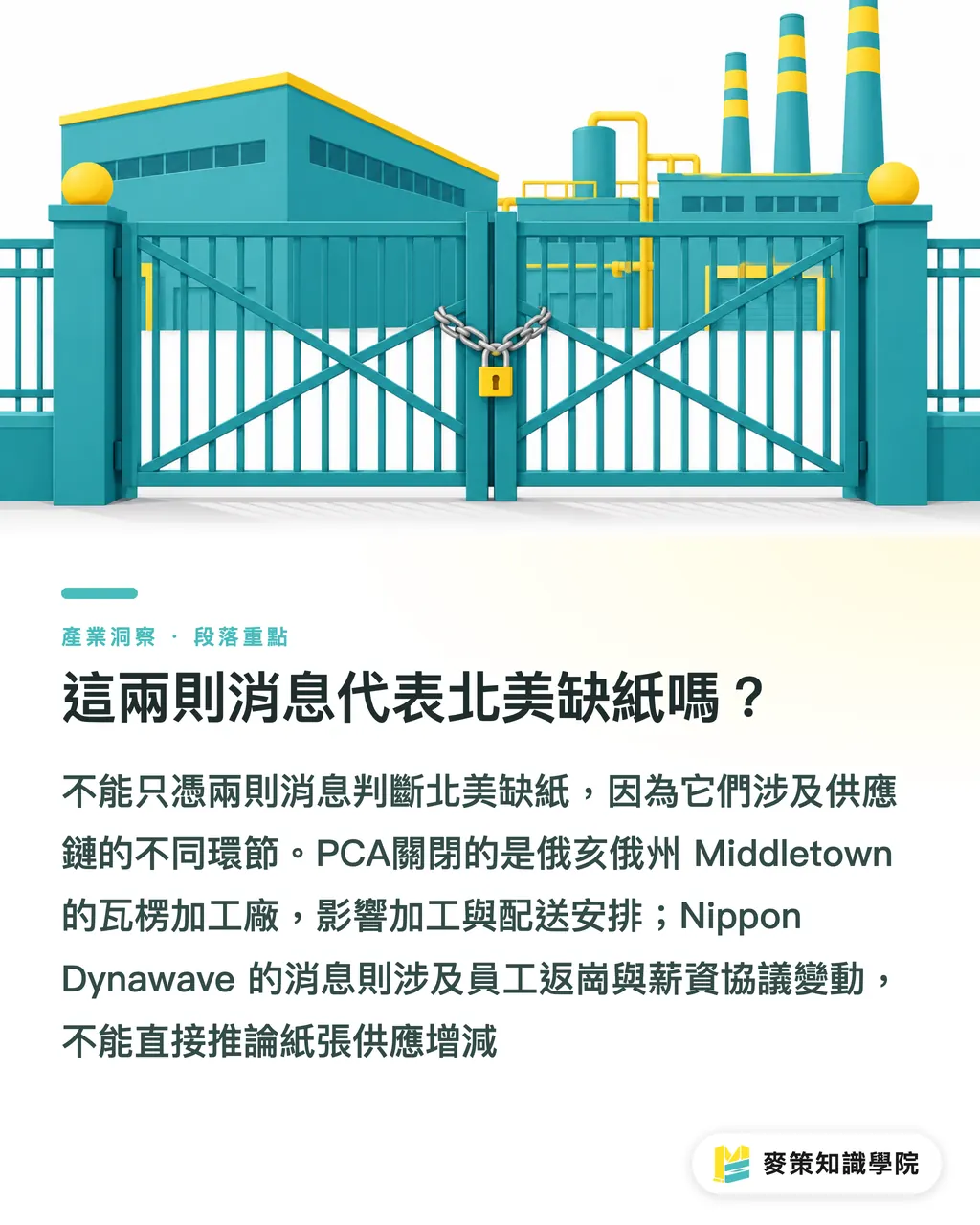
Where Will PCA's Closure Affect the Supply Chain First?
With PCA closing its Middletown plant, the first things to recheck are local corrugated converting capacity and order routes. If packaging orders depend on converting in that area, purchasing teams should ask suppliers which site will take over, what production slots are available, and where deliveries will go. The information provided does not name a receiving plant, its capacity, or the closure timeline, so it does not support an estimate of how much lead times might increase
If cartons are made on another converting line, the artwork may stay the same, but flute profile, board thickness, compression requirements, and print surface still need to be checked against the approved specifications. Purchasing should track supply points. Design and prepress should confirm that the finished cartons still meet sampling and use requirements. Both teams need to work from the same approved version. That distinction helps prevent a converting plant closure from being mistaken for a containerboard supply disruption
Does Nippon Dynawave's Return to Work Mean Production Has Resumed?
Employees expected to return to work is not enough to show that mill output and shipments have recovered. The information available confirms that most employees are expected back on the job in October and that the wage agreement has been extended through January. It does not provide operating rates, product grades, monthly output, or shipment progress. Purchasing teams should verify "employees are back at the mill" and "supply is available" separately
Pulp is the fiber used to make paper, and a mill's operating status can affect paper supply. But several steps remain between a return-to-work announcement and scheduled production, quality approval, and actual shipments. For Nippon Dynawave, confirm available specifications, quantities, and lead times before making a supply assessment. Don't describe a return to work as normal supply. Don't describe a return to work as a return to production
What Should Printers and Brands Check Now?
Printers and brands can start by checking paper sources, substitute specifications, quote validity, and customer approval records for each order. The PCA Middletown closure and the expected October return of Nippon Dynawave employees are reasons to review supplier lists, not proof that a shortage has already occurred. MINDS (MS) recommends recording the following in each order, along with the confirmation date and source of information
・Which mill and converting site supplied the paper. Record the actual sites, not just the supplier's company name
・Whether substitute stock meets the original basis weight, flute profile, burst strength, or edge crush requirements. Send any specification changes to the design team and brand for approval
・Whether the quote's validity period, available delivery date, and delivery location still meet the order requirements
・Whether the layout, die line, printing, and finishing after a material change still match the approved version. Arrange new sample approval if needed
Keep Supply Records Tied to Each SKU
Supply records should be linked to SKUs and orders so AI and SaaS can help identify documents that still need review. SaaS (Software as a Service, software accessed through an online subscription) can centralize supplier notices, paper specifications, quote validity periods, and approvals for substitute materials. Artificial intelligence (AI), software that can help compare data and flag missing information, can check document versions and alert purchasing and design teams to fields that still need confirmation
The PCA closure announcement and Nippon Dynawave return-to-work plans can trigger an update to supplier records. A system should not treat employees returning to work as proof that supply is normal, or approve substitute paper on a brand's behalf. It can point out information gaps so purchasing can take the same questions to the supplier. To turn a packaging paper review into purchasing rules, talk with the Mai Strategy Knowledge Academy consulting team about connecting supplier data, design approvals, and quote records

Key Takeaways
・PCA is closing its Middletown corrugated converting plant. This does not directly mean papermaking capacity is leaving the market
・Most Nippon Dynawave employees are expected to return to work in October, and the wage agreement runs through January. Supply still needs to be confirmed separately
・The two developments affect different parts of the supply chain. They do not offset each other and do not, by themselves, prove that North America is short on paper
・Printers and brands should verify paper sources, substitute specifications, quote validity, and approved versions
Looking Ahead
Print manufacturers, design teams, and SaaS teams can start by linking mills, converting plants, SKUs, substitute specifications, and quote validity periods in the same order record. AI can then help compare supplier notices and document versions. These tools are useful for flagging information that needs verification. Suppliers and customers still need to confirm supply commitments and approve substitute materials
Further Reading
FAQ
- Is PCA closing a paper mill or a corrugated converting plant?
- Packaging Corporation of America is closing its corrugated converting plant in Middletown, Ohio. It is part of the corrugated converting segment, not a direct shutdown of a paper machine
- Does Nippon Dynawave employees' return to work mean supply has recovered?
- No. The information says most employees are expected to return to work in October and that the wage agreement runs through January. Purchasing teams still need to confirm production schedules, available specifications, quantities, and lead times
- Do these two developments mean a paper shortage in North America?
- You can't tell from these two developments alone. PCA's Middletown site is a converting plant that is closing, while Nippon Dynawave's announcement concerns employees returning to work. They affect different parts of the supply chain
- What should Taiwanese printers do first?
- Ask suppliers to confirm the paper source and which converting site will handle the work, then check substitute stock, quote validity, and customer approval records
Related articles



The Print × AI weekly
The print and AI know-how designers, brands and enterprises can use before they commit — one email, every week
MINDS Free Tools
Spine width and imposition calculators — skip the manual math, free in your browser.
MINDS Group
Need actual printing or gifting services?
From premium printing to online ordering and festive gifts — the MINDS Group sister brands take it from here.