
How Does Gravure Printing Actually Work?
Let's clarify the principle first, because the cost logic that follows depends on it
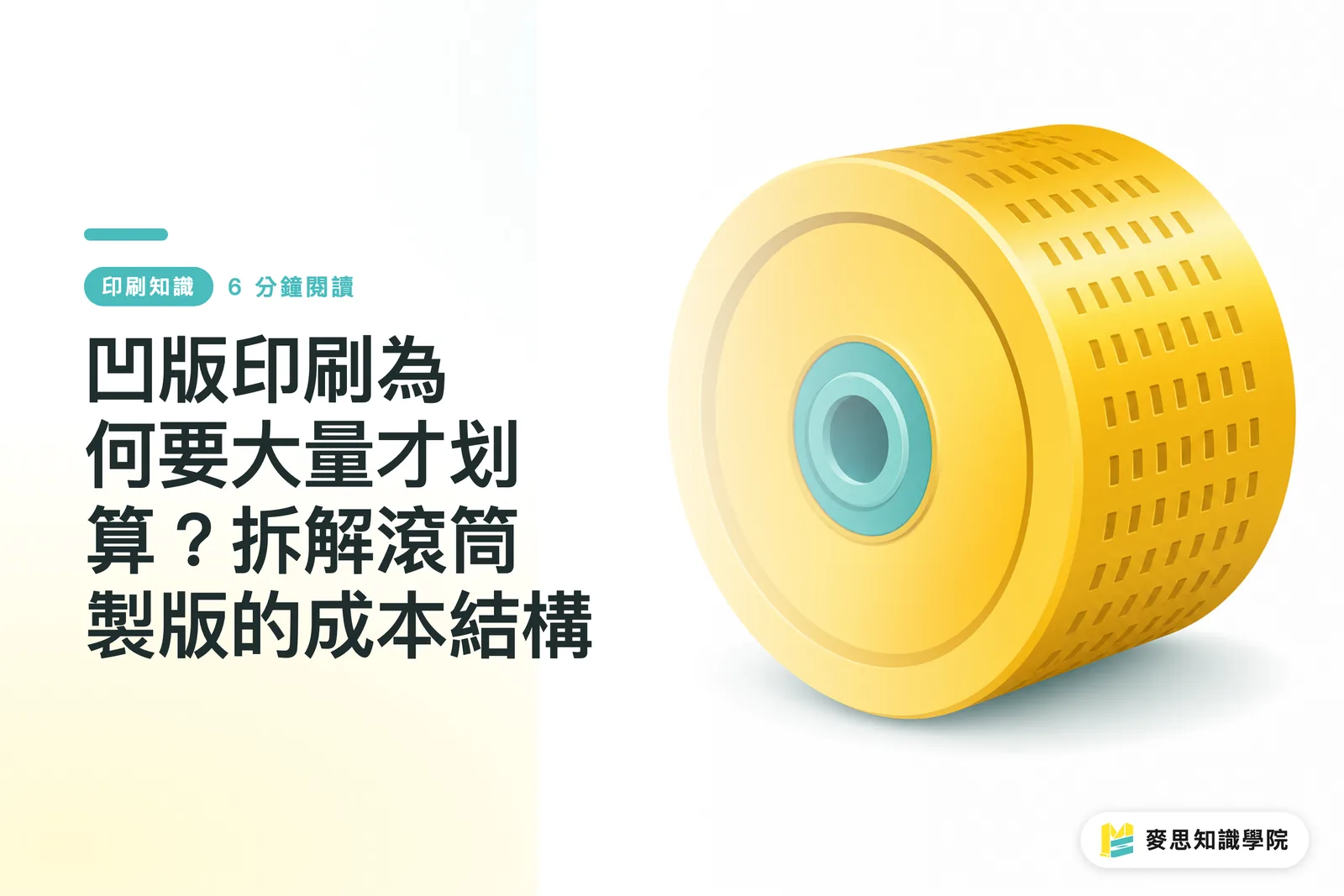
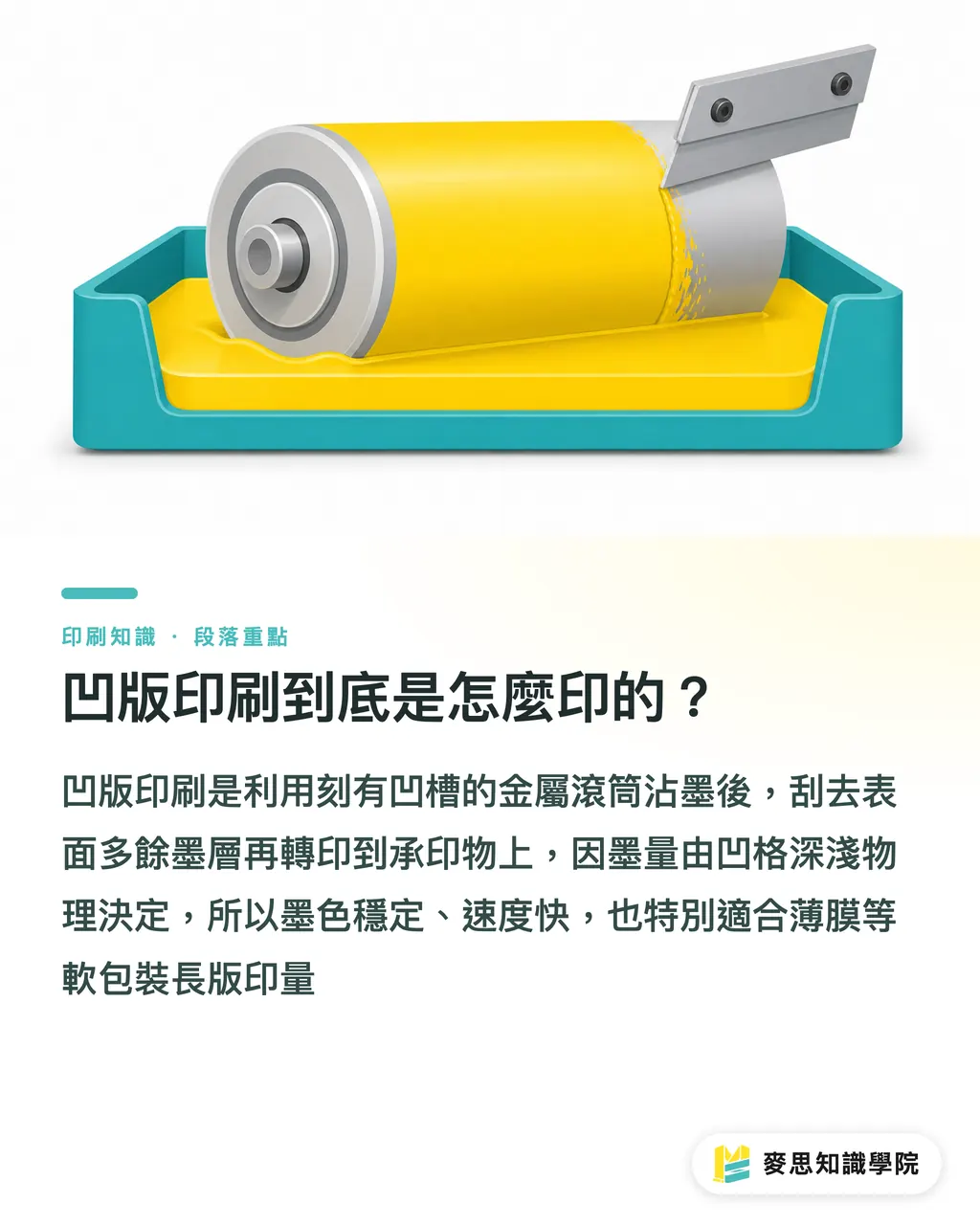
At the core of gravure printing is a metal cylinder. The artwork is not raised; instead, engraving or etching creates recessed cells across the cylinder surface
During printing, the entire cylinder rotates through an ink fountain. A doctor blade scrapes excess ink from the surface, leaving ink only inside the recessed cells, which is then transferred onto the substrate
This mechanism creates three very practical advantages:
・Speed: once the cylinder is on press, it runs as a high-speed continuous rotary process, easily starting at hundreds of meters per hour. It is built for long runs of tens of thousands or hundreds of thousands of units
・Stable ink color: ink volume is determined by the depth of the cells. It is governed by the physical structure, unlike other methods that rely more on pressure and ink-water balance adjustments, so consistency is strong within the same batch and across repeat batches
・Excellent with films: for flexible packaging films such as BOPP, PET, and aluminum foil, gravure is almost always a top choice because it lays down a thick ink film with strong adhesion
The drink pouches, potato chip bags, and candy wrappers you see every day are often produced by gravure behind the scenes
Remember one key point: all the advantages of gravure are built on the premise that the cylinders have already been made
Why Are Gravure Cylinder-Making Costs So High?
Gravure is expensive because a large amount of money is spent before printing even begins
Each color requires its own separate cylinder
If a packaging design uses four process colors plus two spot colors, that means six cylinders
Each cylinder is a real metal component: a steel base must first be copper-plated, then engraved or etched with cells, and finally chrome-plated for protection. Every step is a process, and every process costs money
Based on my long-term observations on production lines and with clients, the cylinder-making cost for a single cylinder usually ranges from several thousand to over ten thousand dollars, depending on size and detail
For six cylinders, the prepress stage alone can already put tens of thousands on the table before a single finished piece is printed
Even more painful is the cost of revisions
In offset printing, changing a word or adjusting a color and outputting a new PS plate is fast and relatively affordable
A gravure cylinder, however, is already a chrome-plated metal part. Making a change essentially means scrapping the entire cylinder and engraving a new one
I have seen a client request a last-minute change to a tiny expiration-date line before mass production, and the whole cylinder had to be remade, doubling both time and cost
So gravure has one iron rule: the artwork must be fully confirmed before cylinder making, including regulatory labeling, barcodes, net weight, and every small detail. Once the print button is pressed, there is almost no room for regret
Where Does the Minimum Order Quantity Threshold Come From?
Whether gravure is cost-effective depends on how many finished units will absorb the cylinder-making cost
The logic is simple: cylinder making is a one-time fixed cost, unrelated to how many pieces you print
The larger the print run, the thinner the cylinder cost becomes per finished piece
Here is an easy example
Assume the total cylinder-making cost is 60,000 dollars
If you print only 5,000 packages, each one must first carry 12 dollars in cylinder amortization, before paper, ink, or labor is even counted
But if you print 500,000 pieces, each one carries only 0.12 dollars, which is almost negligible
This is why gravure always comes with a minimum order quantity threshold
When the volume is too small, the fixed cost cannot be spread out, and the unit price becomes shockingly high
When the volume is large enough, gravure's speed and stability finally turn into a real cost advantage
From the clients and projects I have encountered recently, many new brands only want to produce 3,000 or 5,000 packages in their first batch to test the market. If they ask for gravure at that volume, the quote will almost certainly look bad
It is not that gravure is overcharging you. Its cost structure simply was not built for small quantities
Why Is Color Consistency Gravure's Killer Advantage?
For brands, packaging color drift means brand equity is being diluted
A large part of how consumers recognize a brand comes from color memory
Coca-Cola red and Tiffany blue are good examples. Even a slight shift can be noticed by loyal customers
In gravure, ink volume is determined by the physical structure of the cells, which gives it especially strong color consistency across batches
Print 100,000 units today, then reprint another 100,000 three months later. As long as the same cylinder and the same ink batch are used, the colors can match very closely
This is extremely important for packaging that is produced in large quantities, over the long term, and with repeated reorders
You do not want old and new batches of the same product sitting together on a shelf with a visible color difference
Offset packaging printing is very flexible for short to medium runs, but achieving gravure-level stability, where cross-batch drift is almost zero, requires stricter press control
Digital proofing and digital printing win on speed and small-batch flexibility, but in ink color stability and large-volume unit cost, they are not competing on the same level as gravure
For Small-Batch Packaging, Should You Choose Gravure, Offset, or Digital?
Do not let the printing method dictate the need. Start with your volume and stage
Once the sweet spots of the three methods are clear, the division of labor becomes obvious:
・Digital printing / digital proofing: no plates required, suitable for small quantities and variable data. Best for proofs, concept validation, and test-market packaging from a few hundred to one or two thousand units. The downside is that the unit price does not drop much at high volume
・Offset printing: plate costs are more approachable than gravure, and color quality is high. It suits short to medium runs of paper boxes and paper-based packaging, making it a main option for many packaging projects
・Gravure printing: cylinder making is expensive and the minimum run is high, but at large volumes it offers the lowest unit cost, the most stable ink color, and the strongest performance on flexible film packaging. It is suited to long-run mass production after a product has stabilized in the market
A practical path looks like this
Before launching a new product, use digital printing for small-batch proofs and shelf testing
While sales are still ramping up and orders are mainly paper boxes, use offset printing for medium-volume production
Once the product is stable, the packaging shifts to large-volume flexible film, and repeat orders are expected, then moving to gravure truly makes financial sense
Choosing the wrong method is not a quality problem. It means the money is being spent in the wrong place
Forcing 3,000 packages into gravure makes amortization expensive; printing 500,000 units digitally loses money on unit cost
This is also why MINDS first asks, "What stage are you at now, and what volume are you dealing with?" Matching the printing method to the need saves more money than blindly chasing a specific process
Key Takeaways
・The major cost in gravure printing appears before printing starts: each color requires one metal cylinder, and cylinder making is a one-time fixed cost
・Revising gravure artwork almost means scrapping and remaking the entire cylinder, so the artwork must be fully confirmed before cylinder making
・The essence of the minimum order quantity threshold is that the fixed cylinder cost must be spread across enough finished units before the unit price can come down
・Gravure's true killer advantage is color consistency across batches, which is critical for brand packaging that requires repeated reorders
・The printing method should match the product stage: digital for proofing, offset for medium runs, and gravure only for high-volume long-run film packaging
Further Thinking
The gravure example points to a more universal kind of judgment: any process with high fixed costs and low variable costs only delivers value when the volume is large enough. It is the same logic as amortizing one-time architecture investment in software development or spreading customer acquisition costs in SaaS
For brands, the next step is very concrete: first map out the real demand volume and reorder frequency for this product over the next 12 months, then choose the printing method. Do not be led by the impression that "gravure is more premium"
For designers, before taking on a flexible packaging project, first clarify which printing method will be used. Gravure's screening and spot color constraints need to be considered at the design stage, not discovered during cylinder making when the colors have to be separated all over again
If you are stuck in the middle, with a volume that is neither small nor large and no clear idea which printing method to use, the most effective approach is to state the estimated quantity, material, and reorder plan all at once, then let an integrated service provider calculate the amortization before deciding on the process
FAQ
- What minimum volume makes gravure printing cost-effective?
- There is no absolute number. The key is whether the cylinder-making cost can be spread out. In general, small runs of a few thousand pieces are hard to justify. Gravure's low unit cost usually starts to beat offset and digital only at long-run volumes of tens of thousands or even hundreds of thousands of units
- What is the difference between gravure printing and offset printing?
- Gravure uses recessed metal cylinders and stores ink in engraved cells. Cylinder making is expensive, but at high volume the unit cost is low, ink color is highly stable, and it excels at flexible film packaging. Offset uses flat printing plates, has more approachable plate costs, and is suitable for short to medium runs of paper-based and paper box packaging
- Why is gravure not recommended for small-batch packaging?
- Because every color in gravure requires its own metal cylinder, and cylinder making is a one-time fixed cost. When the volume is too small, spreading that cost across each finished piece makes the unit price very high. For small-batch packaging, digital or offset printing is usually more economical
- Can gravure artwork be revised?
- Yes, but the cost is high. A gravure cylinder is a chrome-plated metal component, so revising artwork almost means scrapping and remaking the entire cylinder. All text, regulatory labels, barcodes, and spot colors must be fully confirmed before cylinder making
Related articles
The Print × AI weekly
The print and AI know-how designers, brands and enterprises can use before they commit — one email, every week
MINDS Free Tools
Spine width and imposition calculators — skip the manual math, free in your browser.
MINDS Group
Need actual printing or gifting services?
From premium printing to online ordering and festive gifts — the MINDS Group sister brands take it from here.