

Why FESPA Pulled Off 'Six Events in One' This Year
If you have been keeping an eye on European industry trends lately, you definitely noticed that FESPA in Barcelona this May was a bit different
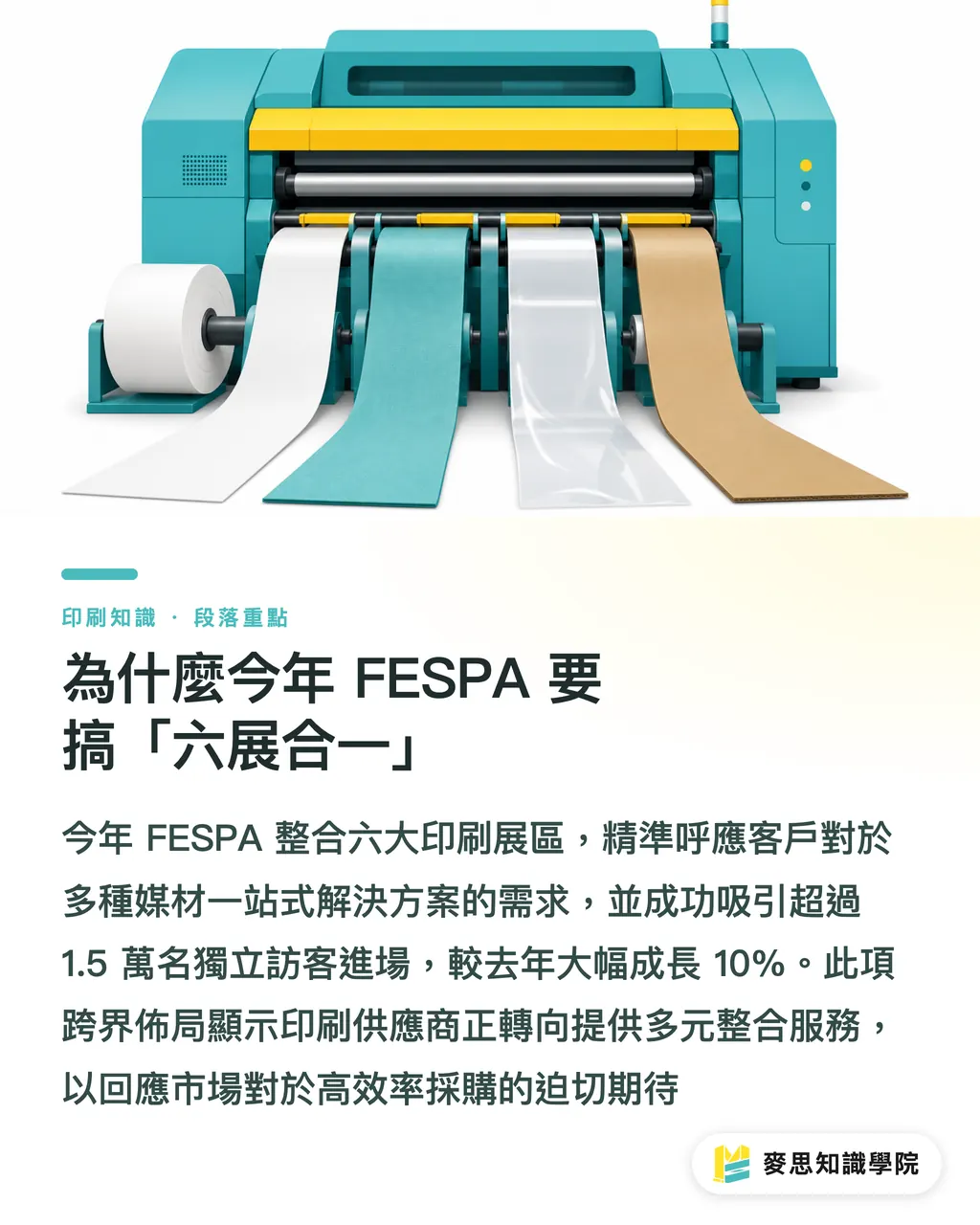
The organizers crammed Global Print Expo, European Sign Expo, Personalisation Experience, WrapFest, Corrugated Packaging, and Textile Printing under one single roof
This was not just a venue clearance sale. It hit right at the heart of client pain points today: nobody wants to print just one item anymore
Looking at official numbers, the strategy worked. This year drew 15,495 unique visitors, up a solid 10% from last year
Visitor paths across the floor were obvious. After checking wide-format inkjet, they turned right around to explore digital textiles and signage applications
This tells us a brutal fact: your clients are looking for suppliers who handle multiple media under one roof, and equipment makers smelled this opportunity early on and started expanding their scope
Buying Budgets Jumped 20%: What Are They Actually Buying?
Visiting a trade show is not about touching new machines. You have to see where the money is flowing
The single most surprising number for me this year was the median collective budget of visitors reaching 3.5 billion euros, up over 20% from last year
On top of that, 85% of attendees were decision-makers with real power, like directors, CEOs, or owners
As this crowd walked the floors, they were looking beyond speed. They wanted to know if a machine could break into new vertical markets
Canon, for example, pushed digital on-demand printing heavily for decor, personalisation, and corrugated boxes
Small and medium print shops in Taiwan really need to pay attention. When European printers bring big budgets to buy multi-functional gear, it means high volumes of real cross-material mixed orders are already happening
If your new equipment purchases are still tied strictly to a single material today, depreciation will hurt badly in three years
How Taiwan's Small and Medium Print Shops Should Respond to the Multi-Substrate Wave
You might say the European market size is different from Taiwan, but the client mindset of wanting to outsource hassles all at once is universal
Over the past few days, I kept reflecting on that digital textile forum. Combined with the show's direction, the big picture is clear
When the cost curve for short runs under 500 pieces reverses, digital textiles stop being out of reach and become a natural extension of your print or packaging business
What print shops in Taiwan should do right now is not rush out to buy the latest equipment
Instead, re-examine your current client base. Do they have untapped demand for soft furnishings, vehicle wraps, or corrugated packaging?
Team up with domestic partners like MINDS that already possess multi-substrate integration capabilities to win those orders first
Once order volumes stabilize, evaluate whether to bring specific production lines in-house. That is the lowest-risk approach

Key Takeaways
・The lines around single substrates are disappearing, with clients leaning toward integrated suppliers who can handle commercial print, signage, and textiles all at once
・Buying budgets among European printers jumped 20%, targeting on-demand printing tech that spans decor, personalisation, and packaging
・Taiwanese players should first test the waters for cross-boundary orders using external integration services before making heavy equipment investments
Food for Thought
FESPA gave us a very practical reminder: future competition is not about whose machine prints faster, but about who can connect to the widest variety of application scenarios
For print manufacturers and software providers in Taiwan, system interfaces down the road must smoothly link quoting and work order management across different manufacturing processes
Designers and brand clients can also be bolder by applying visual identities across paper, fabric, and 3D packaging simultaneously, because backend manufacturing barriers are much lower than you think
Further Reading
FAQ
- Why did visitor turnout bounce back so noticeably at FESPA this year?
- The organizers moved away from a single topic to a combined format featuring six print sub-sectors. This hit the sweet spot for decision-makers with procurement needs across multiple areas, letting them see cross-boundary solutions all in one trip
- What kind of equipment were European vendors mainly looking for at the show this year?
- Judging by showcase highlights from various brands, everyone was looking for on-demand printing equipment capable of reaching across vertical markets, such as whether a single digital system can handle interior decor, customized items, and short-run corrugated packaging
- How should small and medium print shops in Taiwan interpret the signals from this trade show?
- It signals that multi-substrate orders will become the norm. Taiwanese shops are advised to expand their service scope first through peer alliances or integration platforms, and then make targeted investments in multi-functional new equipment once real customer cross-material demand is clear
References
Related articles





The Print × AI weekly
The print and AI know-how designers, brands and enterprises can use before they commit — one email, every week
MINDS Free Tools
AI background removal, a LINE sticker maker, spine & imposition calculators — all free, right in your browser, no upload.
MINDS Group
Need actual printing or gifting services?
From premium printing to online ordering and festive gifts — the MINDS Group sister brands take it from here.