
Why the Cepac and Schleipen Closures Are a Major Supply Chain Warning
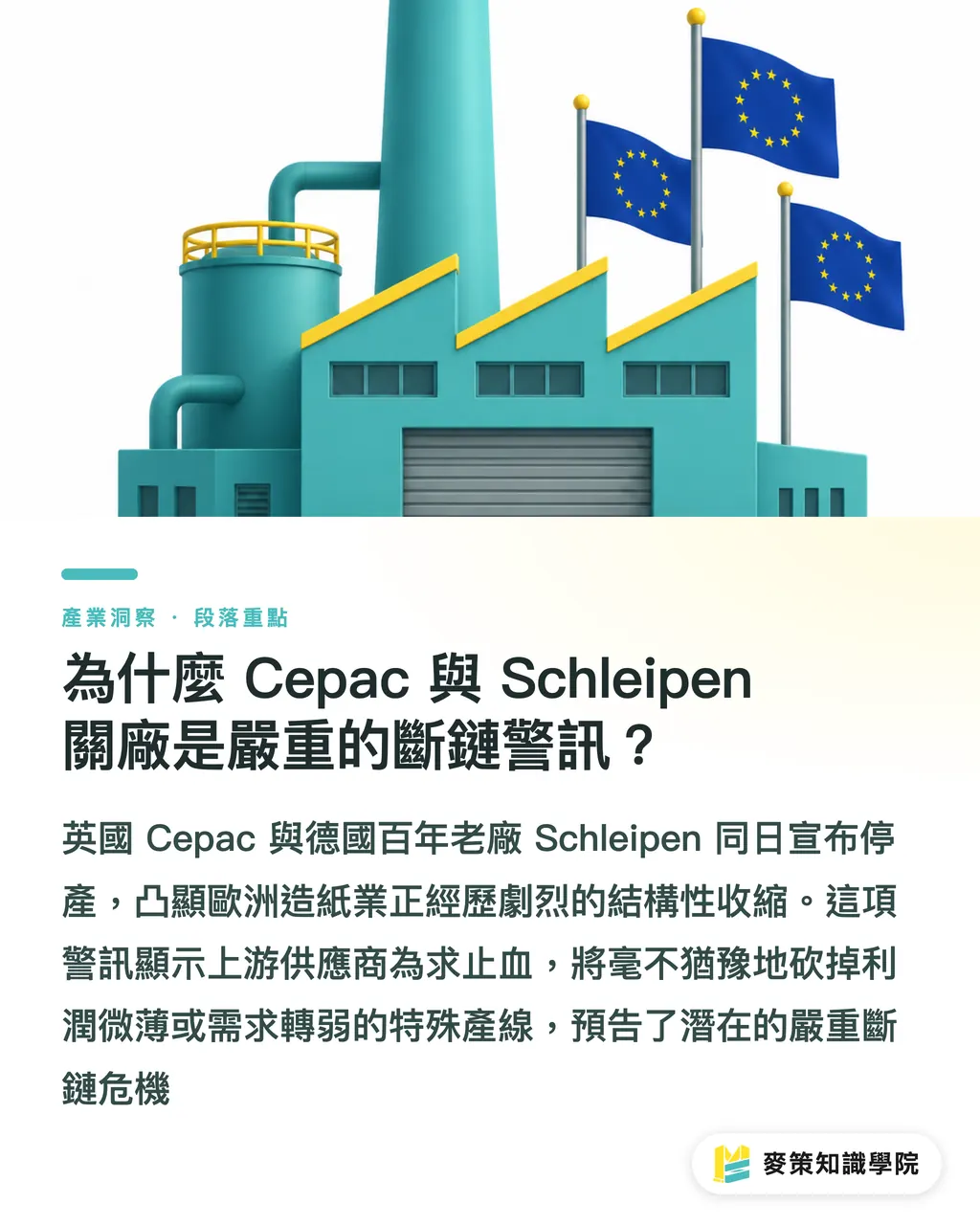
I was talking with a few long-time export packaging clients recently, and everyone has their eyes on European paper prices. UK-based Cepac just announced plans to close its Darlington plant, cutting its Flutepac corrugated tray production line and affecting 63 jobs. On the very same day, century-old German mill Papierfabrik Schleipen confirmed a full shutdown
This is not an isolated case of poor management. Look at what happened before: the Tarascon mill in France shutting down, MCC pulling out of Bingen in Germany, and the unexpected shutdown at the Eerbeek folding boxboard mill in the Netherlands. The picture is clear. The European paper industry is going through an aggressive structural contraction. Cepac poured substantial capital into upgrading equipment, but still could not survive market demand that fell far short of expectations. This points to a hard reality: upstream suppliers will not hesitate to cut specialty lines with razor-thin margins or weakening demand just to stop the bleeding
What Does European Capacity Tightening Mean for Packaging Procurement in Taiwan?
With Darlington and Schleipen bowing out back-to-back, the most immediate fallout is a squeeze on specific European paper grades, which will push up prices for liners and specialty paper in the short term
Many Taiwanese brands specify imported European FSC (Forest Stewardship Council: an international certification promoting responsible forest management worldwide) paper or specialty paperboard to meet Western ESG standards. With capacity shrinking, import costs will climb, and lead times will become completely unpredictable. Over the past few months, I have seen plenty of projects where entire shipments were stalled simply because specified European paper was stuck at sea or the mills had no open production slots. Just like the joint venture merger of graphic paper businesses between UPM and Sappi, fewer suppliers in the market means buyers lose both bargaining power and operational flexibility
How Brand Owners and Packaging Buyers Can Defuse the Risk Early
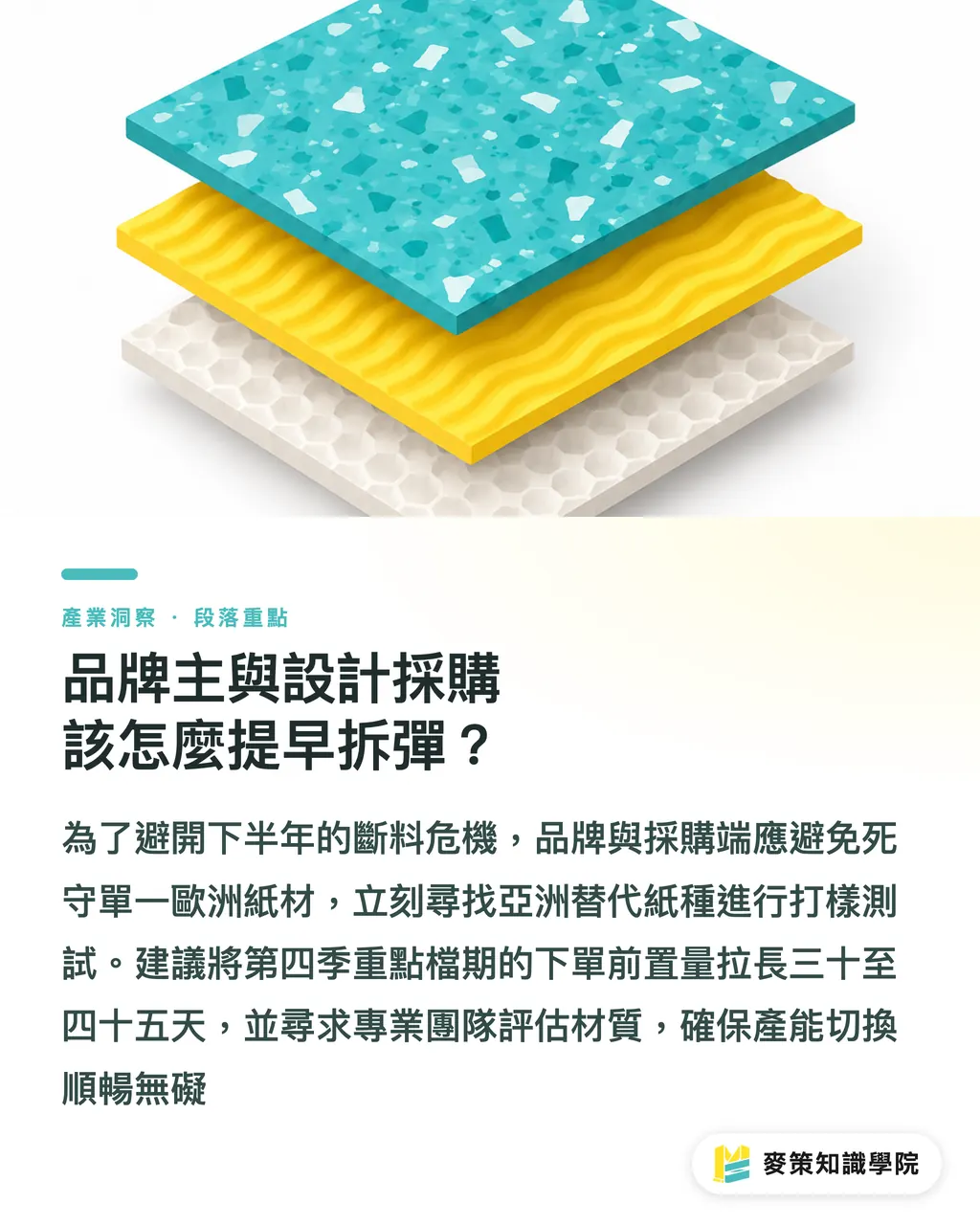
Faced with supply chain turbulence, clinging to a single European paper grade only magnifies project risks. To steer clear of supply disruptions in the second half of the year, I recommend taking these three steps immediately:
・Audit high-risk materials: Identify every packaging item that relies exclusively on a single European mill for its paper supply
・Build a backup paper list: For high-risk items, test similar FSC-certified papers from Japan, South Korea, or Southeast Asia immediately to make sure color reproduction and structural strength hold up
・Adjust lead time expectations: For key Q4 sales campaigns, add 30 to 45 days to your ordering lead time and talk to end clients early about potential variables
If your packaging has complex structures or strict material requirements, bring in a professional team to assess your options. Drawing on MINDS's experience in mid-to-high-end custom printing, we can catch printability issues with Asian replacement materials during the sampling stage, making sure your production switch goes smoothly
Key Takeaways
・The closure of specific European production lines stems from long-term structural consolidation, pointing to rising paper prices and volatile lead times
・ESG packaging that relies heavily on single-source imported European paper faces serious risks of supply shortages
・Brands need to source FSC-certified Asian alternative papers immediately and extend procurement lead times
Further Thoughts
Supply chain vulnerabilities tend to surface right before peak season. Brand owners should sit down with their print suppliers right now, lay out their BOM (bill of materials) for the second half of the year, and review which European paper grades are at risk of running dry. Complete testing and sign off on Asian replacement samples before price hikes and material shortages hit
Further Reading
FAQ
- Why are European paper mills closing or halting operations lately?
- Weak market demand paired with high operating costs is driving structural consolidation across the European paper industry, forcing mills to eliminate unprofitable specialty paper or folding boxboard lines to stop the bleeding
- Our packaging requires FSC certification. Are there options outside of European paper?
- Yes. Regional mills across Japan, South Korea, and Southeast Asia produce stable, FSC-certified eco-friendly paper that serves as an excellent primary alternative
- Will switching paper materials affect our existing packaging structure?
- Paper fiber and stiffness vary across different mills. Before switching materials, always have your printer cut new sample boxes with the alternative stock to verify that load-bearing capacity and folding endurance meet your original design specifications
Related articles

The Print × AI weekly
The print and AI know-how designers, brands and enterprises can use before they commit — one email, every week
MINDS Free Tools
Spine width and imposition calculators — skip the manual math, free in your browser.
MINDS Group
Need actual printing or gifting services?
From premium printing to online ordering and festive gifts — the MINDS Group sister brands take it from here.