

Overview
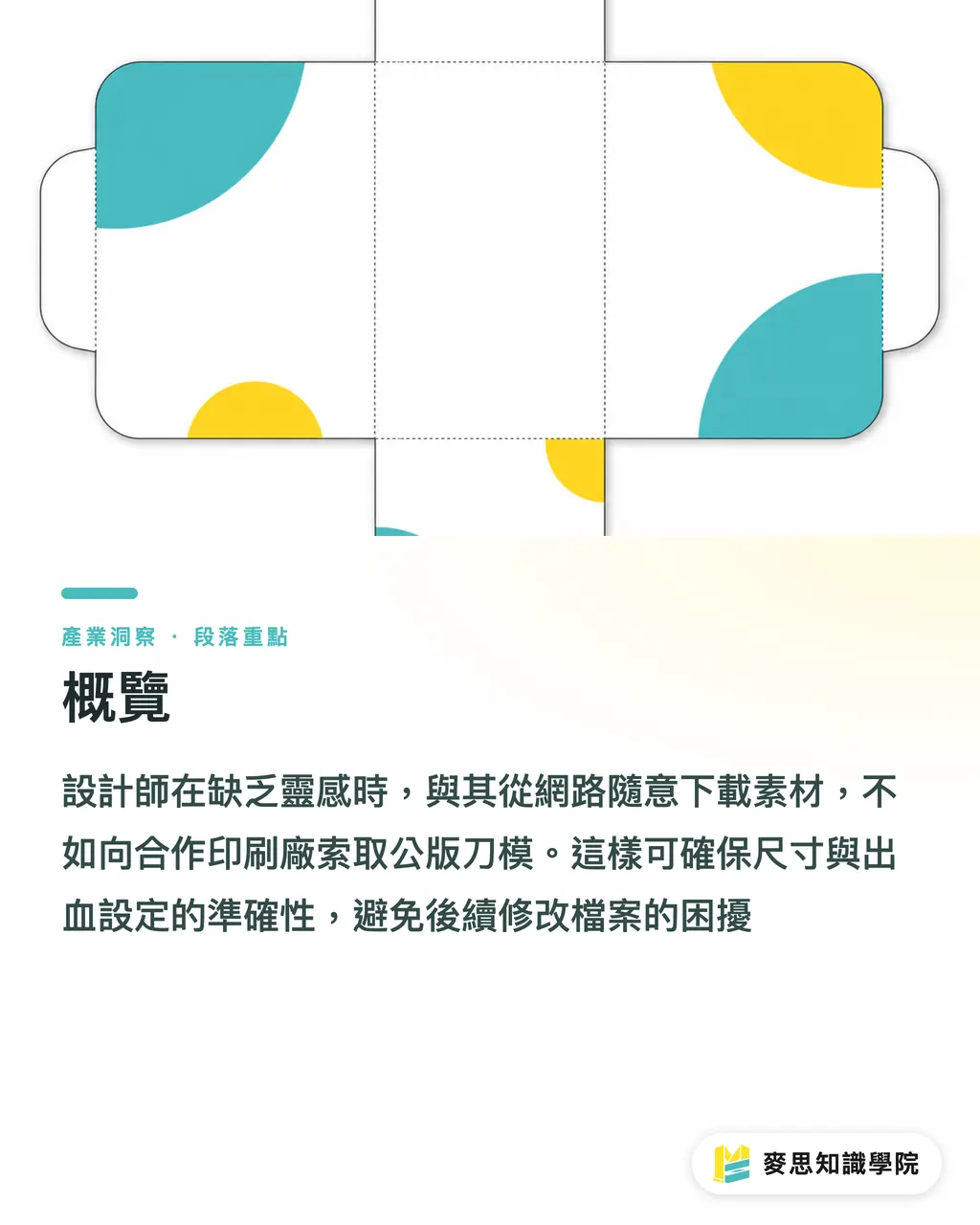
When designers run out of inspiration, instead of downloading unverified assets online, ask your print shop for their standard die-lines first
This guarantees accurate dimensions and bleed settings, saving you from an endless nightmare of file revisions
How to Pick Business Card Templates Without Getting Burned
Beginners usually look for templates to ease their anxiety over dimensions and bleed
The safest and most reliable way to find a template is to use the standard die-lines provided directly by your printer
Stock assets online rarely account for actual trimming tolerances. Applying them directly often leads to essential text or graphics getting cut off
・Dimension check: The standard business card size in Taiwan is 90x54mm
・Bleed setup: Add 1mm to 2mm of bleed on all four sides so you don't get white edges after trimming
・Color mode: Convert final files to CMYK so vibrant RGB colors on screen don't turn dull on paper
Design Priorities for Different Industries
Every industry needs to convey a different image and message, so your design must fit the business
Having looked at stacks of business cards taller than Taipei 101, I've broken down design approaches for three major sectors
Tech and finance emphasize logic and trust. The key is white space and clear visual hierarchy
・Tech startups: Prefer Western sizes like 90x50mm or 85x54mm, often paired with black, white, gray, or cool tones for a minimalist look
・Food & service: Need warmth and memorable touchpoints. Warm colors and textured paper stocks like ivory card or linen paper work best
・Creative & design: The battleground for personal style. Feel free to try custom sizes, embossing, debossing, or foil stamping, but don't overload elements and lose focus
Pairing Special Business Card Styles with Paper and Finishes
A business card is your brand's first handshake. The right stock and finish can instantly elevate that impression
Foil stamping alone comes in over a dozen options like bright gold, matte gold, rose gold, and antique bronze. You need to pick based on your design style
・Minimalist style: Great with heavy cotton or premium thick paper stock. Let the weight of the paper carry the quality, and add spot UV to text for depth
・Vintage style: Kraft paper is top choice. Pair it with single-color black ink or white ink for a strong handcrafted feel
・Luxury style: Dark backgrounds with gold or silver foil stamping. Gilded edges are a great touch. Pick colored paper stock directly to avoid showing white edges
Prepress Checklist Before Sending Files to Print
No matter how pretty the design looks on screen, it means nothing if it can't be printed
Clients and designers often overlook tiny details. Spending money on reprints is annoying, but missing out on a great first impression when exchanging cards is worse
・Font size: Never set body text smaller than 6pt, and avoid ultra-light weights. Otherwise, ink will blur or fine lines will break
・Line weight: Keep all line weights at or above 0.2pt. Lines thinner than that won't print reliably in offset or screen printing
・Outline text: Convert all text to outlines (Create Outlines) before sending files, so missing fonts don't mess up your layout at the print shop

Key Takeaways
・Get die-lines directly from your printer for templates instead of relying on stock web assets to avoid bleed and sizing mistakes
・Industry traits guide design direction. Tech needs clarity, hospitality needs warmth, and creative fields rely on paper textures and finishes
・Special finishes must pair with the right paper stock. Minimalist styles rely on heavy paper, while luxury styles work best with dark colored stocks and foil stamping
・Double-check font sizes are over 6pt and line weights over 0.2pt before printing, and always outline all text
Final Thoughts
A business card is more than just paper. It is the starting point for connecting physical networks with digital channels
For designers and print buyers, look for an integrated print partner like MINDS that offers end-to-end guidance from prepress file checks to paper and finish selection
Building standardized procurement routines and design specs will save you countless hidden costs in communication and trial-and-error
Further Reading
FAQ
- Why do business card templates downloaded online leave white borders after printing?
- Most stock assets don't include a 1-2mm bleed area. Any slight trimming variation will expose the raw paper edge
- How big should font sizes be on a business card for clear reading?
- The safest rule is body text no smaller than 6pt. For reversed out text (white text on dark background), use at least 7pt and a bolder weight to prevent ink bleeding
- How should I pick background colors for foil-stamped business cards?
- Stamping directly onto dark or colored art paper is best. Printing a solid dark color on white paper before foil stamping often leaves visible white edges after trimming, ruining the feel
References
- AI-產業人才地圖-|-人才卡-×-產業別互動導覽 · scandnavik.github.io
Related articles





The Print × AI weekly
The print and AI know-how designers, brands and enterprises can use before they commit — one email, every week
MINDS Free Tools
Imposition calculator and preflight file check — free prepress tools, right in your browser.
MINDS Group
Need actual printing or gifting services?
From premium printing to online ordering and festive gifts — the MINDS Group sister brands take it from here.