
Design stickers yourself or hire a printer, what is the real difference?
Here is the short answer: if you only need a small batch, need it temporarily, and do not care much about finish, make them yourself. If you need to ship in quantity, sell them on shelves, or have them represent your brand, hiring a printer is almost always the better deal
The difference is not whether you know how to use design software. It is in three things you do not see
・Bleed and dies: most DIY layouts forget to leave 3mm bleed. After trimming, a white edge appears all around, and the whole batch is scrapped
・Color shift: screens are RGB, print is CMYK. That muted Morandi color you tuned beautifully on your computer may print one shade grayer
・Material and finishing: the same image printed on coated sticker stock and on matte PP can feel a full grade apart
I have had too many customers bring in files they made themselves for rescue work. In the end, fixing and redoing them took longer than going to a printer from the start
DIY really fits the kind of job where you need only 30 pieces, want to stick them on your own cartons, and need them tomorrow
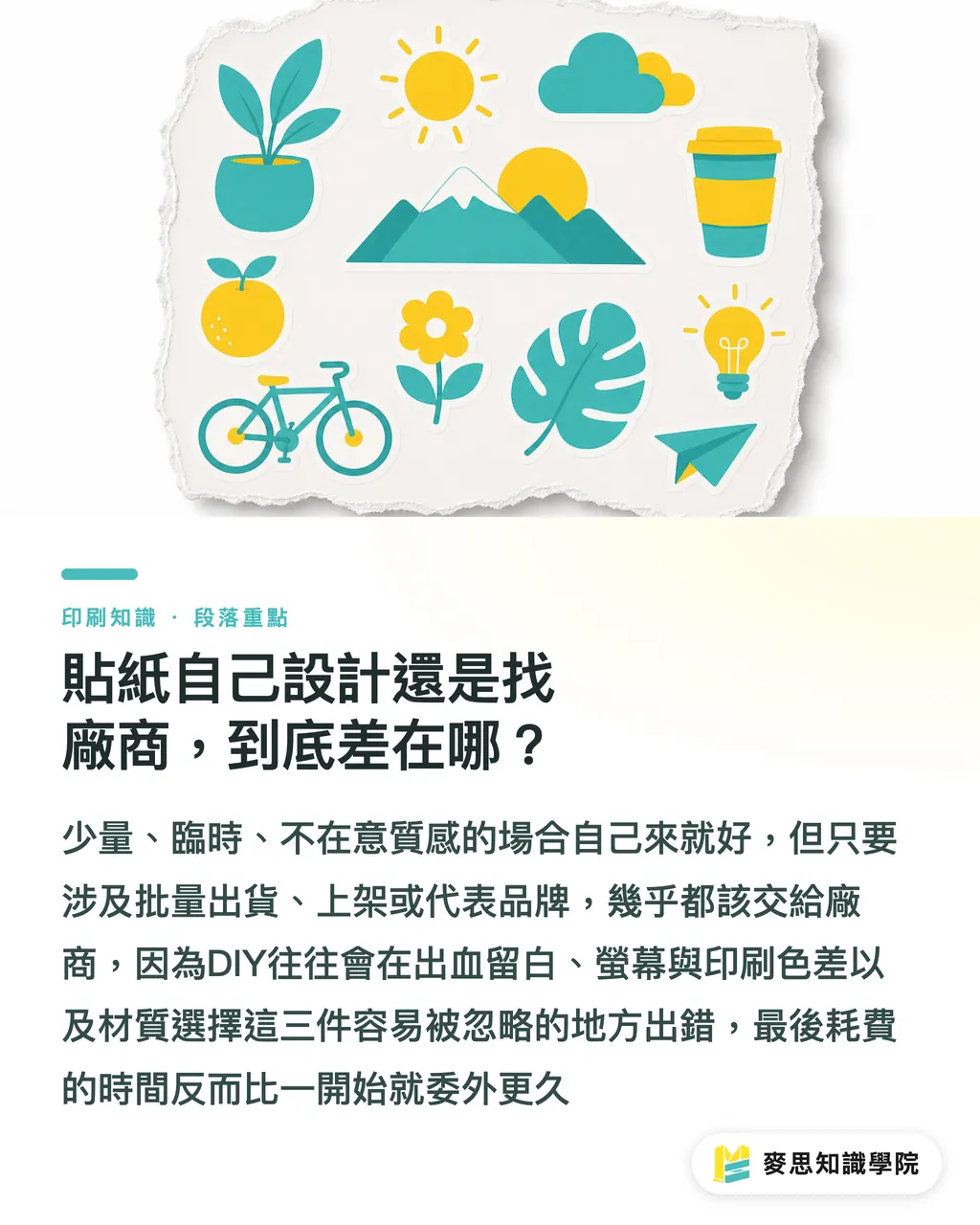
How much do the materials and tools cost to make one sticker yourself?
Many people think home printing is cheap because they only count the cost of one A4 sheet of label paper
The real cost is equipment depreciation plus failed attempts and reprints
A basic DIY setup looks roughly like this
・A4 label paper: available at stationery stores, usually sold in packs of 20 sheets, often with gloss or matte coated backing
・Inkjet or laser printer: inkjet fears water, laser is not waterproof and does not resist scratches. Neither is suitable for long-term outdoor use
・Cutting tools: a hand cutter and cutting mat, or a manual corner-rounding cutter
・Protective layer: if you want water resistance, you need to laminate it yourself with a gloss film or spray on a protective coating
The problem is here: the color gamut and weather resistance of a home printer are far behind industrial digital printing
Your printed stickers may bleed when soaked, fade after two or three months in the sun, and be hard to cut neatly around the edges by hand
When you do the math, DIY fits personal prototypes and very tiny runs. Once you go past one or two hundred pieces, the cost per sticker can end up higher than outsourcing
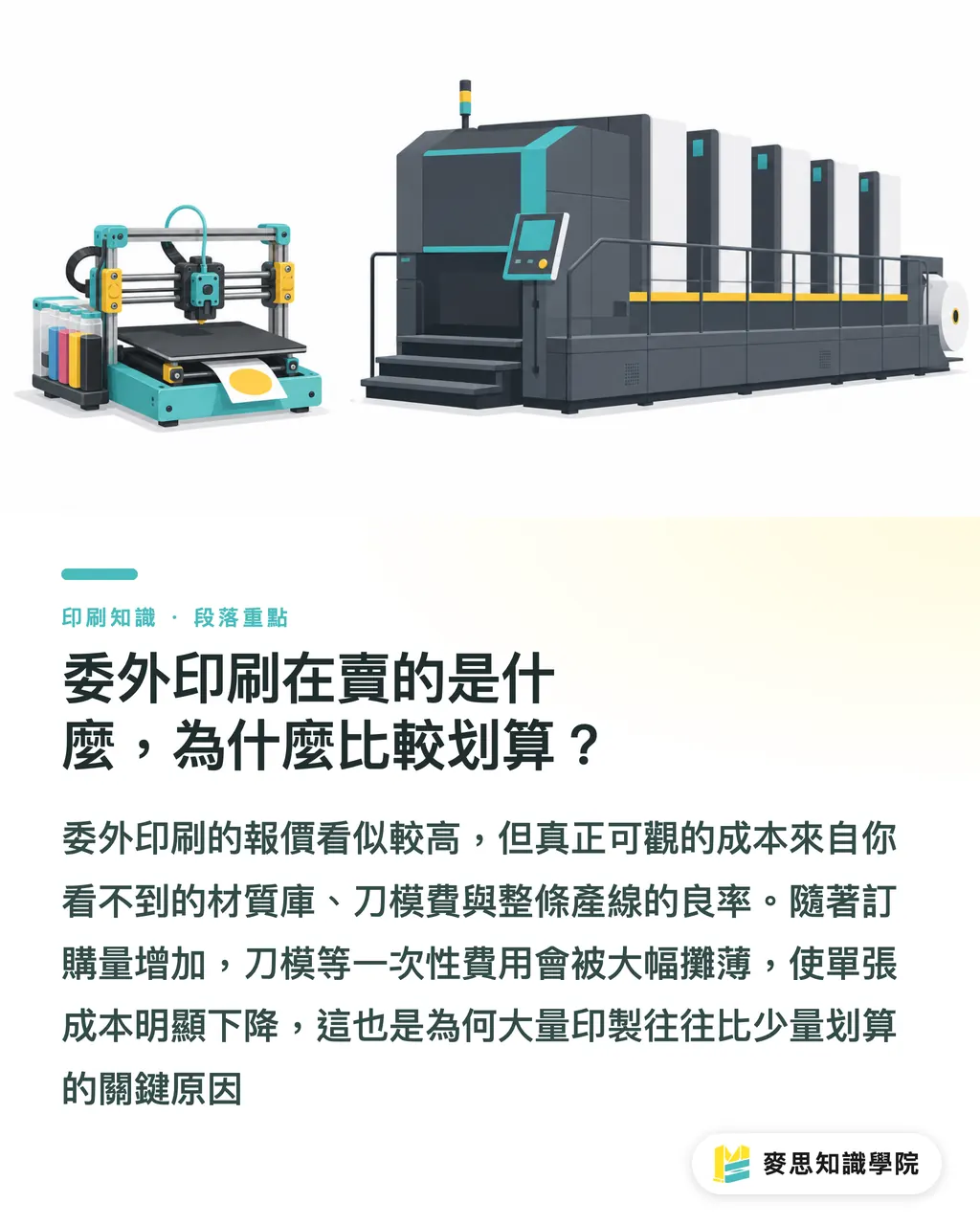
What are you paying for with outsourced sticker printing, and why is it a better deal?
A printer's quote is expensive in places you do not see: the material library, die cost, and yield of the whole production line
The main advantage of outsourcing is that the material choices are far broader than DIY
・Coated stickers: lowest cost, suitable for short-term indoor use, but afraid of water
・Matte / gloss PP: water-resistant and tear-resistant, most commonly used for beverage bottles and skincare product labels
・Clear stickers (clear PP / PET): used for a no-label-look effect, so the label looks like it was printed directly on the bottle
・Holographic, pearlescent, kraft: chosen for texture and finish, with unit prices moving upward
・Outdoor-grade PVC with gloss lamination: sun-resistant and scratch-resistant, used for vehicle stickers and outdoor signage
Finishing is the key part DIY cannot produce properly
・Gloss lamination / matte lamination: determines touch and scratch resistance
・Spot UV, foil stamping, embossing: key processes for raising the perceived quality
・Die cut: custom shapes and cutouts that you cannot achieve cleanly with a hand cutter
The key concept is die cost
Making a new die is a one-time cost. The larger the run, the cheaper that cost becomes per sticker
So for the same sticker design, printing 100 pieces versus 1000 pieces can produce a several-fold difference in unit price. The expensive part is not the paper. It is that the die cost has not been spread out
How do you decide which route fits your project?
Do not ask which one is cheaper. Ask what this batch of stickers is for, how many you need, and how long they must last
Filter it with three questions
・Quantity: under 50 pieces, make them yourself. Over 200 pieces, seriously compare outsourced quotes
・Lifespan and environment: if they will touch water, go outdoors, or last longer than six months, drop the home printer immediately
・Finish requirements: foil stamping, clear backing, custom shapes. DIY simply cannot do these, so they must be outsourced
There is another cost people forget most often: your time
Laying out the file, test printing, cutting, and correcting color shift can eat a whole afternoon
If your hourly rate is higher than the design fee for that sticker batch, DIY is actually a loss
My practical advice to customers is this: create the concept yourself, then ask the printer for a stock dieline template and align your file to its specs
The safest and most efficient approach is to request the stock dieline directly from your print partner instead of downloading random templates online
That way, bleed, resolution, and special finishing layers match the production line's standards exactly, saving the back-and-forth cost of file revisions
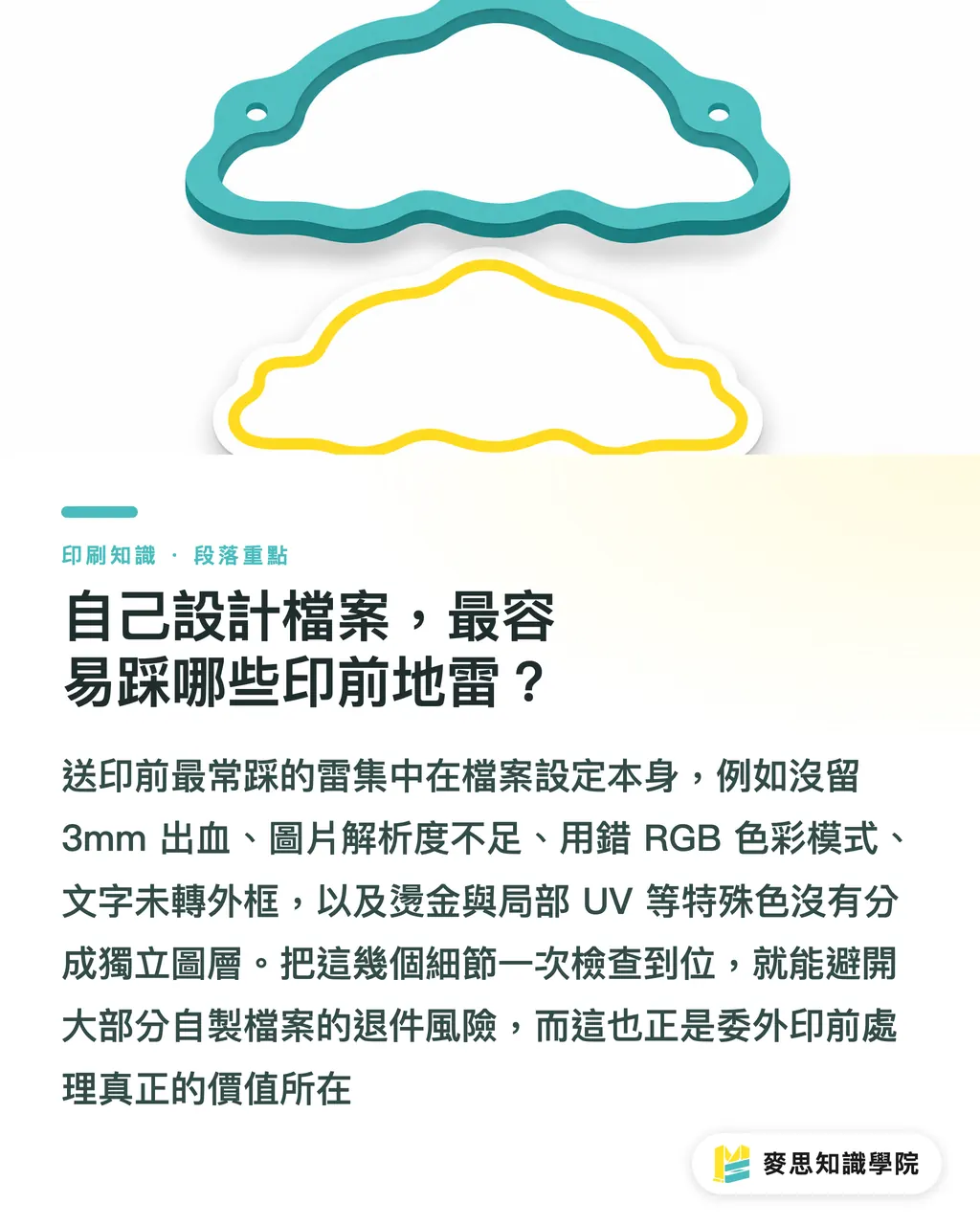
What prepress traps are easiest to step on when designing your own file?
Even if you choose outsourcing and handle the design yourself, the job can still get stuck if the file is wrong
I run into these traps almost every week
・No bleed: the artwork is built only to final size, so trimming tolerance exposes white edges. Leave 3mm on all four sides
・Not enough resolution: images grabbed from the web may be only 72dpi. Print needs 300dpi, and enlarging low-resolution images makes them blurry
・Wrong color mode: the file is saved in RGB, then colors shift badly after the print shop converts it to CMYK. Start in CMYK from the beginning
・Text not outlined: fonts are not embedded or converted to curves, so missing fonts and layout shifts happen on the printer's computer
・Special color layers not separated: areas for foil stamping or spot UV must be marked with independent spot color layers. You cannot just draw them in gold
Check these five points once, and your file will already be better than most customer-supplied print files
This is the real value of outsourcing too: prepress checks and output responsibility are carried by the printer for you
Key Takeaways
・Make them yourself under 50 pieces. Seriously compare outsourced quotes above 200 pieces. When die cost cannot be spread out, DIY can become more expensive
・Stickers from home printers are weak against water and sunlight. Do not save this money for outdoor or long-term use
・Outsourcing sells material libraries and finishing. Clear backing, foil stamping, and die cutting are not things DIY can do properly
・Leave 3mm bleed on all four sides, use CMYK, and outline text. That alone puts you ahead of most self-supplied files
・When calculating cost, do not forget to count your own time. One afternoon of test prints and rework often costs more than the design fee
Further Thought
The smart move is not black or white. It is division of labor
You understand your brand and the tone you want to express best. The printer understands material behavior and production-line limits best
Keep the concept and visual direction in your own hands. Hand bleed, dies, finishing, and color management to people with production experience
This logic is even clearer now: among the customers I have worked with over the past month or two, more and more first use AI tools to generate visual concepts, then bring them to the print shop for production
AI can help you think faster. That is fine. But it will not leave bleed for you, choose the right waterproof material, or handle foil-stamping layers
The next step is practical: write down the quantity, use case, and expected lifespan for this sticker job as a requirements list, then send it to the printer together with your design concept for spec checking
Having one shop integrate design, file checking, materials, and finishing is far more cost-effective than running test prints back and forth yourself
FAQ
- Is it cheaper to print stickers myself or hire a printer?
- For fewer than 50 pieces, short-term indoor personal use, printing them yourself is faster and good enough. For more than 200 pieces, outdoor waterproof use, or finishes such as foil stamping and clear backing, hiring a printer is more cost-effective because die cost and material cost can be spread across the run
- Can stickers printed on a home printer be waterproof?
- No. Inkjet prints are weak against water, and laser prints do not resist scratches well. Neither is suitable for outdoor use or situations where the sticker may get wet. For water resistance, choose matte or gloss PP with gloss lamination, which usually needs to be handled by a print shop
- What should I watch for in sticker design files so they do not get rejected?
- Leave 3mm bleed on all four sides, use 300dpi images, set color to CMYK, outline all text, and mark foil stamping or spot UV areas with separate spot color layers. Get these five points right and you can avoid 90% of prepress problems
- What is sticker die cost, and why does it affect unit price?
- A die is the tool used to cut the sticker shape, and making one is a one-time cost. The larger the print run, the lower the die cost per sticker, so the unit cost for 1000 pieces of the same sticker is often far lower than for 100 pieces
- What is the difference between clear stickers and regular stickers?
- Clear stickers use clear PP or PET material with no white backing, creating a no-label-look effect when applied to a bottle. Regular coated stickers have a white base, cost less, but are weak against water and are mostly used for short-term indoor labels
Related articles

The Print × AI weekly
The print and AI know-how designers, brands and enterprises can use before they commit — one email, every week
MINDS Free Tools
Spine width and imposition calculators — skip the manual math, free in your browser.
MINDS Group
Need actual printing or gifting services?
From premium printing to online ordering and festive gifts — the MINDS Group sister brands take it from here.